For years, tattoos have sparked debate about beauty, self-expression, and identity. While body art has become increasingly common across generations, many people with extensive tattoos still find themselves facing criticism, especially from those who believe appearance should follow more traditional standards.
One young British woman has become the latest person to challenge those opinions, refusing to let strangers define what beauty or confidence should look like.
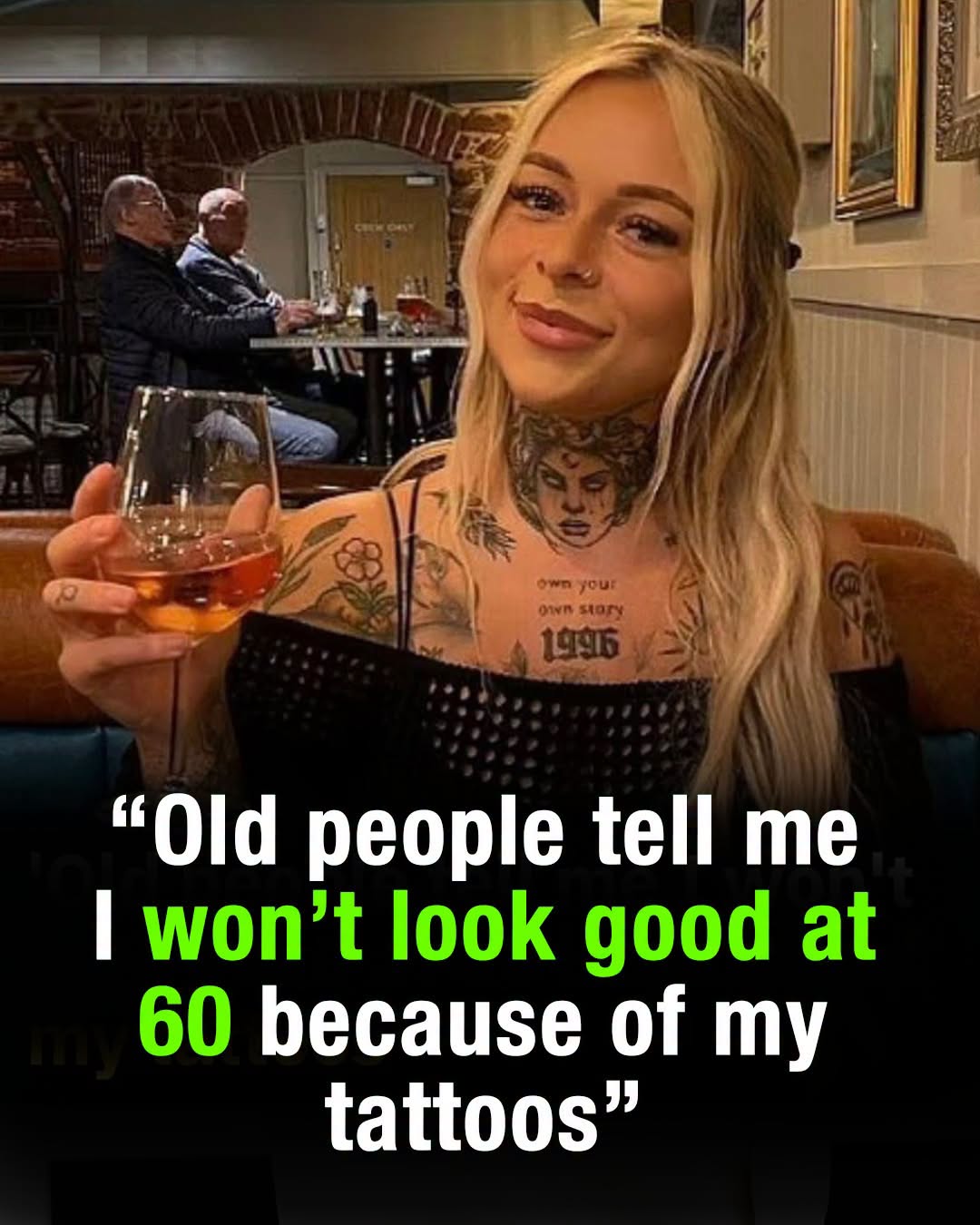
Taylor Paige Courtenay, a 27-year-old from South Devon, England, has covered much of her body with tattoos, including her neck, arms, stomach, and legs. To some people, her appearance is unconventional. To her, every piece of ink represents part of her story, a visual record of experiences, memories, and personal expression that she proudly carries wherever she goes.
Rather than hiding her tattoos, Taylor embraces them openly through social media, where she regularly shares photos and videos celebrating her unique style. But with visibility has come an endless stream of opinions, many of them highly critical.
According to Taylor, some of the harshest comments come from older individuals who insist she will one day regret covering so much of her body with tattoos. Over the years, she has repeatedly been told that her appearance will not age well and that she is ruining her natural beauty.
Instead of quietly accepting those remarks, she has chosen to respond publicly.
In one widely viewed video, Taylor addressed one of the most common criticisms she hears.
“Your tattoos aren’t going to look good when you’re 60.”
Her reply was short but memorable.
“Bold of you to assume you even look good at 60.”
She added that she wished people would simply keep their opinions to themselves rather than constantly criticizing choices that have no effect on their own lives.
For Taylor, the issue extends beyond tattoos.
She believes many people feel entitled to comment on other people’s bodies simply because they look different from what society expects. Whether someone chooses tattoos, piercings, colorful hair, or another form of self-expression, strangers often believe their approval somehow matters.
Taylor has made it clear that it doesn’t.
Her tattoos were never created to satisfy public opinion.
They were created for her.
In another emotional social media post, Taylor reflected on how she once viewed herself because of society’s expectations.
She admitted that she had accepted she would probably never fit the image of what many people describe as the “perfect woman.”
“I’ll never be the girl they take home to their parents.”
“I’ll never be the girl they show off.”
“I’ll always be the temporary fix.”
Those words resonated with many viewers because they reflected insecurities that countless people experience, regardless of whether they have tattoos.
However, Taylor’s message did not end with sadness.
She explained that despite those fears, she had reached a place of acceptance.
Her tattoos make her happy.
That happiness matters more than fitting someone else’s definition of beauty.
Not surprisingly, her videos generated thousands of reactions.
Many critics argued that she would eventually regret her appearance as she grew older.
Some questioned how the tattoos would look decades from now.
Others suggested she had damaged her natural beauty.
One commenter wrote that tattoos looked like “graffiti” covering otherwise beautiful skin.
Another asked whether she worried about how her body art would appear at age sixty.
Others criticized not only her tattoos but also the revealing clothing she sometimes wears in her videos, suggesting that if she wanted privacy from public opinion, she should avoid posting online altogether.
The criticism quickly expanded beyond tattoos themselves.
Some questioned her future relationships.
Others claimed her appearance would make it difficult to be accepted by families or future partners.
But alongside the criticism came overwhelming support.
Many tattoo enthusiasts shared their own experiences, explaining that they had never regretted their body art, even after decades.
One supporter wrote that they received their first tattoo as a teenager and now, years later, had sleeves, chest pieces, and back tattoos with absolutely no regrets.
Another reminded Taylor that nobody else has to approve of what someone chooses to do with their own body.
“Your body is yours.”
“Not everyone will like it.”
“They don’t have to.”
That perspective reflects a broader cultural shift surrounding tattoos.
What was once considered rebellious or unusual has become increasingly mainstream.
Doctors, teachers, lawyers, business owners, and professionals across countless industries now openly wear tattoos.
While stigma still exists in certain environments, attitudes have changed dramatically over the past few decades.
For many people, tattoos are no different than choosing a hairstyle or fashion preference.
They are simply another form of personal identity.
Taylor often describes her tattoos as a collection of memories rather than decoration.
Each design represents a specific chapter of her life.
Together, they create what she views as a living autobiography.
Instead of seeing her body as something that must remain untouched to preserve beauty, she sees it as a canvas that evolves alongside her experiences.
That philosophy has connected with thousands of followers who appreciate her honesty.
Eventually, however, the constant criticism became exhausting.
After receiving wave after wave of negative comments, Taylor chose to disable comments on many of her social media posts.
Rather than continuing endless arguments with strangers, she decided to remove the platform that allowed much of the negativity to flourish.
It was not an admission that critics were right.
It was simply a decision to protect her own peace.
Interestingly, Taylor’s earlier concerns about never being “that girl” eventually took an unexpected turn.
In later posts, she revealed that she had become a mother after welcoming her child in 2023.
By the end of 2024, she shared that she had found happiness with her partner and the father of her baby.
The woman who once believed she would never be accepted for who she was had built a loving family without changing herself to satisfy anyone else’s expectations.
Her story serves as a reminder that public opinion rarely determines personal happiness.
People who criticized her appearance predicted loneliness, regret, and rejection.
Instead, she continued living according to her own values while building the life she wanted.
Whether someone personally likes tattoos or not, Taylor’s experience highlights a broader conversation about respect and personal choice.
Appearance has always been one of the easiest things for strangers to judge.
Social media has only amplified that tendency, giving millions of people the opportunity to criticize individuals they have never met.
Yet those opinions rarely tell the full story.
Behind every tattoo, hairstyle, piercing, or fashion choice is a person whose experiences, values, and motivations are often invisible to everyone else.
Taylor understands that not everyone will appreciate her tattoos.
She doesn’t expect universal approval.
What she does hope for is something much simpler.
The freedom to make decisions about her own body without becoming the target of constant criticism from people who believe their standards should apply to everyone else.
In the end, her tattoos remain exactly what they were always intended to be.
Not a statement for strangers.
Not an invitation for judgment.
Just a reflection of the woman she chooses to be every single day.