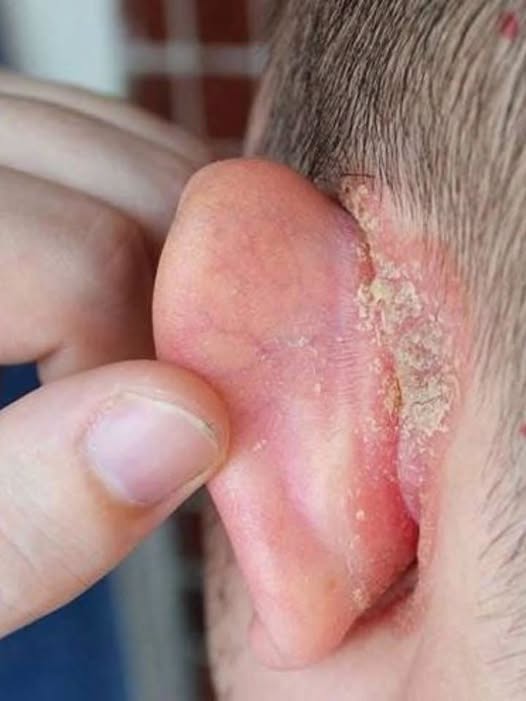
Finding an unusual patch of skin on your child can be alarming.
One moment everything seems normal, and the next you notice redness, dryness, peeling, or a rough area that wasn’t there before. When it appears on a place as noticeable and sensitive as the ear, it is natural for worry to take over.
Many parents immediately start asking the same questions.
Did I use the wrong soap?
Did something irritate their skin?
Is this a sign of something serious?
The good news is that many ear skin changes in children are linked to common conditions such as eczema, especially atopic dermatitis. While it can look uncomfortable and sometimes frightening, understanding what is happening can help parents respond calmly while waiting for a medical appointment.
The ear is a surprisingly vulnerable area.
Unlike thicker skin on other parts of the body, the skin around the ear is delicate and exposed to many everyday triggers. Sweat, weather changes, hair products, shampoos, headphones, hats, glasses, and even certain metals can irritate the area and create the perfect environment for inflammation.
For children who already have sensitive skin, this can quickly become a frustrating cycle.
The skin becomes dry and itchy.
The child scratches.
The scratching damages the skin barrier.
The damaged skin becomes even more irritated.
Before long, a small patch can become a source of discomfort and concern.
Atopic dermatitis, commonly known as eczema, happens when the skin’s protective barrier does not work as effectively as it should. Instead of keeping moisture locked in and irritants out, the skin becomes more sensitive to the environment.
This can lead to symptoms such as redness, dryness, flaking, itching, rough texture, and sometimes small cracks or areas of broken skin.
When eczema appears on the ears, it can be especially challenging because children may touch or scratch the area without even realizing it. The constant irritation can prevent healing and make a small problem last much longer.
For many parents, one of the hardest parts is the uncertainty.
A child may not always be able to explain exactly how the area feels. They may simply say it itches, hurts, or bothers them. Younger children might rub their ears repeatedly or become restless because of the discomfort.
It is important to remember that noticing a skin problem does not mean you did something wrong.
Many parents blame themselves when their child develops eczema, but the condition is usually connected to a combination of genetics, immune system responses, and environmental factors. It is not caused by a lack of care or a parenting mistake.
While waiting for a doctor’s appointment, there are gentle steps that may help protect the skin and reduce irritation.
The first priority is keeping the area clean without overdoing it.
Harsh soaps, strong cleansers, and heavily scented products can make sensitive skin worse. Washing the ear gently with lukewarm water and using mild, fragrance-free products can help avoid additional irritation.
Moisture is also essential.
Children with eczema often have skin that loses water more easily, leaving it dry and vulnerable. Applying a fragrance-free moisturizer designed for sensitive skin can help strengthen the skin barrier and reduce dryness.
Consistency matters.
A single application may not make a dramatic difference, but regular moisturizing can gradually help the skin become calmer and more protected.
Another important step is identifying possible triggers.
Think about anything new that may have touched your child’s ear recently.
Did they start wearing new headphones?
Did they get a new hat?
Was a different shampoo or hair product used?
Did they wear earrings or accessories containing metal?
Sometimes the cause is something simple that is repeatedly irritating the same area.
Reducing scratching is also crucial.
Children often scratch because the itching feels impossible to ignore, but scratching creates tiny injuries that increase inflammation and slow recovery.
Keeping fingernails trimmed can reduce accidental damage. Some parents also use gentle distractions, especially during bedtime when itching can feel worse and children have fewer activities competing for their attention.
Comfort is important too.
A child who is uncomfortable may become frustrated, upset, or worried. Reassuring them that their skin is being cared for can help reduce stress, which may also make the experience easier for the entire family.
However, there are situations where parents should seek medical advice sooner rather than waiting for a scheduled appointment.
If the area becomes increasingly painful, swollen, warm, or begins leaking fluid, it may indicate an infection. Fever, rapidly spreading redness, or a sudden worsening of symptoms should also be taken seriously.
A healthcare professional can determine whether the skin change is eczema or something else and recommend the appropriate treatment.
Sometimes eczema requires more than basic skincare. A pediatrician or dermatologist may suggest specific medications, treatment plans, or ways to prevent future flare-ups.
The goal is not only to calm the current irritation but also to help families understand how to manage sensitive skin over time.
For many children, eczema comes and goes.
There may be periods when the skin looks completely normal, followed by times when certain triggers cause symptoms to return. Learning what affects your child’s skin can make future flare-ups easier to handle.
The most important thing parents can do is observe, protect, and respond gently.
That strange patch on your child’s ear may look frightening at first, but with patience and proper care, many skin issues improve.
A calm approach, simple skincare habits, and guidance from a healthcare professional can turn a stressful discovery into something manageable.
The ear may be a small part of the body, but caring for it is a reminder of something much bigger: children’s skin is constantly changing, and understanding those changes is one of the best ways parents can protect their little ones.