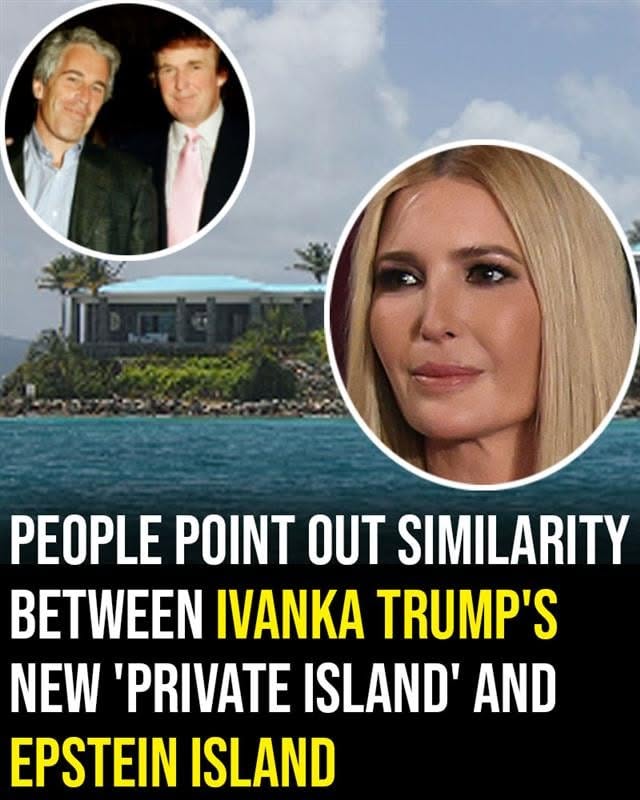
Ivanka Trump’s announcement that she plans to help transform Albania’s Sazan Island into an exclusive luxury destination has triggered a wave of debate, suspicion, and heated online comparisons, turning what was framed as an ambitious development project into a global talking point.
The island, once a heavily restricted military zone during the Cold War, has long been known for its untouched landscapes, rugged coastline, and relative isolation. In recent years, it has also gained attention for its ecological value, with protected wildlife habitats that include migratory birds, marine life, and rare coastal species that have thrived in the absence of mass tourism and commercial development.
Now, that quiet status is being challenged.
According to the vision outlined by developers involved in the project, Sazan Island is set to be reimagined as a high-end luxury retreat designed to attract elite international visitors. The plans reportedly include upscale accommodations, private access zones, and carefully curated resort infrastructure meant to blend modern exclusivity with what supporters describe as “respect for natural beauty.”
Ivanka Trump has emphasized that the intention is not to erase the island’s environment but to integrate development in a way that preserves its character while making it accessible to a global luxury market. Advocates of the project argue that opening the island after decades of restricted military use could bring economic benefits to the region, including tourism revenue, jobs, and international investment in Albania’s growing hospitality sector.
Yet the reaction has been sharply divided.
For many critics, the announcement raises immediate concerns about privatization, environmental disruption, and the increasing concentration of pristine natural spaces in the hands of wealthy investors. Environmental groups and local voices have warned that even carefully designed luxury projects can place pressure on fragile ecosystems, especially in areas that have remained relatively undisturbed for decades.
Sazan Island, they argue, is not an empty canvas. It is a living habitat.
Wildlife species such as sea turtles, dolphins, and migratory birds have been cited by conservation advocates as part of a delicate ecological balance that could be disrupted by construction, increased boat traffic, and seasonal tourist activity. Flamingos and seals in nearby regions have also become symbolic in online discussions, representing broader concerns about how development may reshape the natural landscape of the Mediterranean.
What has intensified the controversy, however, is not only environmental concern but the symbolism attached to the project.
As news of the development spread across social media platforms, comparisons began emerging between the proposed luxury destination and other infamous private island locations associated with the ultra-wealthy. Most notably, some users drew parallels to Jeffrey Epstein’s private island, a reference that has fueled intense debate, speculation, and emotional reactions online.
These comparisons have not been supported by any evidence linking the Sazan Island project to illegal activity or misconduct. Instead, they reflect a broader climate of public distrust toward high-profile figures, political families, and private developments that involve exclusive access to remote or protected locations.
For critics, the concern is less about direct equivalence and more about perception.
They argue that when powerful and wealthy individuals gain access to secluded islands, particularly under the banner of luxury tourism or private development, it can evoke uncomfortable associations rooted in past scandals and systemic inequality. In that context, even legitimate projects can become symbolic flashpoints for deeper anxieties about privilege, accountability, and transparency.
Supporters of the Sazan Island development strongly reject these comparisons.
They point out that the project is being framed as a regulated, environmentally conscious tourism initiative rather than a private enclave removed from oversight. They emphasize that Albania has been actively seeking foreign investment to boost its tourism industry, and that carefully managed development could help position the country as a major destination in the Mediterranean.
From this perspective, Sazan Island represents opportunity rather than secrecy.
They also argue that comparisons to unrelated historical scandals are unfair and misleading, potentially overshadowing legitimate discussions about economic growth, infrastructure planning, and environmental management.
Still, the debate continues to intensify online.
Social media users have dissected early promotional imagery, planning documents, and public statements, searching for details that might confirm or contradict their assumptions. Some frame the project as an example of elite overreach into untouched natural spaces. Others dismiss the backlash as politically motivated outrage amplified by viral speculation.
At the heart of the controversy is a broader tension that extends far beyond a single island.
Across the world, coastal regions and natural reserves are increasingly being targeted for luxury development projects aimed at high-net-worth individuals. These developments often promise sustainability, exclusivity, and economic benefit, but they also raise difficult questions about access, ownership, and long-term environmental impact.
Sazan Island has become the latest focal point for those competing narratives.
On one side is a vision of transformation: a remote, once-restricted military site evolving into a curated destination for global tourism, investment, and economic growth. On the other is a fear that such transformation comes at the cost of ecological preservation and public access to natural heritage.
The imagery surrounding the island has become powerful in its own right.
To supporters, it represents potential—an underutilized space finally being integrated into the global economy. To critics, it represents vulnerability—an isolated ecosystem at risk of being reshaped by forces driven by wealth and exclusivity.
Even the island’s wildlife has become part of the narrative, with environmental observers pointing to sea turtles nesting along its shores and migratory birds passing through its airspace as reminders of what could be altered if development proceeds without strict protections.
As the debate unfolds, officials and project representatives continue to stress that environmental safeguards and planning regulations will guide any construction. They insist that preservation and development are not mutually exclusive and that modern luxury tourism can coexist with ecological responsibility when properly managed.
However, public perception remains deeply divided.
The comparisons to Epstein Island, while not grounded in factual equivalence, highlight how quickly high-profile development projects can become entangled in cultural memory, mistrust, and symbolic association. In the digital age, perception often spreads faster than documentation, and once certain comparisons take hold online, they can shape the entire conversation regardless of official statements.
For Ivanka Trump, the project has now moved beyond architecture and tourism planning into the realm of public scrutiny and political symbolism. What was presented as an ambitious vision for a Mediterranean destination has become a case study in how modern development projects are judged not only on their economic or environmental merits, but also on the narratives they evoke.
As discussions continue, Sazan Island remains suspended between two futures: one defined by curated luxury and global tourism, and another defined by preservation, caution, and resistance to privatization.
And in that uncertainty, the island has become more than a place on the map. It has become a mirror reflecting larger global tensions about wealth, access, nature, and trust.