The death of Victor Willis, the unmistakable lead voice of the Village People, has marked the end of an era in popular music but it has also opened an unexpected and heated debate over how his legacy should be remembered.
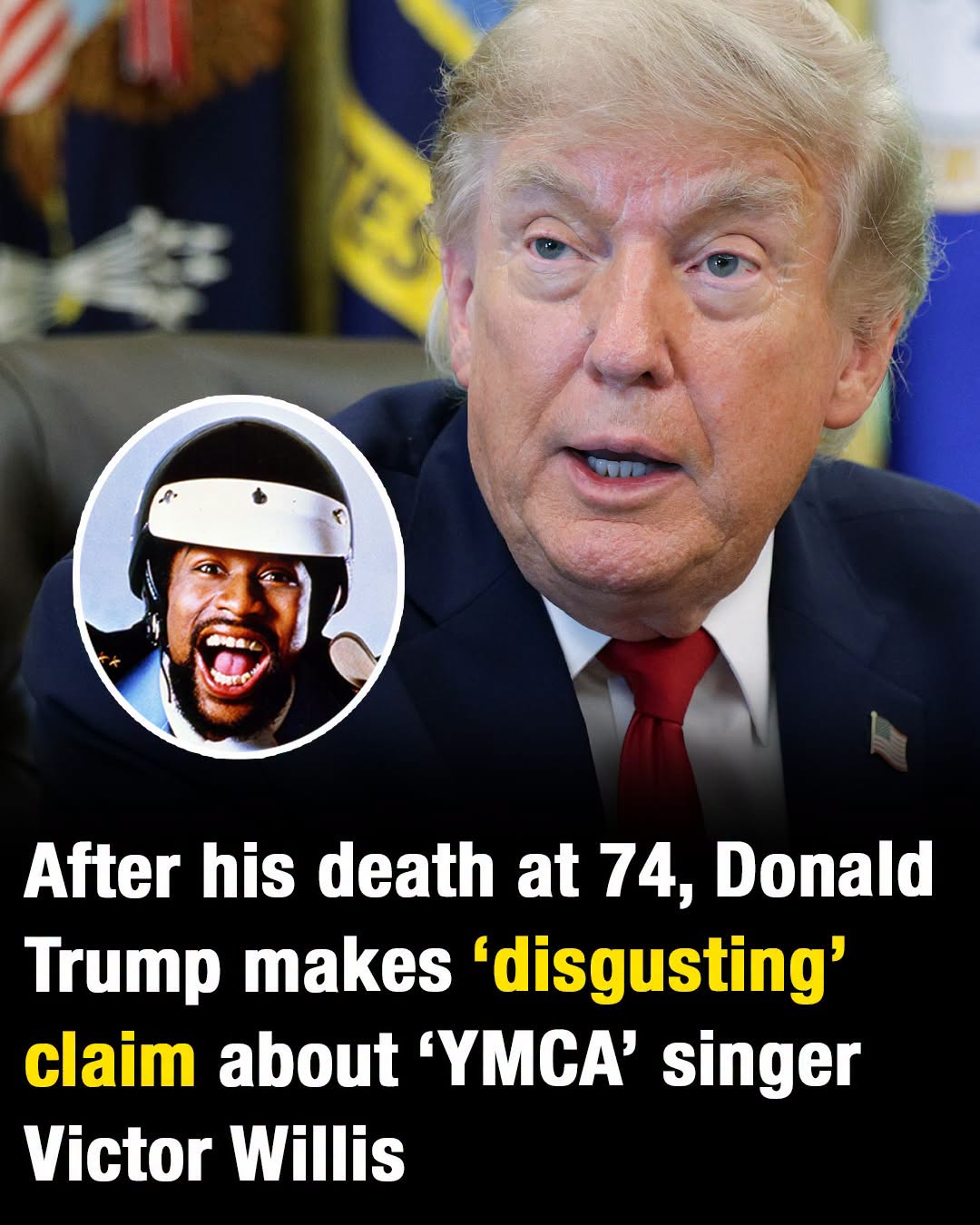
As tributes continue to pour in for the man whose voice helped define the disco age, a separate controversy has emerged surrounding claims made by Donald Trump about Willis’ feelings toward the political use of “YMCA.”
At the center of the dispute is a sharp contradiction between public statements attributed to Trump and earlier comments from Willis himself regarding the use of the song at political rallies. Trump has suggested on multiple occasions that Willis approved of, or even “loved,” the use of “YMCA” in such settings. However, those claims are being widely questioned in light of Willis’ own publicly expressed discomfort and objections to how the track was being used outside its original cultural and artistic context.
The result is a growing tension between political messaging and artistic ownership, with many observers arguing that the late singer is now being spoken for in ways that do not align with his own recorded stance. Critics say this creates a posthumous narrative battle, where a global hit song is being pulled into competing interpretations that extend far beyond its original disco-era roots.
Victor Willis’ legacy, however, is not defined by controversy but by cultural impact. As the lead singer and co-creator behind some of the Village People’s most iconic tracks, he helped shape a sound that transcended genres and generations. Songs like “YMCA,” “Macho Man,” and “In the Navy” became more than disco anthems; they evolved into cultural fixtures played at sporting events, celebrations, parades, and political rallies around the world.
Willis’ voice, in particular, became instantly recognizable commanding yet playful, structured yet full of energy. It was a sound that turned theatrical camp into something universally accessible, allowing audiences from entirely different backgrounds to find joy in the same chorus. Over time, “YMCA” in particular transformed into one of the most enduring party anthems in modern music history.
But behind the glittering image of disco fame was a more complex journey. Willis eventually stepped away from the Village People at the height of their popularity in the early 1980s, later engaging in legal and financial disputes over the rights to his work. Those battles reflected a broader struggle many artists face: the tension between creative contribution and long-term ownership in an industry often dominated by contracts and corporate control.
In later years, Willis returned to perform and re-engage with the music that had defined his career, reclaiming his place in a legacy that continued to evolve long after its original peak. His connection to “YMCA” remained central to his identity in the public eye, even as debates continued about how the song should be used, interpreted, and performed in different cultural and political settings.
Following news of his passing, tributes highlighted not only his musical influence but also his role in shaping one of the most recognizable choruses in the world. Fans, fellow musicians, and cultural commentators emphasized how rare it is for a single song to achieve such universal recognition while still retaining its original energy decades later.
The controversy surrounding Trump’s remarks has, in many ways, overshadowed those tributes, reigniting long-standing debates about the relationship between music and politics. For some, the use of “YMCA” at rallies represents harmless celebration. For others, it raises questions about consent, context, and the appropriation of artistic work for political symbolism.
What makes the situation more emotionally charged is the fact that Willis is no longer here to clarify or respond. His voice, once so present in every chorus of “YMCA,” is now absent from the conversation about how that song should be remembered or represented. That absence has left space for competing narratives to fill the void.
At the heart of the matter lies a broader cultural question: who owns a song once it becomes part of collective memory? For many, “YMCA” no longer belongs solely to its creators, having become embedded in global culture through decades of repetition, reinterpretation, and reinvention. Yet for others, authorship still matters, especially when the original artist has expressed clear views about how their work should be used.
Despite the debate, Willis’ artistic legacy remains firmly intact. He helped create music that continues to bring people together across generations, languages, and political divides. Whether played at sporting arenas, weddings, pride events, or public gatherings, the song he helped build still carries the same unmistakable energy it did at its inception.
In the end, Victor Willis is remembered not through political claims or posthumous disputes, but through sound through a chorus that refuses to fade, and a voice that continues to echo wherever people gather to sing, dance, and celebrate.
No statement or controversy can erase that impact. The music remains, as it always has, larger than the arguments surrounding it, and still belonging most strongly to the moment it creates every time it is heard.