The idea sounded simple enough.
What if the money collected from tariffs on imported goods could be returned directly to American families?
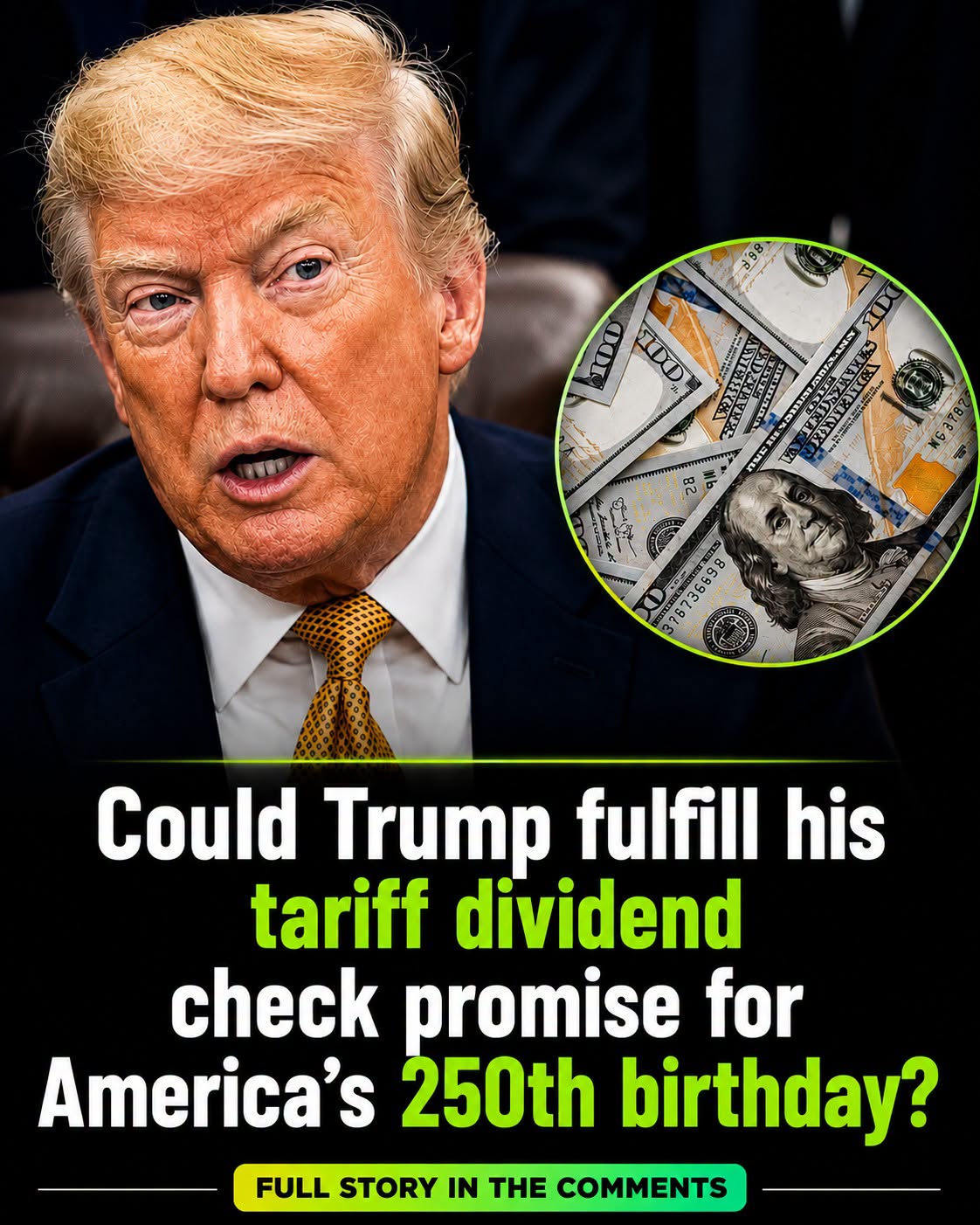
That question quickly became one of the most talked-about economic proposals after President Donald Trump suggested that many lower- and middle-income Americans could receive checks worth as much as $2,000 through what he called a “tariff dividend.”
For supporters, the proposal sounded like a welcome financial boost during a time when many households continue to struggle with higher prices, rising living costs, and economic uncertainty.
For critics, it immediately raised questions about whether such payments were financially and legally possible.
As excitement spread online, many Americans began asking the same question:
Will the checks actually happen?
The answer is more complicated than many social media posts suggest.
The proposal centers around tariff revenue.
Tariffs are taxes placed on imported goods entering the United States. Importers typically pay these taxes when products arrive in the country. Although businesses initially pay the tariffs, economists generally agree that at least part of the cost is often passed along to consumers through higher retail prices.
Trump has argued that increased tariff collections could generate substantial government revenue.
Instead of allowing all of that money to remain in federal accounts, he suggested returning a portion directly to American taxpayers.
Supporters describe the idea as giving money back to the people.
Some have even compared it to previous stimulus payments issued during the COVID-19 pandemic.
However, there is one critical difference.
Stimulus checks were authorized through legislation passed by Congress and signed into law.
The proposed tariff dividend has not reached that stage.
At this point, it remains a policy proposal rather than an approved federal program.
No law currently authorizes the government to issue tariff dividend payments.
That means no federal agency has the authority to begin sending checks.
The Treasury Department has announced no payment schedule.
The Internal Revenue Service has opened no application process.
No official website exists where Americans can register to receive the money.
Despite that reality, online rumors have continued to spread rapidly.
Posts claiming that payments have already been approved have attracted millions of views.
Some videos insist checks will arrive by America’s 250th birthday.
Others claim registration deadlines are approaching.
None of those claims have been supported by official government announcements.
For the proposal to become reality, Congress would first need to debate and pass legislation establishing the program.
Lawmakers would have to determine who qualifies.
Would every taxpayer receive a payment?
Would income limits apply?
Would families receive more than individuals?
Would Social Security recipients qualify?
Would payments be taxable?
None of these questions currently have official answers because no legislation has yet defined the program.
Only after Congress approved such a bill and the president signed it into law could federal agencies begin organizing payment systems.
Until then, there is nothing for Americans to apply for.
Unfortunately, that uncertainty has created an opportunity for scammers.
Whenever public interest grows around government payments, fraud typically follows.
The proposed tariff dividend has proven no exception.
Cybersecurity experts and consumer advocates have reported increasing numbers of fake websites promising early access to the supposed payments.
Some ask visitors to provide Social Security numbers.
Others request bank account information.
Still others demand processing fees, claiming payment cannot be released without verification.
Text messages have also become increasingly common.
Recipients receive messages claiming they have been selected for the tariff refund.
A link directs them to a website requesting sensitive financial information.
Phone scams have appeared as well.
Individuals pretending to represent the IRS or Treasury Department claim they can accelerate payment processing in exchange for banking details or small administrative fees.
These scams rely on urgency.
Victims are often told they must act immediately before losing eligibility.
Consumer protection officials consistently warn that legitimate government agencies do not operate this way.
The IRS does not call demanding immediate action.
It does not request payment through gift cards, cryptocurrency, or wire transfers.
It does not send unexpected text messages asking recipients to click links to claim federal payments.
Most importantly, there is currently no official tariff dividend application.
That means any company or individual claiming to process applications is almost certainly attempting to collect personal information or money fraudulently.
Identity theft remains one of the greatest risks.
Providing Social Security numbers, driver’s license information, banking credentials, or tax documents to fake websites can expose victims to long-term financial harm.
Once criminals obtain this information, they may attempt to open credit accounts, file fraudulent tax returns, or gain unauthorized access to financial institutions.
Protecting personal information remains essential.
Experts recommend ignoring unsolicited messages promising government money.
Instead of following links received through texts or emails, Americans should rely only on official announcements released directly by federal agencies.
If Congress eventually approves any tariff dividend program, information would be widely available through legitimate government channels.
The Treasury Department would announce payment procedures.
The IRS would publish official guidance.
Major news organizations would report verified details.
There would be no need for secret registration lists or early-access programs.
Political proposals often generate excitement long before becoming law.
Some ultimately pass.
Others change significantly during negotiations.
Still others never advance beyond campaign promises.
The tariff dividend currently remains within that uncertain stage.
Supporters continue arguing that returning tariff revenue directly to Americans would offset higher consumer costs while rewarding taxpayers.
Opponents question whether sufficient revenue exists to sustain such payments and whether tariffs themselves ultimately increase household expenses through higher prices.
Economists remain divided.
Some believe tariff revenue could provide meaningful government income.
Others argue that consumers ultimately bear much of the financial burden through increased prices on imported goods.
Those broader debates continue independently of whether dividend checks eventually become law.
For millions of Americans, however, the immediate question is much simpler.
Should they expect a $2,000 payment anytime soon?
Based on current federal law, the answer remains no.
No payments have been authorized.
No checks have been approved.
No application process exists.
That reality makes caution especially important.
Whenever large sums of promised government money capture national attention, scammers move quickly to exploit public hope.
Until official legislation is passed and federal agencies publicly announce a verified payment program, Americans should treat every email, phone call, website, text message, or social media advertisement promising a tariff dividend with extreme skepticism.
If Congress ultimately approves such payments, the announcement will come directly from the United States government—not from anonymous websites, unsolicited phone calls, or messages asking for personal information.
Until that day arrives, the safest assumption is also the simplest one.
The proposed $2,000 tariff dividend remains exactly what it is today: a political proposal, not an approved federal benefit, and certainly not something anyone can legitimately claim through an online application.