
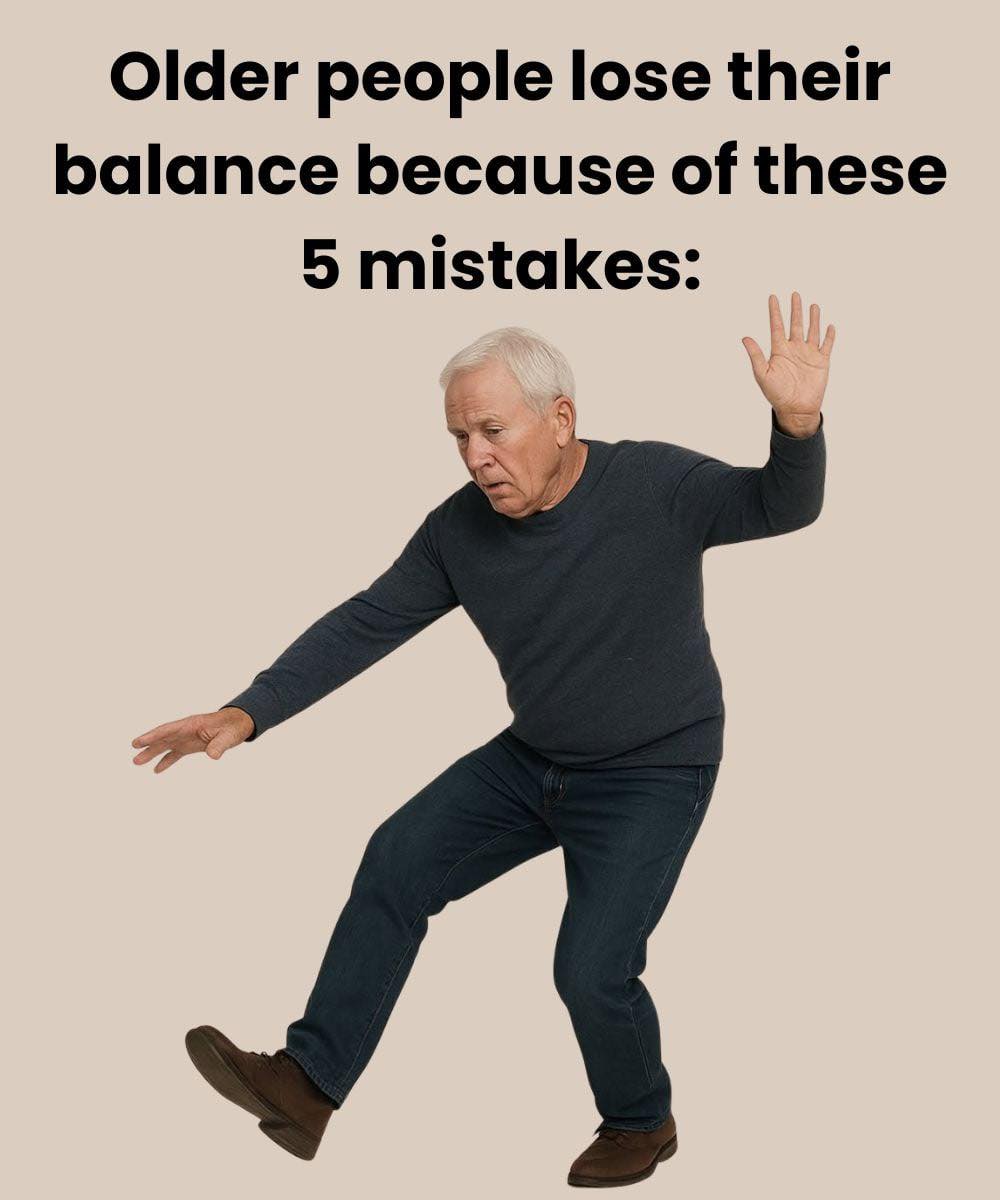
That subtle, creeping fear of losing your balance rarely arrives without warning. It doesn’t appear overnight or out of nowhere.
Instead, it builds quietly, shaped by small, repeated choices that seem harmless in the moment but gradually shift the way your body moves through the world. What feels like a sudden loss of stability is often the result of patterns that have been forming for months, even years, beneath the surface of daily life.
One of the most common and overlooked causes begins with something deceptively simple: stillness. Long hours spent sitting whether in front of a television, at a table, or resting more than moving slowly weaken the muscles responsible for keeping you upright. The legs lose strength, the core becomes less engaged, and the intricate system that keeps you balanced starts to dull. Movement is not just about exercise; it is the language your body uses to maintain awareness of itself. When that language fades, so does your ability to react quickly and confidently.
Footwear, often dismissed as a matter of comfort or style, plays a far more powerful role than many realize. Shoes that lack proper support, grip, or structure can quietly turn even the safest floor into a risk. Slippers that slide, worn-out soles, or overly soft shoes may feel pleasant at first, but they remove the stability your feet depend on. Your feet are your foundation, and when that foundation is compromised, every step becomes less certain. Over time, this uncertainty doesn’t just affect how you walk it affects how you trust your own movement.
Vision and hearing, too, shape your sense of balance in ways that are easy to underestimate. Clear sight helps you judge distance, detect obstacles, and orient yourself in space. Hearing contributes to spatial awareness, helping you sense your environment even when you’re not directly looking at it. Skipping regular checkups, delaying new glasses, or ignoring subtle changes in hearing can make the world feel less predictable. When your brain receives incomplete or distorted information, your body has to compensate, often leading to hesitation or missteps.
Then there is the environment itself the space you move through every day. A dim hallway, a loose rug, a cluttered corner, or an uneven surface may seem insignificant until the moment they aren’t. Many falls don’t happen because of dramatic accidents, but because of ordinary surroundings that haven’t been adjusted for safety. A single missed detail can turn a routine walk across a room into a dangerous situation. What makes this especially challenging is how familiar these spaces feel; the more accustomed you are to them, the less likely you are to notice their risks.
Nutrition also plays a quiet but essential role in maintaining balance. The body relies on a steady supply of nutrients to keep muscles strong, nerves responsive, and energy levels stable. Skipping meals, neglecting hydration, or lacking key vitamins can weaken the systems that support coordination and strength. Fatigue, dizziness, and slower reaction times often follow, creating conditions where balance becomes harder to maintain. What you consume doesn’t just fuel your body it directly affects how securely you move within it.
Yet for all these risks, there is an equally powerful truth: none of them are beyond your influence. Balance is not something that simply disappears with age; it is something that can be supported, improved, and protected through consistent, mindful choices. Small adjustments, made daily, can rebuild confidence and restore a sense of control that may feel like it’s slipping away.
Movement, for instance, does not need to be intense to be effective. Gentle walks, light stretching, and simple exercises can gradually strengthen the muscles that keep you steady. Even a few minutes of intentional movement each day can begin to reawaken the body’s natural coordination. The goal is not perfection or athletic performance, but consistency reminding your body how to move, how to respond, and how to trust itself again.
Choosing the right footwear is another powerful step toward stability. Shoes with proper support, non-slip soles, and a secure fit provide a reliable foundation for every step you take. This isn’t about sacrificing comfort, but about redefining it understanding that true comfort includes safety, confidence, and the ability to move without hesitation.
Regular checkups for vision and hearing can restore clarity to your environment, making it easier to navigate the world with assurance. Clear sight and sound reduce uncertainty, allowing your brain and body to work together more effectively. These small acts of maintenance can have a profound impact on how stable and secure you feel in your daily life.
Adjusting your home environment can transform it from a potential hazard into a place of support. Better lighting, secure rugs, clear pathways, and simple safety additions can dramatically reduce the risk of falls. These changes don’t require major renovations just a willingness to look at familiar spaces with fresh awareness.
And then there is the deeper shift: recognizing that balance is not just physical, but also mental. Confidence plays a crucial role in how you move. When you trust your body, your steps are more natural, your reactions quicker, your posture stronger. Fear, on the other hand, can create stiffness and hesitation, increasing the very risk it tries to avoid. Rebuilding that trust takes time, but it begins with small, steady actions that prove to you, day by day, that your body is still capable.
The fear of losing balance can feel overwhelming, but it is often a signal rather than a sentence. It is your body’s way of asking for attention, for care, for a return to the habits that support strength and stability. By listening to that signal, rather than ignoring it, you give yourself the opportunity to change the outcome.
In the end, balance is not about achieving perfection or eliminating every risk. It is about creating conditions where your body has the best possible chance to succeed. It is about understanding that each choice how you move, what you wear, how you care for your health, and how you shape your surroundings contributes to the way you experience the world.
Every steady step you take is not an accident. It is the result of awareness, effort, and the quiet decision to take care of yourself in ways that matter. And with each of those steps, you reclaim something essential: not just your balance, but your independence, your confidence, and your sense of control over the life you continue to build.