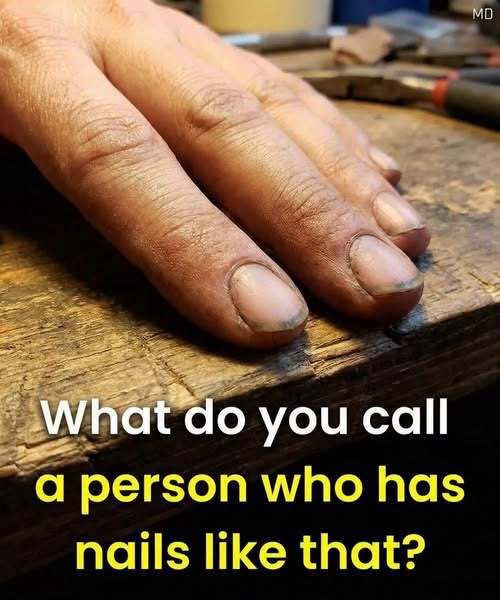
The appearance of someone’s hands can trigger an instant reaction. Clean, well-groomed nails are often associated with care, professionalism, and attention to detail, while dirty or stained nails are frequently and sometimes unfairly linked to neglect or poor hygiene.
In many everyday situations, especially in workplaces where cleanliness is essential, those assumptions can influence how people are perceived within seconds.
In professional environments such as healthcare, food service, offices, or customer-facing roles, personal grooming is more than just appearance; it is tied to safety and trust. Clean hands help reduce the spread of germs, and maintained hygiene signals responsibility in shared spaces. Because of this, visible dirt under nails can understandably create discomfort or concern, especially where close contact or food handling is involved.
However, that immediate judgment often tells only part of the story.
In reality, many people with visibly stained or rough hands are not neglecting hygiene at all they are working in environments where dirt is unavoidable. Mechanics spend hours handling oil and grease that cling stubbornly to skin and nails. Farmers work soil that embeds itself deeply during planting and harvesting. Construction workers deal with dust, cement, and materials that leave lasting traces even after washing. Cleaners, caregivers, emergency responders, and volunteers in disaster zones often end their days physically exhausted, with hands that reflect intense, hands-on labor.
In these cases, dirt is not a sign of carelessness but of effort.
It represents physical work that keeps essential systems running—cars repaired, buildings constructed, food produced, homes cleaned, and communities supported during emergencies. Even with proper hygiene routines, certain substances and environments naturally leave behind marks that are difficult to remove completely without time, specialized products, or repeated cleaning.
This creates a tension between perception and reality. On one hand, visible cleanliness remains important in contexts where health and safety depend on it. On the other, many of the people who contribute most directly to everyday life’s functioning are also the ones most likely to carry visible signs of their work. Judging solely based on appearance risks overlooking the value of what they do.
There is also a practical dimension that often goes unnoticed: not all dirt is equal. Some stains come from benign, everyday exposure soil, dust, or harmless residues while others may indeed indicate a lack of regular handwashing or care. The difference is not always visible at a glance, which is why snap judgments can easily become inaccurate.
Public health guidance continues to emphasize that proper hand hygiene is essential, especially before eating, preparing food, or touching shared surfaces. Washing with soap and water remains one of the most effective ways to reduce bacteria and prevent illness. But even strong hygiene practices cannot always erase the physical traces of certain types of work, particularly in demanding or outdoor professions.
Psychologically, visible dirt on hands also plays into how quickly humans form impressions. Studies in social behavior show that people often rely on visual cues to assess trustworthiness, competence, and cleanliness within seconds of meeting someone. While these instincts can be useful in certain contexts, they can also lead to oversimplified conclusions that fail to account for individual circumstances.
A more balanced perspective acknowledges both realities.
Clean hands do matter in maintaining health standards, professionalism, and shared comfort. At the same time, dirty or stained nails do not automatically reflect a person’s hygiene habits, character, or reliability. In many cases, they reflect effort, labor, and physical contribution in environments where cleanliness is not easily preserved during the workday.
Recognizing this distinction helps shift the conversation from judgment to understanding. It encourages awareness of context what someone does, where they work, and what conditions they face before forming assumptions based on appearance alone.
Ultimately, hands carry stories. Some are polished and maintained through predictable routines. Others are marked by work, pressure, and long hours spent building, repairing, growing, or helping. Both deserve recognition in their own way, and neither should be reduced to a single glance under the fingernails.