
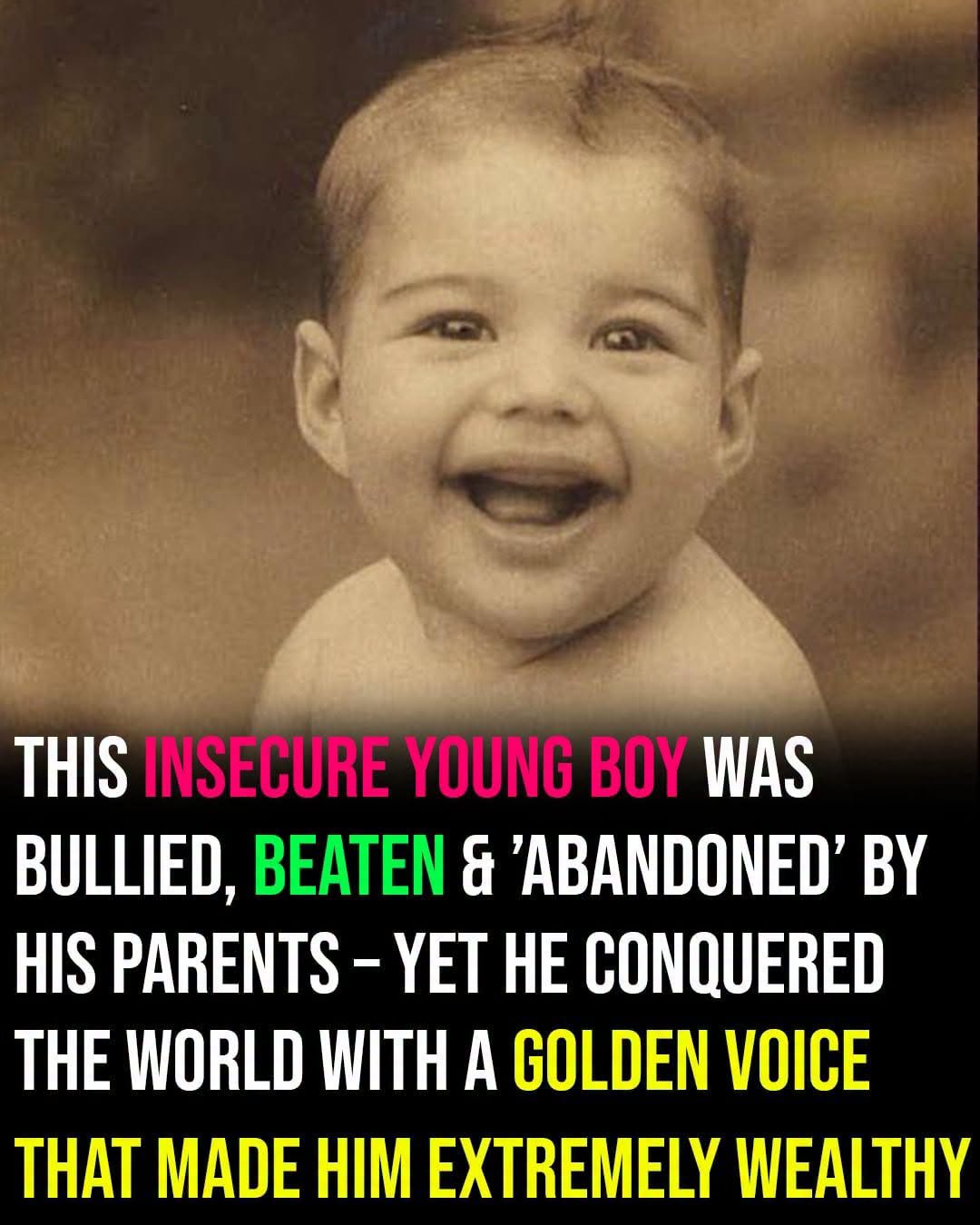
Long before the stadiums, the fame, and the unforgettable voice that would captivate millions, there was a shy boy named Farrokh Bulsara trying to understand where he belonged in the world.
The child who would eventually become Freddie Mercury entered the world on September 5, 1946, in Stone Town, Zanzibar. Born to Parsi parents of Indian descent, Farrokh grew up far from the stages and spotlights that would later define his life. His family valued tradition, education, and discipline, offering him a stable upbringing while the world around him slowly changed.
Yet even during childhood, he often felt different.
At the age of eight, Farrokh was sent to boarding school in India, a decision that would shape much of his emotional life. Far from his family and surrounded by unfamiliar routines, he learned very quickly that survival often depended on adaptation. School life could be difficult, and several accounts from friends and biographers have described periods of loneliness, isolation, and emotional hardship.
Music became an escape.
He began playing the piano, discovering that melodies allowed him to express emotions that words could not. Teachers quickly noticed his talent, and classmates began calling him Freddie, a nickname that would eventually become part of his new identity.
But the young boy who practiced piano and dreamed quietly of performing still carried a deep sense of being an outsider.
Everything changed again in 1964.
Political violence erupted during the Zanzibar Revolution, forcing the Bulsara family to leave their home and relocate to England. Suddenly, Freddie found himself starting over once more, arriving in London as a teenager whose entire world had been uprooted.
He had lost his home.
He had lost his country.
He had to build an entirely new life.
London during the 1960s offered opportunity, but it also demanded reinvention. Freddie enrolled at Ealing Art College, where he studied graphic design and developed a strong interest in fashion, visual art, and music. He worked ordinary jobs, including handling luggage at Heathrow Airport, while pursuing his artistic ambitions.
Friends recalled his determination.
He studied musicians obsessively.
He admired performers who seemed larger than life.
Artists like Jimi Hendrix inspired him not only because of their music but because of their ability to transform themselves onstage.
Freddie wanted more than success.
He wanted freedom.
In 1970, that opportunity finally arrived.
He joined guitarist Brian May and drummer Roger Taylor, who had previously played in a group called Smile. Soon afterward, bassist John Deacon completed the lineup, and Freddie proposed a new name for the band.
Queen.
The choice immediately reflected his vision.
He wanted grandeur.
He wanted drama.
He wanted something theatrical and unforgettable.
Freddie also designed the band’s famous crest, combining the zodiac signs of each member into an emblem that represented both royalty and mystery. He believed that Queen should never simply perform songs. The band would create experiences.
Many people initially viewed him as arrogant.
Others thought his ideas were unrealistic.
But Freddie understood exactly what he wanted.
He envisioned rock music mixed with opera, theatrical costumes, elaborate arrangements, and performances that felt larger than life.
The breakthrough came with Killer Queen, but it was Bohemian Rhapsody that changed everything.
Released in 1975, the song defied every industry rule. It had no traditional chorus. It moved between ballad, opera, hard rock, and theatrical performance. Record executives doubted it could succeed.
Freddie believed otherwise.
The song became one of the most celebrated recordings in music history, proving that audiences were willing to embrace something entirely different.
His voice became his greatest instrument.
Capable of extraordinary range and emotional power, Freddie could move from tenderness to fury within a single phrase. His performances carried both confidence and vulnerability, allowing listeners to connect deeply with his music.
Songs such as Somebody to Love, We Are the Champions, Don’t Stop Me Now, Love of My Life, and Who Wants to Live Forever became anthems for millions.
But it was onstage where Freddie truly became legendary.
His greatest moment arrived during Live Aid in 1985.
Standing before more than 70,000 people inside Wembley Stadium and an audience of nearly two billion television viewers worldwide, Freddie delivered a performance that many still consider the greatest live appearance in rock history.
For twenty-one minutes, he commanded the crowd with absolute confidence.
Every movement.
Every gesture.
Every note.
The audience followed him completely.
He transformed a charity concert into a defining cultural moment.
Yet behind the confidence remained a deeply private man.
Freddie rarely discussed his personal life publicly. He guarded his relationships carefully and often struggled with the intense attention that accompanied fame. Friends described him as generous, loyal, and surprisingly shy away from the stage.
His sexuality remained largely private for many years, partly because of his family background and partly because of the pressures surrounding public life during that era.
The stage allowed him to become fearless.
Offstage, he often remained cautious.
Then came the illness that would eventually define his final years.
In the late 1980s, Freddie was diagnosed with AIDS, a disease that carried enormous fear and stigma at the time. He chose to keep his condition private, continuing to record music even as his health declined.
Those who worked with him during his final years spoke of remarkable determination.
He continued singing despite increasing physical weakness.
He continued writing.
He continued creating.
When recording The Show Must Go On, his voice still carried extraordinary strength despite the progression of his illness.
The title itself seemed to reflect his philosophy.
No matter the pain.
No matter the fear.
The music would continue.
Freddie Mercury died on November 24, 1991, at the age of forty-five, only one day after publicly confirming his diagnosis.
His death shocked the world.
Yet his music never disappeared.
Decades later, his songs continue to fill stadiums, movies, television programs, and playlists across generations. Young listeners who were born years after his death still discover his voice and feel the same emotional connection that audiences experienced during his lifetime.
What makes Freddie Mercury so enduring is not simply his talent.
It is his transformation.
He took loneliness and turned it into performance.
He took rejection and turned it into confidence.
He took uncertainty and transformed it into art.
The boy who once felt isolated at boarding school became the voice of millions.
The immigrant who arrived in London searching for a future became one of the most recognizable performers in history.
The man who often felt different gave countless people permission to embrace their own differences.
His story is not only about fame.
It is about resilience.
It is about reinvention.
It is about refusing to allow pain to write the final chapter.
The costumes, the fame, the wealth, and the legendary performances all helped create the myth of Freddie Mercury.
But the real legacy lives inside the music.
Every note carries the determination of a boy who refused to disappear.
Every song contains pieces of the struggles he endured.
And every audience that sings along keeps his voice alive.
Freddie Mercury did not simply become a rock star.
He transformed his wounds into art, his fears into music, and his life into one of the greatest performances the world has ever witnessed.
Long after the final curtain fell, the applause continues.