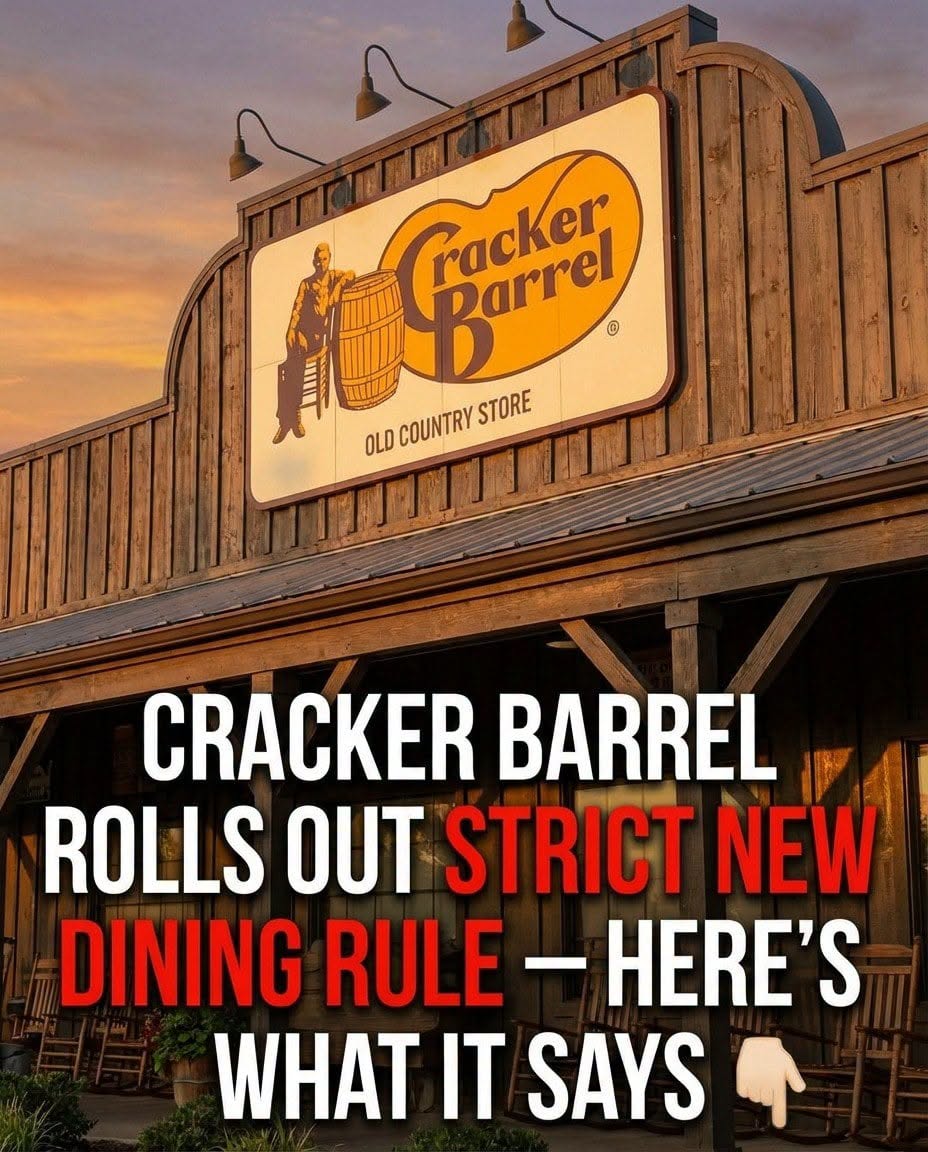
For decades, Cracker Barrel Old Country Store has represented a very specific version of American nostalgia. It is not just a restaurant chain, but a carefully constructed experience built around memory itself: wooden rocking chairs lined neatly along front porches, checkerboard tablecloths, vintage-style signage, and walls filled with antique tools, farm memorabilia, and relics meant to evoke a slower, simpler rural past.
For millions of customers, visiting Cracker Barrel is not simply about food. It is about familiarity. It is about consistency. It is about stepping into a space that feels unchanged in a world that constantly is.
That is why even the smallest adjustments to its identity have often carried outsized emotional weight.
When the company began modernizing aspects of its brand in recent years, including subtle updates to its logo, refreshed interior design elements, and operational improvements aimed at efficiency, it was framed internally as a necessary step in long-term survival. The restaurant industry has become increasingly competitive, with fast-casual chains, digital ordering systems, and shifting consumer expectations forcing even legacy brands to evolve or risk stagnation.
But outside the boardroom, perception told a different story.
For many loyal customers, especially those who had grown up associating Cracker Barrel with road trips, family gatherings, and childhood memories, even minor visual changes felt deeply personal. A slightly altered font, a redesigned sign, or a modernized layout was interpreted not as improvement, but as loss. What executives described as refinement, customers often experienced as erosion.
Social media amplified those reactions almost instantly.
Images comparing “old Cracker Barrel” versus “new Cracker Barrel” circulated widely, sparking emotional debates about whether the brand was abandoning its roots. Some users accused the company of stripping away its identity in pursuit of modernization. Others defended the updates as inevitable, arguing that no business can remain frozen in time without eventually becoming irrelevant.
Caught between nostalgia and necessity, Cracker Barrel found itself at the center of a cultural conversation far larger than its menu.
Inside the company, leadership reportedly began reassessing how far the modernization efforts should go. While operational upgrades continued behind the scenes — including supply chain improvements, technology integration, and service efficiency updates — certain visible design changes were quietly reconsidered. Elements of the traditional aesthetic that had been softened or updated were partially restored or re-emphasized in some locations, a move interpreted by observers as an attempt to rebalance heritage with progress.
At the same time, another internal discussion drew attention to company travel and expense policies, particularly guidance suggesting that employees should dine at Cracker Barrel locations during work-related travel. While some interpreted this as a mandate, company representatives later clarified that it was intended as a recommendation rather than a strict requirement tied to reimbursement. The clarification helped ease concerns, but it also highlighted the sensitivity surrounding corporate messaging in an era where internal policies can quickly become public controversy.
In response, Cracker Barrel moved to improve transparency around its operational guidelines, emphasizing flexibility for employees and clearer distinctions between suggestions and formal requirements. The company’s efforts were aimed at preventing misunderstandings while maintaining consistency in internal culture and brand alignment.
Yet beyond policy discussions and design updates, the deeper issue remained unchanged: Cracker Barrel occupies a unique emotional space in American culture.
Unlike many restaurant chains that position themselves as purely functional dining experiences, Cracker Barrel built its identity around storytelling. Its decor is curated to resemble a rural general store. Its branding leans heavily into nostalgia. Its atmosphere is designed to evoke memory even for guests who may not have lived the rural past it references.
That emotional connection is powerful, but also fragile.
When a brand becomes intertwined with memory, change is never just operational. It becomes symbolic. A redesigned chair is not just furniture. A new logo is not just typography. A refreshed dining room is not just interior design. Each adjustment is filtered through personal history, even if that history is shared indirectly through culture, travel, or family tradition.
Industry analysts note that Cracker Barrel’s challenge is not unique. Many legacy brands face similar tension between modernization and preservation. As consumer expectations evolve, companies must introduce digital systems, streamline operations, and update physical spaces to remain competitive. Yet doing so without alienating loyal customers requires careful calibration.
Too little change risks irrelevance.
Too much change risks identity loss.
Finding the balance is often the most difficult task.
In Cracker Barrel’s case, the reaction to recent updates revealed just how deeply embedded the brand is in the emotional landscape of its customers. For some, even the suggestion of change felt like an interruption to continuity. For others, it represented progress long overdue.
Despite the controversy, the company continues to emphasize that its core experience remains unchanged. The menu still focuses on traditional comfort food. The stores still feature country-inspired merchandise. The rocking chairs still line the porches. The overall intent, according to leadership, is to preserve the essence of what made Cracker Barrel successful while adapting behind the scenes to ensure it can remain viable for future generations.
What the situation ultimately illustrates is not simply a corporate redesign effort, but a broader cultural truth about nostalgia itself. People do not always resist change because they oppose improvement. Often, they resist it because it challenges the emotional version of a place they carry with them.
Cracker Barrel exists in that space more than most brands.
It is both a restaurant and a memory.
A business and a symbol.
A place that serves food and, for many, serves something harder to define: continuity in a rapidly changing world.
As the company moves forward, it continues to navigate that delicate balance between honoring the past and adapting for the future. Each decision, whether visible or internal, carries the weight of expectation from millions who see more than a brand when they look at its sign.
They see a piece of their own history.
And that is precisely why even small changes will always feel so large.