A single photograph can sometimes hold a lifetime of emotion.
For one grieving family in Brazil, an image of a smiling young boy giving a cheerful thumbs-up has become both a treasured memory and an unbearable reminder of how quickly life can change.
What was once an ordinary family photo now carries a message no parent ever wants to share a warning born from heartbreak.
The tragedy unfolded in the Brazilian state of Paraná, where a young boy named Arthur was spending what should have been another carefree day of childhood. Like many children his age, he was curious, energetic, and eager to explore the world around him.
No one imagined that an ordinary-looking pile of material near a roadside could become the center of a devastating accident.
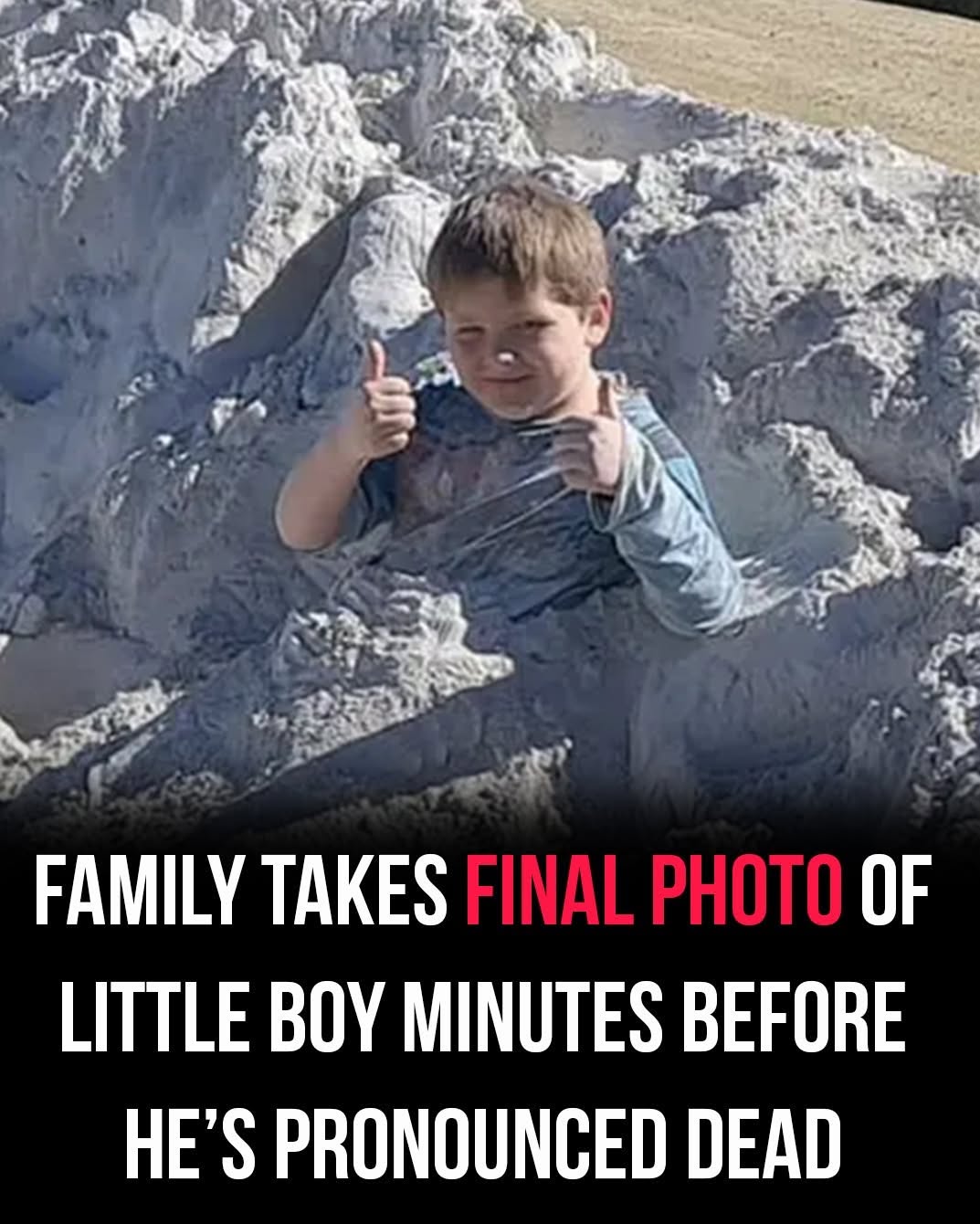
According to reports shared by local media and family members, Arthur encountered a large pile of industrial powder that appeared harmless at first glance. To a child’s eyes, it may have looked no different from sand, dirt, or another substance commonly found outdoors.
Children naturally explore through touch, movement, and play.
They build castles in sand, jump into piles of leaves, and run freely through open spaces. Curiosity is one of childhood’s greatest gifts. It allows children to learn about the world, discover new experiences, and develop confidence.
Yet curiosity can sometimes collide with dangers that are impossible for a child to recognize.
Arthur had no way of knowing that the material before him might pose a serious threat.
What happened next would forever change the lives of everyone who loved him.
Family members later described how quickly events unfolded. A joyful moment turned into confusion and panic as Arthur began experiencing severe breathing difficulties after coming into contact with the powder.
Emergency assistance was sought, and efforts were made to help him.
But despite attempts to save him, the young boy tragically lost his life.
The speed with which the situation escalated left relatives and community members in shock.
How could something that looked so harmless prove so dangerous?
Experts explain that certain industrial materials can present serious health risks when inhaled. Fine powders, especially those used in construction, manufacturing, or agriculture, may contain particles capable of irritating or damaging the respiratory system.
Some substances can become airborne with even slight movement.
When inhaled in significant quantities, these particles may interfere with breathing, trigger severe reactions, or lead to life-threatening complications.
To adults familiar with industrial environments, such hazards may be recognized immediately.
Children, however, do not possess the same awareness.
To them, a pile of powder may simply appear to be another opportunity for play.
Following Arthur’s death, his family made a difficult and deeply emotional decision.
Rather than keep their grief private, they chose to share his story publicly.
Their hope was simple: if telling their son’s story could prevent even one similar tragedy, then perhaps some meaning could emerge from unimaginable loss.
The photograph they shared quickly spread across social media.
In the image, Arthur smiles brightly at the camera, radiating the kind of happiness that only children seem able to express so effortlessly. His innocence shines through the photograph.
That image touched people far beyond his hometown.
Messages of sympathy poured in from strangers who had never met him. Parents hugged their children a little tighter. Communities began discussing hidden hazards that often go unnoticed in everyday environments.
For many people, the tragedy revealed dangers they had never considered.
It is easy to assume that obvious threats are the ones most likely to cause harm. We teach children to avoid traffic, fire, and deep water because those risks are visible and familiar.
But some dangers are silent.
Some cannot be seen, smelled, or recognized until it is too late.
This reality is what makes stories like Arthur’s so heartbreaking.
His death serves as a painful reminder that the world sometimes contains risks hidden beneath ordinary appearances.
Industrial materials are often transported, stored, or temporarily placed in locations where curious children may encounter them. Safety experts frequently emphasize the importance of proper labeling, secure storage, and restricted access to potentially hazardous substances.
Preventing accidents often requires awareness from everyone involved.
Manufacturers, local authorities, businesses, and communities all play a role in ensuring dangerous materials remain inaccessible to children.
Parents and caregivers also face the difficult task of protecting children from hazards that may not be immediately obvious.
No parent can anticipate every possible danger.
Childhood itself involves exploration, discovery, and moments of adventure. It is impossible to remove every risk from a child’s life.
Yet awareness can sometimes make all the difference.
Arthur’s family hopes that increased awareness may help spare others from experiencing similar pain.
Their loss cannot be undone.
No warning, no safety campaign, and no public awareness effort can return the child they loved so deeply.
What remains are memories.
A smile.
A photograph.
A life that ended far too soon.
Grief experts often describe loss as something that changes shape over time but never fully disappears. Families learn to carry it rather than escape it.
For Arthur’s loved ones, every birthday, holiday, and family gathering will carry his absence.
There will always be an empty place where laughter once lived.
And yet, even amid profound sorrow, families often search for ways to transform pain into purpose.
By sharing Arthur’s story, his relatives have done something remarkably brave.
They have turned private heartbreak into public awareness.
Their message extends beyond one community, one country, or one tragic event.
It speaks to parents everywhere.
Children see wonder where adults see routine.
They run toward what interests them.
They trust the world to be safe.
Because of that innocence, adults carry the responsibility of seeing dangers children cannot.
Arthur’s final photograph now means far more than anyone could have imagined on the day it was taken.
Once a snapshot of happiness, it has become a symbol of love, loss, and vigilance.
His smile remains frozen in time not as a memory of tragedy alone, but as a reminder of how precious and fragile childhood truly is.
His story continues to travel farther than he ever had the chance to go.
And through that story, countless people may pause, look more carefully at the world around them, and protect a child from a danger that otherwise might have gone unnoticed.
Sometimes the most powerful warnings come not from signs or labels, but from the memories left behind by those we wish were still here.