Few moments inside a courtroom carry the emotional weight of a sentencing hearing. Long after the evidence has been presented, the verdict delivered, and the legal arguments concluded, there comes a moment when families on both sides are forced to confront a reality that cannot be undone.
It is often during these final minutes that grief, regret, anger, and heartbreak become impossible to hide.
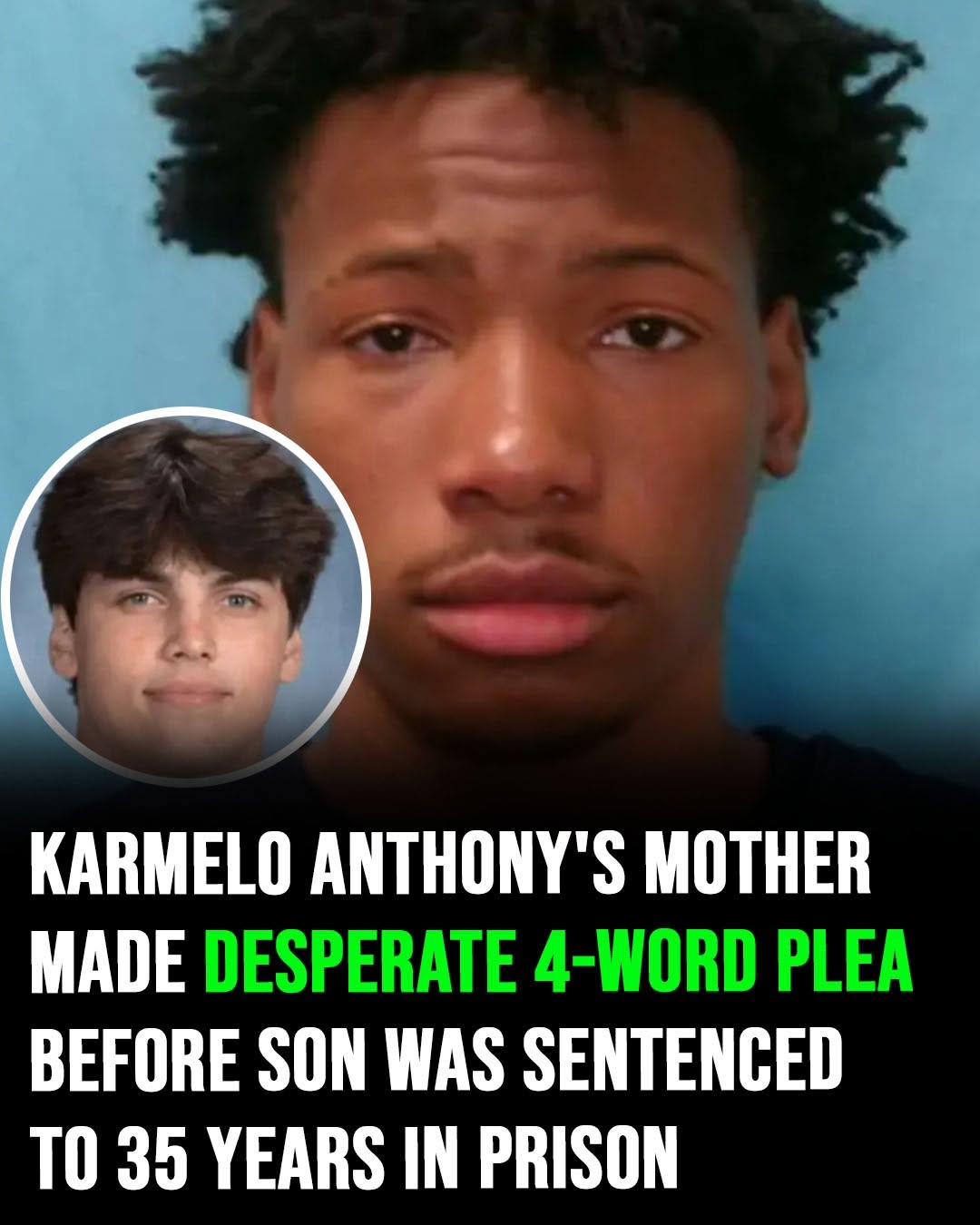
That was the atmosphere surrounding the sentencing of 19-year-old Karmelo Anthony, whose conviction in the death of 17-year-old Austin Metcalf brought an end to a case that had captured widespread public attention. What began as an ordinary school event ultimately became a tragedy that changed multiple families forever.
The incident occurred during what should have been a routine high school track meet. Students, parents, coaches, and spectators had gathered expecting a day focused on competition and school spirit. Instead, a confrontation escalated into violence, leaving one teenager dead and another facing a future defined by prison walls.
As the legal process unfolded, investigators, attorneys, and witnesses worked to reconstruct exactly what happened that day. The details became the subject of intense scrutiny, with both prosecutors and defense attorneys presenting competing narratives about the events that led to the fatal encounter.
For Austin Metcalf’s family, however, the legal arguments never changed the central reality. Their son was gone.
Friends described Austin as a young man known for his kindness and calm nature. Family members remembered him as someone who brought people together rather than divided them. Those closest to him spoke of a teenager with dreams, plans, and an entire future ahead of him.
His death created a void that no court ruling could ever fill.
During the sentencing hearing, members of Austin’s family addressed the court and shared the impact the loss had on their daily lives. Their statements painted a picture of grief that extends far beyond the day of the tragedy.
His mother spoke about the painful reality of moving forward without her son. She described the empty spaces he left behind, the memories that continue to surface unexpectedly, and the difficulty of accepting that the future she once imagined for him would never come to pass.
She spoke about visiting his grave, reflecting on conversations she can no longer have and milestones he will never reach. Her words reminded everyone in the courtroom that criminal cases do not end when a verdict is announced. For families who lose a loved one, the consequences continue indefinitely.
Relatives and friends echoed similar sentiments.
They remembered Austin as someone who cared deeply about others and who often acted as a calming presence in difficult situations. Stories shared during the hearing highlighted not only the life that was lost but also the countless moments that will never happen because of that loss.
While Austin’s family confronted one form of heartbreak, Karmelo Anthony’s family faced another.
Although their son remained alive, they were preparing to watch him receive a sentence that would dramatically alter the course of his life.
Family members described the emotional toll the case had taken on them from the moment of his arrest through the lengthy court proceedings. They spoke about the fear, uncertainty, and sadness that accompanied every stage of the legal process.
For Karmelo’s mother, the sentencing hearing represented perhaps the most difficult moment of all.
As she stood before the judge, she was no longer speaking as part of a legal strategy or defense argument. She was speaking as a mother confronting the possibility of losing years, even decades, with her child.
Her voice reportedly trembled as she addressed the court.
She spoke about her son, his life, and her hope that the judge would consider mercy when determining his sentence. Like many parents facing unimaginable circumstances, she appeared torn between accepting the gravity of what had occurred and desperately hoping for a future that still allowed room for redemption.
Then came the words that would resonate far beyond the courtroom.
“Please have mercy, Your Honor.”
The brief plea lasted only seconds, yet it captured the emotional reality facing her family. Those four words carried the weight of countless memories, fears, hopes, and unanswered questions.
They reflected a mother’s instinctive desire to protect her child, even when the outcome seemed increasingly unavoidable.
When the time came for the judge to issue the sentence, the courtroom reportedly fell silent.
After considering the evidence, testimony, and recommendations presented throughout the case, the judge sentenced Karmelo Anthony to 35 years in prison.
The announcement marked the official conclusion of one chapter of the case, but it also signaled the beginning of another.
For Austin Metcalf’s family, the sentence represented accountability for a life taken far too soon. While no punishment could restore what had been lost, the ruling provided a measure of legal closure after months of proceedings.
For Karmelo Anthony and his family, the sentence marked the start of a long and uncertain future inside the correctional system.
The emotional contrast inside the courtroom was striking.
On one side sat a family mourning a son they would never see again.
On the other sat a family facing the prospect of watching a son spend much of his young adulthood behind bars.
The tragedy highlighted how violence can devastate multiple lives simultaneously. One family lost a child permanently. Another watched their child lose decades of freedom.
Neither side left the courtroom unchanged.
Public reaction to the case reflected the complexity of these emotions. Some viewed the sentence as a necessary consequence for a serious crime. Others focused on the youth of those involved and the devastating reality that a single moment can permanently alter multiple futures.
The case also sparked broader discussions about conflict among young people, decision-making under pressure, and the lasting consequences of impulsive actions.
Community members expressed sadness that an event intended to celebrate student achievement became remembered instead for tragedy.
Many pointed to the importance of teaching conflict resolution, emotional control, and personal responsibility, especially during adolescence when emotions can run high and decisions can carry lifelong consequences.
As the courtroom emptied and families began the difficult process of moving forward, one reality remained impossible to ignore.
There were no true winners.
One mother would continue visiting a cemetery, carrying memories of the son she lost.
Another mother would face years of prison visits, watching her son serve a sentence that will define much of his adult life.
The legal system delivered its judgment, but it could not erase the pain experienced by either family.
In the end, the story serves as a powerful reminder of how quickly lives can change and how far-reaching the consequences of a single moment can become. The sentence may have concluded the case, but for the families involved, the emotional journey continues.
Long after the headlines fade and public attention moves elsewhere, two families will continue living with the aftermath of a tragedy that transformed their futures forever. One family will remember a son whose life ended too soon. The other will hold on to hope while counting the years until a son can once again walk free.
Between those two realities lies a heartbreaking truth that no courtroom can fully resolve: sometimes justice can answer the legal questions, but it cannot heal the loss.