The quiet coastal village of Langrune-sur-Mer has spent decades preserving the memory of one of the most significant moments in modern history.
Every year, residents gather to honor the young soldiers who landed on the beaches of Normandy during World War II, many of whom never returned home. For locals, D-Day is not simply a historical event. It is a sacred chapter woven into the identity of the region, a reminder of sacrifice, courage, and the price paid for freedom.
This year, however, what was intended to be a solemn commemoration became the center of an unexpected controversy that sparked outrage among many residents and reignited debates far beyond the borders of the small French town.
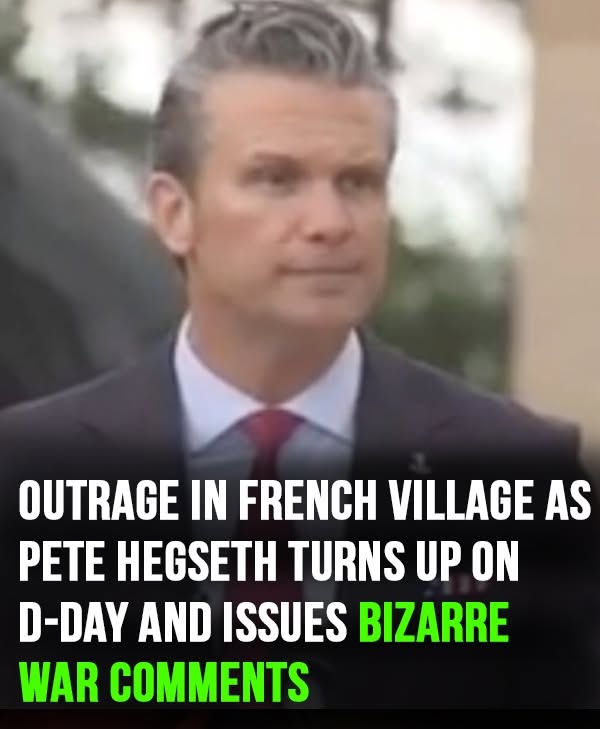
The controversy centered around remarks delivered by U.S. Defense Secretary Pete Hegseth during a visit connected to D-Day remembrance events. While many expected a speech focused on honoring the fallen and reflecting on the lessons of history, portions of his address took a different direction. As he spoke before an audience gathered to remember the events of June 1944, Hegseth drew comparisons between the wartime invasion of Europe and modern migration challenges facing Western nations.
For some listeners, the comparison felt jarring.
Residents who had assembled to pay tribute to soldiers who died fighting Nazi Germany said they were surprised to hear references to contemporary political debates inserted into an event they believed should remain focused on remembrance and historical reflection.
The reaction was immediate.
Many locals expressed frustration that the sacrifices of World War II soldiers appeared to be linked to current political issues. Some described feeling uncomfortable as the speech shifted away from historical commemoration and toward commentary on modern social and political concerns.
For generations, Normandy’s beaches have served as symbols of liberation. Thousands of American, British, Canadian, and Allied troops landed there during one of the most ambitious military operations in history. The region remains deeply connected to those events, with memorials, cemeteries, museums, and ceremonies reminding visitors of the immense human cost of war.
Residents often view themselves as guardians of that memory.
Many families in the area have personal connections to the war. Stories of occupation, resistance, liberation, and loss have been passed down through generations. As a result, commemorative ceremonies carry enormous emotional significance.
Several local officials reportedly voiced concerns after the speech, arguing that D-Day commemorations should remain focused on honoring those who served rather than becoming platforms for contemporary political messaging.
Critics suggested that invoking the sacrifices of wartime soldiers to support modern policy arguments risked overshadowing the original purpose of the event.
One resident described the atmosphere as deeply unsettling.
According to attendees, many people arrived expecting a message centered on unity, remembrance, and gratitude. Instead, they found themselves discussing political interpretations that quickly divided opinions.
The controversy spread rapidly across social media, where clips and summaries of the speech attracted international attention.
Supporters of Hegseth argued that historical events often provide lessons that remain relevant in modern times. They suggested that drawing parallels between past and present challenges is a legitimate way to encourage public reflection about the future.
Others disagreed strongly.
Critics argued that comparing military invasions during wartime to modern migration issues oversimplified complex realities and risked politicizing a solemn occasion meant to honor those who died fighting for democracy.
The disagreement highlighted a broader question that has become increasingly common in recent years: who controls the meaning of historical memory?
Across many countries, public figures frequently invoke historical events when discussing contemporary issues. Supporters often view such references as important reminders of lessons learned. Opponents sometimes see them as attempts to use the emotional weight of history to support current political positions.
The events in Normandy became a vivid example of that tension.
As debate intensified, local leaders emphasized that their primary focus remained honoring the soldiers who fought and died during World War II. Several residents expressed concern that the controversy itself risked distracting from the purpose of the commemoration.
For them, D-Day is about courage under unimaginable circumstances.
It is about young men crossing an ocean, facing overwhelming danger, and sacrificing their lives in the hope of securing freedom for future generations.
Those memories remain deeply personal in Normandy.
Visitors walking through the region encounter endless reminders of that history. White crosses stretch across military cemeteries. Memorial plaques mark villages that witnessed fierce battles. Museums preserve artifacts and stories that connect modern generations to the events of 1944.
Many residents believe those places deserve protection from political division.
As news of the controversy spread, commentators across Europe and the United States weighed in. Some defended Hegseth’s remarks as part of a broader conversation about Western values and security. Others argued that commemorations of wartime sacrifice should remain separate from contemporary political disputes.
The incident also drew attention because of the symbolism surrounding D-Day itself.
Unlike many historical events that remain subjects of intense disagreement, D-Day is often remembered as a rare example of international unity. Allied forces from multiple nations worked together toward a common goal, creating a legacy that continues to resonate more than eighty years later.
That legacy makes commemorative events especially sensitive.
When discussions shift away from remembrance and toward modern political controversies, emotions can quickly intensify.
Reports from the event indicated that security measures around Hegseth and his family were increased as tensions grew among some attendees. While there were no reports of violence, the heightened security reflected the strength of local reactions.
For many residents, the issue was not simply whether they agreed or disagreed with Hegseth’s political views.
Instead, they questioned whether a ceremony honoring fallen soldiers was the appropriate setting for such arguments.
As the debate continued, one theme emerged repeatedly from interviews with locals: respect.
Residents spoke about respecting history, respecting the sacrifices made during the war, and respecting the purpose of memorial events. They emphasized that remembrance ceremonies should unite people through shared gratitude rather than divide them through contemporary political disagreements.
The controversy ultimately became about more than one speech.
It revealed how powerful historical memory remains and how fiercely communities defend the meaning of events that shaped their identity. It also demonstrated how quickly modern political debates can intersect with moments intended for reflection and remembrance.
For the people of Langrune-sur-Mer, the beaches remain sacred ground. Long after headlines fade and political arguments move elsewhere, the memories of those who landed there in 1944 will continue to endure.
The storm surrounding the speech may eventually pass, but the questions it raised will likely remain. How should history be remembered? Who gets to interpret its lessons? And where is the line between honoring the past and using it to argue about the present?
In a small French village overlooking the same waters crossed by Allied troops more than eight decades ago, those questions suddenly became impossible to ignore.