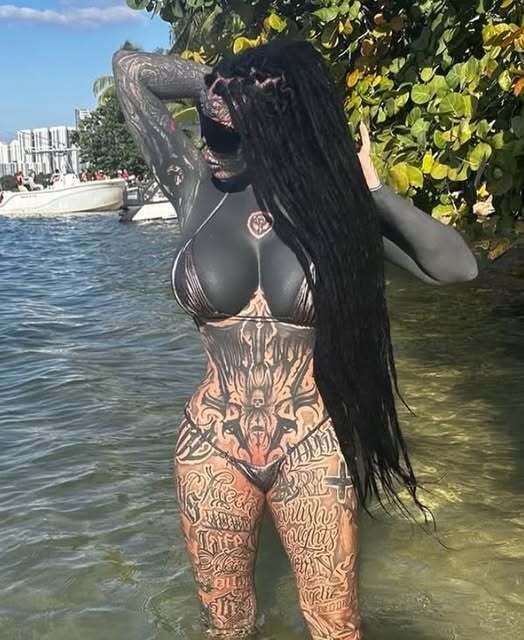
Body modification has always fascinated people.
From ancient traditions to modern fashion trends, human beings have continuously found new ways to express themselves through their appearance. Hairstyles, clothing, jewelry, piercings, and tattoos have all served as powerful tools for personal identity, allowing individuals to communicate who they are without saying a single word.
Among these forms of self-expression, tattoos remain one of the most visible and enduring.
For some people, a tattoo represents a meaningful memory. For others, it honors a loved one, marks a life-changing event, or serves as a permanent reminder of a personal journey. Every design carries a story, whether that story is deeply emotional, culturally significant, or simply a reflection of individual taste.
In recent decades, tattoos have become increasingly common around the world. What was once considered unconventional has gradually entered the mainstream, appearing everywhere from professional workplaces to celebrity red carpets. Yet despite their growing acceptance, tattoos continue to spark strong reactions, especially when they become part of more dramatic body transformations.
One woman has become a striking example of just how far self-expression can go.
Her appearance has attracted enormous attention online, generating fascination, admiration, criticism, and curiosity in equal measure. While countless people choose to get a few tattoos throughout their lives, she pursued a transformation that extended far beyond traditional body art.
The result is a look so dramatic that many people struggle to believe the before-and-after photographs show the same person.
Images of her transformation have spread across social media platforms, where users frequently compare her earlier appearance with her current one. The contrast is so significant that discussions often focus not only on the physical changes but also on the motivations behind them.
For some observers, her transformation represents an extraordinary example of personal freedom.
For others, it raises questions about society’s changing relationship with beauty, identity, and self-expression.
Regardless of opinion, few people remain indifferent after seeing the photos.
The fascination surrounding her appearance reflects a broader cultural conversation that has existed for generations.
Why do people modify their bodies?
What motivates someone to dramatically alter their appearance?
And why are certain forms of self-expression embraced while others remain controversial?
Historically, body modification has existed in nearly every civilization.
Ancient cultures around the world used tattoos to signify status, spiritual beliefs, tribal affiliation, achievements, or rites of passage. In many Indigenous communities, tattooing was not simply decoration but an important cultural practice passed down through generations.
Each mark carried meaning.
Each design told a story.
Each symbol connected individuals to their heritage and community.
Even today, tattoos continue to serve these functions for many people.
Some choose designs that reflect family history.
Others commemorate important milestones.
Some use tattoos to celebrate recovery, survival, or personal growth.
In these cases, body art becomes much more than decoration.
It becomes part of a person’s identity.
At the same time, modern tattoo culture has expanded beyond symbolism alone.
For many enthusiasts, tattoos are simply a form of artistic expression.
The body becomes a living canvas.
Designs evolve over time.
New artwork is added.
Old pieces may be transformed or expanded.
Each addition contributes to a larger personal masterpiece.
This artistic approach has helped fuel the rapid growth of tattoo culture across the globe.
Television shows, social media, and celebrity influence have introduced tattoo artistry to wider audiences than ever before. Talented artists have gained international recognition, and intricate designs are now celebrated as legitimate forms of creative achievement.
Yet public attitudes remain divided.
While tattoos are increasingly accepted in many parts of society, they still challenge traditional expectations in certain communities and professional environments.
Some cultures continue to associate tattoos with rebellion or nonconformity.
Certain religious groups discourage or prohibit body modifications altogether.
Older generations may view visible tattoos differently than younger generations who grew up in a world where body art is far more common.
As a result, heavily tattooed individuals often become subjects of public attention.
People make assumptions.
They form opinions.
They create narratives based solely on appearance.
Sometimes those assumptions prove accurate.
Often they do not.
This reality becomes even more pronounced when someone undergoes extensive modifications that dramatically alter facial features or overall appearance.
For many observers, dramatic transformations challenge deeply held ideas about beauty and identity.
Society frequently promotes narrow standards regarding what people should look like.
Those who intentionally move outside those expectations often attract intense scrutiny.
Yet individuals who choose these paths often describe their decisions in remarkably similar ways.
They speak about authenticity.
About freedom.
About becoming more comfortable in their own skin.
About creating an appearance that reflects how they see themselves rather than how others expect them to look.
Whether others understand those choices is often secondary.
The growing popularity of social media has amplified these conversations significantly.
Before-and-after photographs can reach millions of viewers within hours.
Images generate reactions instantly.
Comments range from admiration to criticism.
Supporters celebrate confidence and individuality.
Critics question the motivations behind extreme transformations.
The debates can be intense.
Yet they also reveal something interesting about human nature.
People are endlessly fascinated by transformation.
Whether it involves fitness journeys, career changes, makeovers, or body modifications, stories of dramatic change capture attention because they challenge expectations.
They force people to reconsider assumptions.
They invite questions about identity and self-discovery.
In many ways, appearance serves as a reflection of broader social values.
As cultures evolve, ideas about beauty, professionalism, and self-expression evolve alongside them.
Practices once considered shocking may later become commonplace.
Fashion trends shift.
Social norms change.
Public attitudes adapt.
What remains constant is the human desire to express individuality.
For some, that expression comes through clothing.
For others, through hairstyles, art, or creative pursuits.
And for many, it comes through tattoos and body modifications that transform the body into a personal statement.
The woman whose transformation continues to captivate online audiences represents one example of this larger phenomenon.
Her appearance may not appeal to everyone.
It may challenge conventional expectations.
It may spark debate.
But it also highlights an important reality.
Self-expression is deeply personal.
The choices people make about their appearance often reflect values, experiences, and identities that cannot be fully understood through photographs alone.
Ultimately, tattoos and body modifications remain powerful reminders that individuality takes many forms.
Some expressions are subtle.
Others are impossible to ignore.
But all of them tell stories about the people behind them.
And sometimes, those stories become far more fascinating than the ink itself.
As conversations around beauty, identity, and personal freedom continue to evolve, one thing remains clear: the desire to shape and express who we are is as old as humanity itself. Whether through a single meaningful tattoo or a dramatic full-body transformation, people continue seeking ways to make their outward appearance reflect their inner sense of self.
That pursuit of identity, more than any design or modification, may be the most enduring form of self-expression of all.