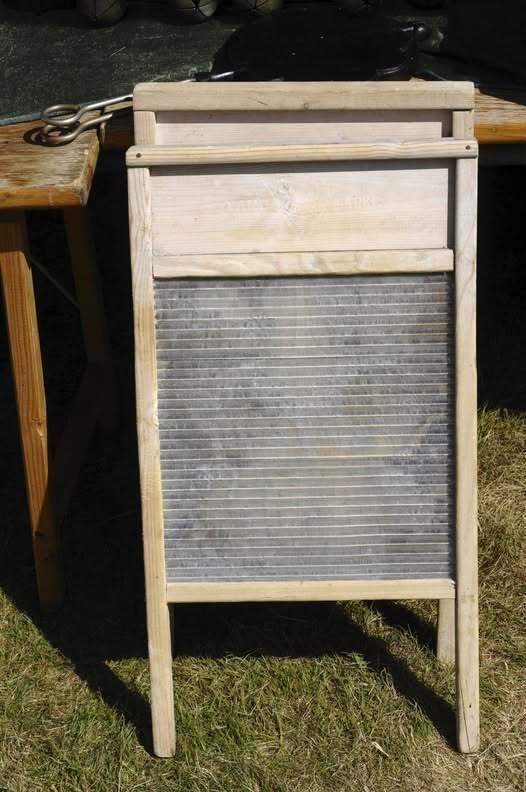
At first glance, it looked like nothing more than a strange metal contraption buried beneath dusty picture frames, cracked dishes, and old tools at a crowded yard sale.
Most people walked past it without a second thought. A few paused, tilted their heads in confusion, and moved on. Its rusted rollers, heavy crank handle, and chipped paint made it seem too outdated to have any purpose in today’s world of washing machines and dryers. But for older generations, the sight of it unlocked something immediate and powerful: memory.
What sat quietly on that folding table was not junk. It was a laundry wringer, a tool that once stood at the center of domestic life in homes across America and much of the world. Long before automatic washers transformed household chores into something effortless, this machine represented survival, routine, and relentless physical labor. It belonged to an era when washing clothes was not a quick task squeezed between errands, but an exhausting, all-day event that demanded planning, strength, and patience.
For many families in the late nineteenth and early twentieth centuries, laundry day was one of the hardest days of the week. Clothes had to be soaked, scrubbed by hand, boiled in steaming tubs, rinsed repeatedly, and finally wrung dry using tools exactly like this one. The wringer’s rollers squeezed water from heavy fabrics before they were hung outside beneath the sun and wind. Without it, drying thick blankets, denim, or work clothes could take far longer and require far more effort.
The more I studied the old wringer sitting at the sale, the more it stopped feeling like a forgotten object and started feeling like a witness to another world. Its worn wooden handle had likely been gripped thousands of times. Its rollers had pressed water from children’s clothes, work uniforms, bed sheets, and cloth diapers through decades of ordinary family life. Every scratch and stain hinted at repetition, endurance, and necessity.
What makes the laundry wringer fascinating is not just how it worked, but what it represented socially. Laundry in earlier generations was rarely an isolated task. It often became a shared ritual among mothers, grandmothers, sisters, and neighbors. Women gathered around steaming tubs exchanging news, stories, worries, and laughter while they worked through piles of fabric together. The labor was physically demanding, but the process also built community in a way modern convenience rarely does.
Today, washing clothes usually means pressing a few buttons and returning an hour later. We barely think about the technology quietly handling the task for us. But the wringer reminds us how recently everyday life looked completely different. In many households, clean clothes required hours of exhausting manual effort. Water had to be heated manually over fires or stoves. Wet laundry had to be lifted repeatedly with aching arms. Winters made the process even harsher, with freezing fingers and damp air turning simple chores into grueling work.
The wringer itself was considered a major innovation when it became widely popular. Before its arrival, people twisted water from clothing by hand, a tiring and inefficient process. The wringer changed everything by using pressure and rotating rollers to force water out quickly. Though simple by modern standards, it dramatically reduced labor and made household washing more manageable.
Some versions were attached directly to wooden washing tubs, while others stood independently on metal frames. Many were built from cast iron, making them incredibly durable. That durability explains why so many still survive today in garages, barns, antique shops, and estate sales decades after they disappeared from daily use.
Yet these tools were not without danger. Many older people still remember stories of fingers caught painfully between the rollers, especially when children stood too close while helping with chores. Despite the risks, families relied heavily on them because alternatives simply did not exist. Necessity outweighed inconvenience.
As electricity spread through homes during the twentieth century, automatic washing machines gradually replaced wringers. Laundry that once consumed an entire day could suddenly be completed with minimal physical effort. What had been exhausting labor became background noise in everyday life. The wringer, once essential, slowly disappeared into storage rooms and forgotten corners of basements.
But objects like this never truly vanish. They survive because they carry emotional weight far beyond their practical function. When people encounter a laundry wringer today, they often do not just remember the machine itself. They remember parents and grandparents. They remember kitchens filled with steam, clotheslines stretching across backyards, and homes where nothing was wasted because everything required too much effort to replace.
That emotional connection explains why antique wringers have become unexpectedly popular among collectors, history enthusiasts, and younger generations fascinated by vintage craftsmanship. In an age dominated by disposable products and digital convenience, these heavy handmade machines feel almost shocking in their permanence. They were designed to last for decades, repaired instead of discarded, maintained instead of replaced.
For some people, restoring an old wringer has become a way of preserving family history. Others display them as decorative reminders of resilience and hard work. A few even continue using them for traditional homesteading practices, proving that old technology can still serve practical purposes in the modern world.
There is also something strangely humbling about realizing how much invisible labor previous generations carried every single day. Modern conveniences often make us forget the physical effort once required simply to maintain a household. The laundry wringer stands as a quiet monument to those unseen hours of labor, especially the work historically performed by women whose contributions rarely received recognition.
What struck me most after bringing the wringer home was how quickly it transformed from an odd antique into something deeply human. Sitting on a shelf, it no longer looked cold or mechanical. It looked personal. Like a storyteller waiting patiently for someone to ask the right questions.
Who used it? What conversations happened around it? How many winters did it survive? How many children grew up watching their parents feed heavy wet sheets through those rollers?
The machine cannot answer, but somehow it still speaks.
In a culture obsessed with speed, convenience, and constant upgrades, the laundry wringer offers a completely different lesson. It reminds us that ordinary people once built entire lives around persistence, patience, and physical effort. It honors routines that modern society often dismisses as insignificant, even though those routines kept families clothed, cared for, and together.
That is why this strange old tool continues to fascinate people long after its practical usefulness faded. It is not just metal, wood, and gears. It is evidence of endurance. A surviving fragment of everyday history.
And perhaps that is why so many people stop when they see one at a yard sale. Not because they want to buy an old laundry machine, but because for a brief moment, they are looking directly at the lives of the people who came before them.