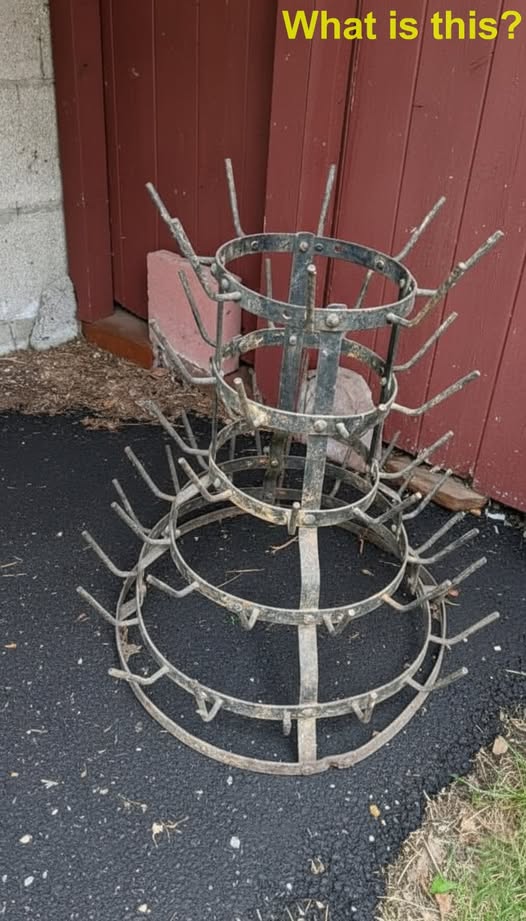
At first glance, it didn’t look like anything special. Tucked away in the corner of an old kitchen in a 1907 home, it stood there quietly metal arms jutting out in all directions, slightly worn with age, its purpose completely unclear.
It wasn’t decorative in the modern sense, nor did it resemble any tool most of us would instantly recognize. It felt like a relic, something practical once, but now stripped of its meaning by time. We turned it over in our hands, guessing wildly. A coat rack, maybe. Some kind of antique holder. A forgotten piece of machinery. None of it quite fit.
But as often happens with old homes, the truth wasn’t obvious it was layered, hidden behind habits and ways of living that no longer define our daily routines. And when we finally discovered what it was, everything about it suddenly made sense. This wasn’t just a random object. It was a bottle drying rack, something that once held an essential place in everyday life.
In the early 20th century, long before disposable packaging and single-use convenience took over, households operated with a completely different mindset. Nothing was thrown away if it could be reused. Glass bottles, whether used for milk, beer, homemade syrups, or preserves, were part of a cycle. They were emptied, washed, dried, and used again. And that’s where this simple yet ingenious rack came in.
Each of those metal prongs had a purpose. Bottles would be placed upside down on the hooks, allowing water to drain out naturally while air circulated freely inside. It was a system designed not just for convenience, but for hygiene. Proper drying meant preventing mold, bacteria, and spoilage. It was a quiet but vital step in ensuring that whatever filled those bottles next would remain safe and fresh.
Standing there, holding that rack, it became impossible not to imagine the life that once moved around it. The kitchen wasn’t just a place for cooking it was a center of rhythm and routine. Someone would have stood at the sink, sleeves rolled up, carefully washing each bottle by hand. Another might have been drying dishes nearby, or preparing the next meal. Children may have been tasked with helping, learning early how to care for what the family owned. The rack would slowly fill, one bottle at a time, each placed with intention.
It wasn’t glamorous work, but it mattered. Every bottle represented effort, resourcefulness, and a kind of quiet discipline that shaped daily life. There was no rushing through it, no shortcuts. The process demanded patience. And in return, it offered something we often overlook today a sense of connection to the things we use.
What’s striking is how natural this way of living once felt. Today, the idea of carefully washing and reusing every container might seem like a deliberate lifestyle choice, something associated with sustainability trends or environmental awareness. But back then, it wasn’t a movement. It was simply how life worked. Resources were limited, and waste was not an option people could afford to ignore.
The bottle drying rack, in that sense, becomes more than just a tool. It’s a symbol of a different relationship with the world one where objects weren’t disposable, where effort was expected, and where care was built into even the smallest routines. It reminds us that efficiency didn’t always mean speed. Sometimes, it meant doing things thoroughly, thoughtfully, and with respect for what you had.
As we continued to look at it, the wear on the metal told its own story. Slight bends in the hooks, areas where the finish had faded from years of use these weren’t flaws. They were evidence. Evidence of hands that reached for it daily, of bottles placed and removed thousands of times, of a life lived not in excess, but in repetition and care.
Today, objects like this often find new roles. People repurpose them as mug holders, jewelry displays, or rustic decorative pieces. They become conversation starters, admired for their vintage charm rather than their original function. And there’s nothing wrong with that. In fact, it’s a way of keeping them alive, of giving them a second chapter in a completely different world.
But there’s something deeper happening when we bring these items into modern spaces. We’re not just decorating we’re reconnecting. Even if we don’t fully realize it, we’re reaching back toward a slower, more deliberate way of living. A time when tools were built to last, when chores weren’t something to rush through but something that shaped the rhythm of the day.
That old rack, once just a puzzling object, now feels like a quiet bridge between two worlds. One where convenience rules, and another where intention did. One where we throw things away without thinking, and another where every item had value, purpose, and a place in the cycle of daily life.
It also changes the way we look at the things around us. What we might dismiss today as clutter or outdated equipment could, in another context, be essential. It’s a reminder that usefulness isn’t always obvious, and that history often hides in the most ordinary shapes.
In the end, discovering what that object was didn’t just solve a mystery it shifted perspective. It turned a forgotten piece of metal into a story about resilience, resourcefulness, and the quiet dignity of everyday work. It made us pause and consider how much has changed, and what might have been lost along the way.
Because sometimes, the most unassuming objects carry the richest histories. And sometimes, understanding them is less about what they are, and more about the lives they once supported.