In the carefully choreographed world of state visits and diplomatic ceremonies, every gesture is measured, every word chosen with precision, and every expression filtered through layers of protocol.
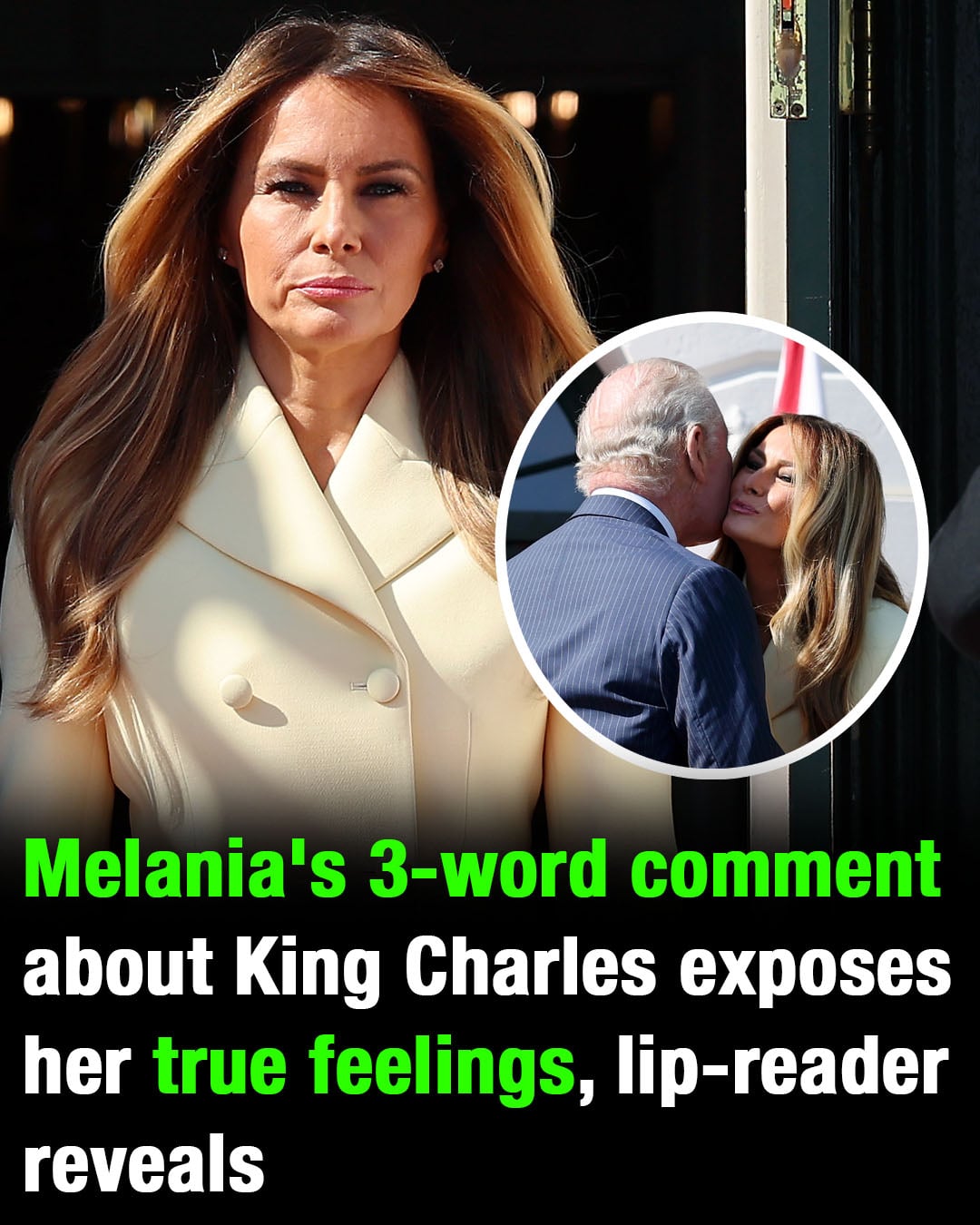
Yet sometimes, in the smallest, most unguarded moments, something real slips through. That is exactly what observers believe happened during a recent encounter between Melania Trump and King Charles III a brief exchange that, despite its simplicity, has drawn intense attention for what it seemed to reveal beneath the surface.
At first glance, the meeting appeared to follow the familiar script of high-level diplomacy. The setting was formal, the atmosphere polished, and the expectations clear. These are moments designed to project stability, continuity, and mutual respect between nations. Every movement is rehearsed in advance, from the positioning of hands to the timing of greetings. And yet, within that structure, there are always fleeting instances where the human element breaks through.
As Melania approached Charles, the interaction immediately felt less rigid than many had anticipated. Rather than maintaining the distance often associated with such encounters, the two appeared to lean into a more natural rhythm. Charles, known for his understated warmth in private moments, greeted her with a tone that suggested familiarity rather than mere obligation. His words carried a softness that stood out against the otherwise formal backdrop, hinting at a connection that extended beyond the present moment.
Melania’s response, according to those analyzing the exchange, was equally telling. Typically reserved in public settings, she is often described as composed, measured, and careful not to reveal too much. But in this instance, there was a noticeable shift. Instead of retreating into the safety of protocol, she responded in a way that felt spontaneous, even personal. The phrase attributed to her simple, direct, and warm stood out precisely because of its lack of calculation.
Lip-reading experts, who have since examined the footage, suggest that her words conveyed genuine pleasure at seeing Charles again. While the exact phrasing has been widely discussed, what matters more is the tone it implied. It was not the kind of polite acknowledgment that fills diplomatic scripts. It carried a sense of sincerity, as though the moment was less about roles and more about recognition.
Body language reinforced that impression. Both figures appeared relaxed, their posture open rather than guarded. There was an ease in their interaction that contrasted sharply with the surrounding formality. Small details the angle of their shoulders, the naturalness of their smiles, the absence of visible tension combined to create an impression of comfort that is rarely seen in such highly controlled environments.
Observers have pointed to the history between them as a possible explanation for this dynamic. Their previous meeting at Windsor had already established a certain level of familiarity, one marked by light conversation and a shared moment of humor. Charles had once teased Melania about her choice of headwear during a windy event, a small but memorable interaction that hinted at a rapport beyond standard diplomatic exchange. That earlier connection appears to have carried forward, subtly shaping the tone of their latest encounter.
What makes this moment particularly compelling is how it diverges from the expectations often placed on public figures. In a setting where every action is scrutinized and every word dissected, authenticity can be difficult to maintain. Yet here, in a brief exchange lasting only seconds, there was a sense of something unfiltered. It was not dramatic or overt, but it was enough to be noticed.
For Melania, this glimpse of openness offers a contrast to the image she has often projected. Her public persona has long been defined by restraint, a deliberate distance that keeps her emotions largely out of view. Moments like this, where that distance appears to soften, provide a rare opportunity to see a different side one that is less about maintaining an image and more about engaging in a genuine human interaction.
For Charles, the exchange aligns with a reputation for balancing formality with personal warmth. As monarch, he operates within a framework that demands precision and decorum. Yet those who have interacted with him often note his ability to inject moments of sincerity into otherwise rigid settings. In this case, that quality seems to have helped create an environment where Melania felt comfortable responding in kind.
The reaction to the encounter highlights how attuned audiences have become to these subtle signals. In an age where every frame of video can be replayed and analyzed, even the smallest gestures can take on outsized significance. What might once have passed unnoticed is now examined in detail, with viewers searching for meaning in tone, expression, and timing.
At the same time, the interpretation of such moments is inherently subjective. While many see the exchange as evidence of genuine warmth, others may view it as a well-executed performance within the bounds of diplomacy. The truth likely lies somewhere in between, shaped by both the realities of the setting and the personalities involved.
What cannot be denied is the impact of the moment itself. For a brief instant, the layers of ceremony seemed to fall away, revealing something more personal beneath. It was a reminder that even in the most structured environments, human connection can still find a way to surface.
In the broader context of international relations, such moments may seem insignificant. They do not alter policy or shift alliances. But they do contribute to the tone of interactions, creating impressions that linger beyond the immediate event. A genuine smile, a warm greeting, or a few sincere words can subtly influence how relationships are perceived, both by those directly involved and by the public watching from afar.
For those who witnessed or later analyzed the exchange, the takeaway is less about the specific words spoken and more about what they represented. It was a glimpse into a connection that felt real, however briefly, in a setting that often prioritizes form over feeling. And in that glimpse, there was something unexpectedly compelling a reminder that even at the highest levels of public life, the simplest expressions of recognition and warmth can carry the most meaning.
As the moment continues to circulate and be discussed, it stands as a small but telling example of how much can be communicated without grand statements or elaborate gestures. Sometimes, it is the quiet words, the relaxed posture, and the shared understanding between two people that leave the strongest impression. In a world defined by spectacle, those understated moments can resonate the most, precisely because they feel so rare.