There was a time when the sound of teenage longing, heartbreak, and electric joy could be captured in a single voice layered over thunderous drums and shimmering harmonies.
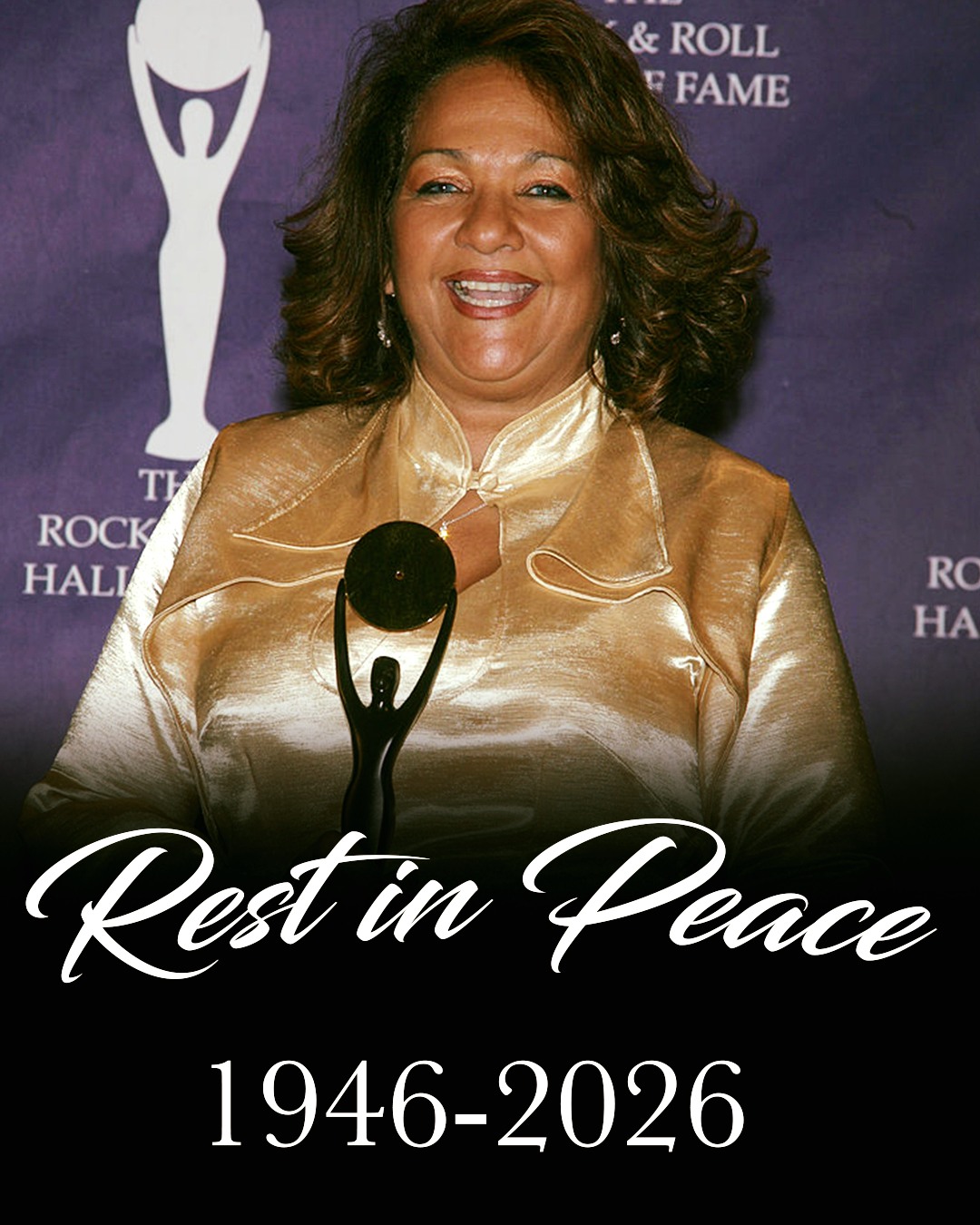
At the center of that moment stood The Ronettes, a trio whose presence was as unforgettable as their music. With towering hairstyles, dramatic eyeliner, and a confidence that filled every stage they stepped onto, they didn’t just perform songs they defined a feeling. Now, with the passing of Nedra Talley Ross at the age of 80, the final living link to that iconic group has been lost, closing a chapter that helped shape the very foundation of modern pop music.
In their prime, The Ronettes were impossible to ignore. Their breakthrough hits carried the unmistakable production style of Phil Spector, whose “Wall of Sound” transformed simple love songs into cinematic experiences. Among those songs, Be My Baby stands as perhaps the most enduring a track that continues to echo across generations, instantly recognizable from its opening beat. Though Ronnie Spector commanded much of the spotlight as the group’s lead voice, Nedra Talley Ross played an essential role in shaping the harmonies that gave their music its emotional depth and texture.
But what makes her story remarkable is not just what she achieved during those years of fame, but what she chose afterward. At a time when the music industry often demanded constant reinvention and relentless visibility, she stepped away. For many artists, success becomes a trap, binding them to an endless cycle of touring, recording, and public expectation. Nedra chose a different path. She walked away from the glare of fame, leaving behind the pressures of a competitive and often unforgiving industry in favor of something quieter, more grounded, and deeply personal.
Her decision was not framed as a retreat, but as a redefinition of purpose. Moving beyond the stage, she built a life centered on faith, family, and stability. She became involved in Christian music, using her voice in a different context one less about chart positions and more about spiritual expression. She also pursued a career in real estate, demonstrating a practical independence that contrasted sharply with the image many might have expected from a former pop star. Alongside her husband, Scott Ross, she raised four children, creating a life that prioritized connection over celebrity.
Those who knew her in these later years often described a woman who carried her past with quiet dignity but did not allow it to define her present. The energy that once fueled performances in packed venues was redirected into everyday moments family gatherings, community involvement, and a faith she held onto with consistency and conviction. It is this second chapter of her life that many who knew her personally point to as her greatest achievement, not because it was more visible, but because it was more enduring.
When news of her passing emerged, it came not through the machinery of publicity that once surrounded her career, but through the voice of her family. Her daughter’s words that she had “gone home to be with the Lord” captured the tone of a life that had long since shifted away from the spotlight. It was a simple message, but one that resonated deeply with those who remembered her not just as a performer, but as a person who had chosen a different kind of legacy.
The response was immediate and widespread. Tributes flowed in from fans, musicians, and historians of the era, each reflecting on what The Ronettes had meant to them. For many, the group represented more than music; they were part of a cultural shift, a moment when young women claimed space in an industry that often underestimated them. Their style, their sound, and their attitude influenced countless artists who followed, leaving a mark that continues to be felt long after their final recordings.
With Nedra Talley Ross’s passing, the original lineup of The Ronettes is now entirely gone. It is a reality that brings a sense of finality to an era that already feels distant, preserved more in recordings and memories than in living presence. Yet there is something about music that resists that finality. Every time “Be My Baby” begins to play, with its unmistakable rhythm and layered harmonies, it creates a bridge across time. For a few minutes, the past feels immediate again, and the voices that defined it feel as alive as ever.
That enduring quality speaks to the power of what The Ronettes created together. Their songs were not just products of their time; they became part of a shared cultural language, referenced, reinterpreted, and rediscovered by new audiences. Nedra’s contribution to that legacy may not always have been the most visible, but it was essential. Without those harmonies, without that balance between voices, the magic would not have been the same.
In reflecting on her life, it becomes clear that her story cannot be reduced to a single narrative. She was both a key figure in one of the most influential groups of the 1960s and a woman who chose to step away from that identity in search of something more personal. She experienced the intensity of fame and the quiet of ordinary life, navigating both with a sense of purpose that remained consistent even as her circumstances changed.
Her passing marks more than the loss of an individual; it signals the fading of a direct connection to a transformative moment in music history. Yet it also reinforces the idea that legacy is not confined to the years of greatest visibility. It extends into the choices made afterward, the lives built beyond the spotlight, and the impact left on those who knew her not as an icon, but as a mother, a wife, and a woman of faith.
As the world reflects on her life and contributions, the image that remains is not just of a young performer standing under bright lights, but of someone who understood when to step away from them. In doing so, she offered a different kind of example one that suggests fulfillment is not always found in staying at the center of attention, but sometimes in knowing when to leave it behind.
And still, the music plays. It drifts through speakers, across decades, carrying with it the voices of three young women who once changed everything. Among them is Nedra Talley Ross, her harmonies woven into every note, her presence preserved in a sound that refuses to fade.