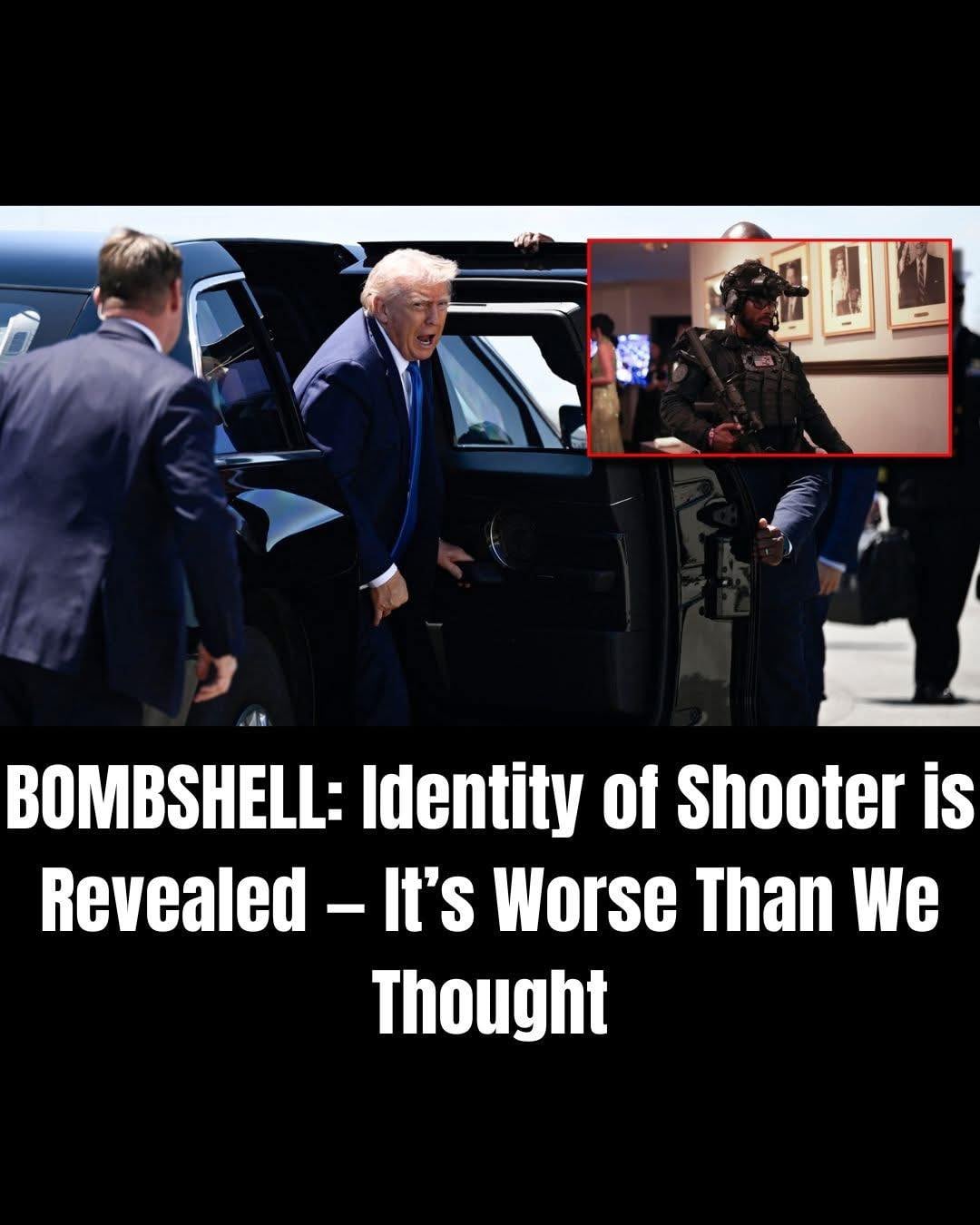
In the aftermath of a night that shattered the carefully managed calm of one of Washington’s most high-profile events, attention has turned to a single name: Cole Tomas Allen.
Identified by authorities as the man accused of opening fire near the White House Correspondents’ Dinner, his background has only deepened the sense of disbelief surrounding the incident. What investigators have found so far does not fit the image many expect when they imagine someone capable of such an act. Instead, it tells the story of a life that, at least on the surface, seemed disciplined, ambitious, and quietly successful.
Before his name became linked to chaos and fear, Allen’s path appeared to follow a trajectory that educators and families often hold up as an example of achievement. A graduate of California Institute of Technology, he had been immersed in one of the most demanding academic environments in the world. Known for its rigorous focus on science and engineering, Caltech is a place where intellectual curiosity is not just encouraged but expected, and Allen reportedly thrived within that culture.
His work extended beyond the classroom. He had connections to Jet Propulsion Laboratory, an institution synonymous with precision, exploration, and cutting-edge research. For someone to move through that environment requires not only intelligence, but discipline and persistence qualities that, on paper, suggest stability rather than volatility.
Those who encountered his creative side saw a different dimension of the same mind. Allen developed video games that were anything but simplistic. Titles like “First Law” and “Bohrdom” reflected a fascination with physics, motion, and controlled systems. Players navigating these digital worlds were not simply reacting; they were calculating, anticipating, and adapting within carefully constructed environments where every variable mattered. His work suggested a person deeply engaged with structure, logic, and the predictable consequences of force and movement.
In recent years, he had also stepped into education, earning recognition as a teacher and continuing to pursue advanced studies in computer science. By all outward measures, he embodied a kind of quiet, methodical success a life built not on spectacle, but on steady progress and intellectual engagement.
And yet, that image now sits in stark contrast to the allegations being examined by federal authorities.
According to early reports, the incident unfolded with alarming speed. Near one of the most heavily secured gatherings in the country, Allen is accused of approaching a checkpoint armed with multiple weapons. The location alone a high-profile event attended by the President, senior officials, and prominent journalists makes the situation particularly troubling. Security protocols in such environments are designed to anticipate and neutralize threats before they escalate, and in this case, they were activated within seconds.
Witnesses described a sudden shift from routine to crisis. The sound of gunfire cut through the controlled atmosphere, triggering an immediate response from Secret Service agents and law enforcement personnel. One agent was struck, his protective gear absorbing the impact and likely preventing a fatal outcome. The return response was swift, decisive, and focused entirely on containment.
Within moments, the suspect was subdued. The immediate danger had passed, but the questions it left behind began to multiply almost instantly.
How does someone with a background like Allen’s arrive at such a moment? What combination of circumstances, pressures, or decisions could transform a life defined by structure into one marked by alleged violence? These are the questions now guiding the investigation, though answers remain uncertain.
Authorities have begun examining every aspect of his recent history. His academic records, professional experiences, and personal projects are being reviewed in detail. Digital footprints messages, searches, online interactions are being analyzed for clues that might explain intent or reveal warning signs that went unnoticed. Even seemingly minor details, such as a small political donation, are being placed into a broader context as investigators attempt to build a complete picture.
In situations like this, the absence of a clear motive can be as unsettling as the act itself. When an individual’s past does not easily align with their alleged actions, it disrupts familiar narratives. It challenges assumptions about what danger looks like and where it originates. Instead of fitting into a recognizable pattern, the story becomes more complex, more ambiguous, and more difficult to process.
For those who knew Allen, whether personally or professionally, the contrast is particularly stark. The image of a focused student, a creative developer, and a dedicated teacher does not easily reconcile with the allegations now attached to his name. That dissonance is often where the deepest unease takes root not just in what happened, but in the realization that it does not make immediate sense.
Beyond the individual case, the incident has reignited broader conversations about security, perception, and unpredictability. High-profile events are designed with layers of protection, yet no system is entirely immune to risk. Each breach, attempted or otherwise, becomes a point of analysis, prompting reviews of protocol and renewed scrutiny of how threats are identified and addressed.
At the same time, there is a growing awareness that not all risks can be anticipated through traditional means. Background, education, and outward success do not always provide reliable indicators of behavior. The complexity of human experience mental health, personal struggles, unseen pressures can exist beneath even the most structured lives, often without clear external signals.
As the investigation continues, the focus will remain on evidence, process, and accountability. Federal charges are expected to move forward, and legal proceedings will attempt to establish a clearer understanding of what occurred and why. For now, however, the narrative remains incomplete, shaped by fragments of information and the weight of unanswered questions.
What is certain is the impact. A night intended for reflection, humor, and the symbolic bridging of political divides was transformed into something else entirely a reminder of how quickly stability can be disrupted, and how fragile even the most controlled environments can be.
For Washington, the incident lingers as more than a security concern. It is a moment that challenges assumptions about safety, about predictability, and about the stories we tell ourselves when we look at someone’s life from the outside. For Torrance, where Allen’s life unfolded before this moment, it raises a different set of questions about how well we can ever truly know the people we think we understand.
In the space between those two realities lies the central tension of the story. A life that appeared carefully constructed, guided by logic and discipline, now sits at the center of an event defined by disruption and uncertainty. And until the full truth emerges, that contrast will remain unresolved, unsettling, and impossible to ignore.