What began as a night built on tradition, political theater, and carefully measured humor quickly transformed into one of the most alarming security incidents in recent memory.
At the Washington Hilton, where the White House Correspondents’ Dinner had gathered some of the most powerful figures in American politics and media, the atmosphere shifted in an instant from controlled spectacle to raw uncertainty. Beneath the formal attire and rehearsed remarks, a far more dangerous reality was unfolding just beyond the ballroom doors.
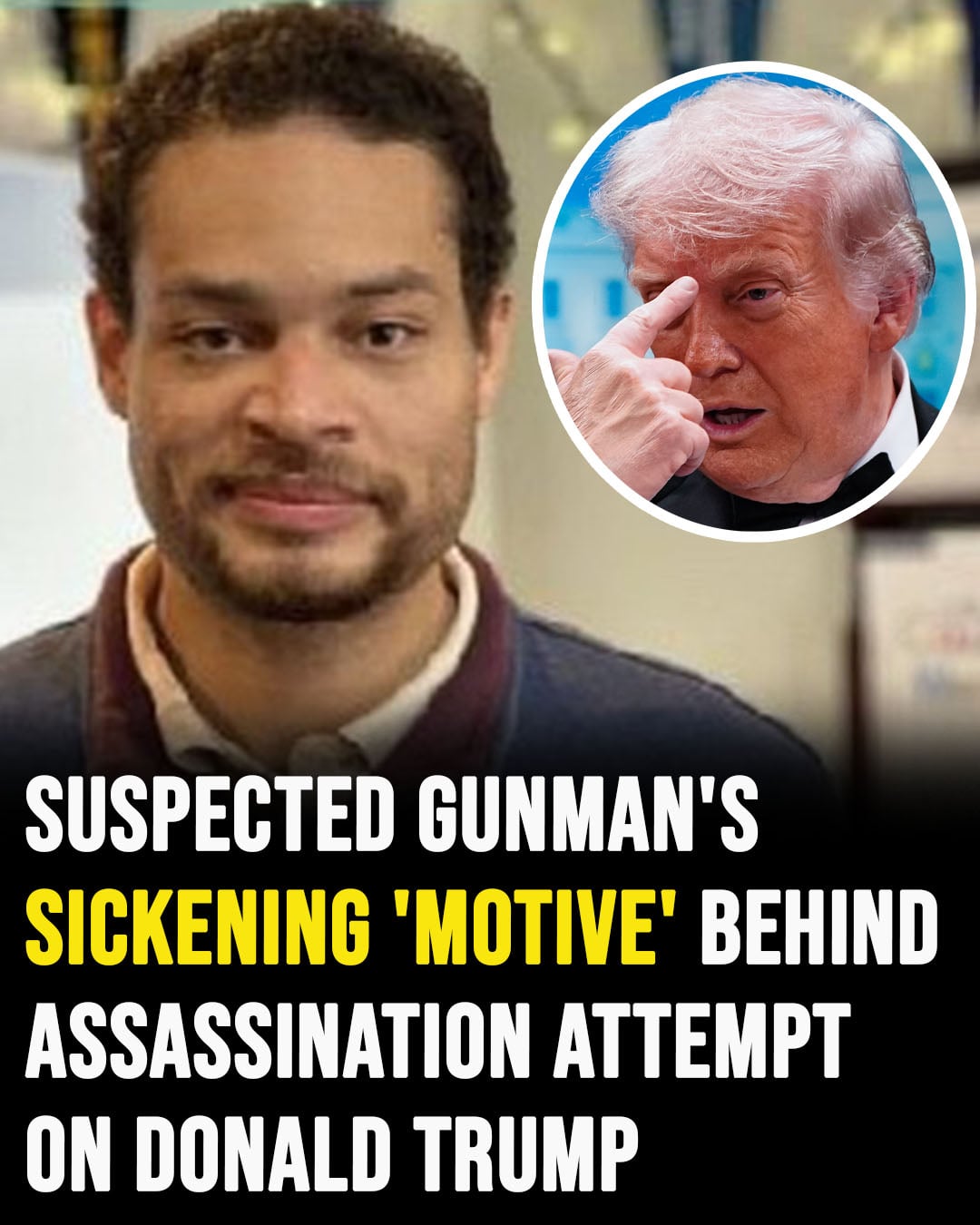
According to authorities, the man at the center of the chaos, 31-year-old Cole Tomas Allen, did not arrive at the event by accident or impulse. Investigators now believe his actions were deliberate, planned over time, and carried out with a clear sense of direction. After traveling across the country, Allen reportedly checked into the hotel days before the dinner, positioning himself in close proximity to one of the most heavily guarded gatherings in the United States. What appeared outwardly as routine movement within a busy hotel environment may have concealed far more calculated intentions.
Inside the ballroom, the guest list reflected the highest levels of influence. Donald Trump was seated alongside Melania Trump, with JD Vance and other senior officials, journalists, and public figures filling the room. The event, long known for blending satire with politics, was proceeding as expected until it wasn’t. The first signs of danger were subtle, then unmistakable, as security personnel reacted to a threat moving toward the protected area.
Law enforcement officials say that when Secret Service agents confronted Allen, the situation escalated rapidly. In the moments that followed, a confrontation turned violent. One officer was struck by gunfire, with a ballistic vest believed to have prevented a fatal outcome. The speed and coordination of the response that followed proved critical. Within seconds, agents moved to neutralize the threat, subduing Allen and bringing the situation under control before it could escalate further.
For those inside the ballroom, the experience unfolded in fragments sharp sounds, sudden movement, and the urgent commands of trained professionals. Guests who moments earlier had been engaged in conversation or listening to remarks found themselves seeking cover, trying to understand whether the danger was contained or still approaching. The president and other protected individuals were swiftly evacuated under established protocols, a process rehearsed countless times but rarely executed under real conditions.
As the immediate threat was contained and the room gradually stabilized, attention shifted from survival to understanding. Who was responsible, and why? In the hours and days that followed, investigators began piecing together a portrait of the suspect that raised as many questions as it answered. On paper, Allen’s background did not fit a simple or easily recognizable pattern. Yet the evidence being uncovered pointed toward a level of intent that could not be dismissed as spontaneous.
Authorities reported finding electronic materials and written documents that they described as a manifesto, outlining grievances and potential targets. According to officials, these materials suggested that Allen intended to carry out an attack aimed at government figures, with indications that high-ranking individuals including the president may have been among his intended targets. The language used in these documents, as described by investigators, reflected a mindset focused on disruption and harm rather than symbolic protest.
Further details added additional layers to the investigation. Officials indicated that Allen had connections to activist circles and protest activity, including involvement with a group referred to as The Wide Awakes. While the nature and extent of that affiliation remain under examination, it has become part of the broader effort to understand what influences or motivations may have shaped his actions. Law enforcement agencies are continuing to analyze digital records, communications, and travel patterns in an attempt to reconstruct the path that led to that night.
Jeanine Pirro, speaking on behalf of federal prosecutors, described the suspect as someone who appeared intent on causing significant harm. Her remarks underscored the seriousness with which authorities are treating the case, emphasizing that additional charges may be forthcoming as more evidence is reviewed. The investigation remains active, with multiple agencies involved in assessing both the immediate threat and any potential wider implications.
For many observers, the most unsettling aspect of the incident is not only what happened, but how close it came to becoming something far worse. The layers of security surrounding events like the Correspondents’ Dinner are designed to prevent exactly this kind of breach. That an armed individual was able to approach so closely has prompted renewed scrutiny of protocols, procedures, and the evolving nature of threats in a highly visible political environment.
At the same time, the incident has left a lasting emotional impact on those who were present. What had been intended as a night of tradition and shared experience became a stark reminder of vulnerability. The contrast between expectation and reality the shift from controlled ceremony to uncontrolled danger has lingered in the accounts of those who experienced it firsthand.
As the country processes the event, the focus remains divided between accountability and understanding. The legal system will address the actions of the individual involved, determining responsibility through established processes. But beyond the courtroom, broader questions persist about how such situations develop and how they can be prevented in the future.
The story is still unfolding, with investigators continuing to gather evidence and clarify details. Each new piece of information adds to a picture that is complex, unsettling, and incomplete. What is already clear, however, is that the events at the Washington Hilton will not be easily forgotten. They have become part of a larger narrative about security, perception, and the unpredictable ways in which moments of normalcy can be interrupted.
In the end, the incident stands as a reminder of how fragile even the most carefully constructed environments can be. Behind the formalities, the speeches, and the traditions, there exists a reality that can shift without warning. And in that shift, the distance between routine and crisis can disappear in a matter of seconds, leaving behind questions that take far longer to answer.