
In an age where a single online campaign can reach millions of people within hours, petitions have become far more than simple collections of signatures. They have evolved into public statements, political organizing tools, and digital records of how citizens feel about the issues shaping their country.
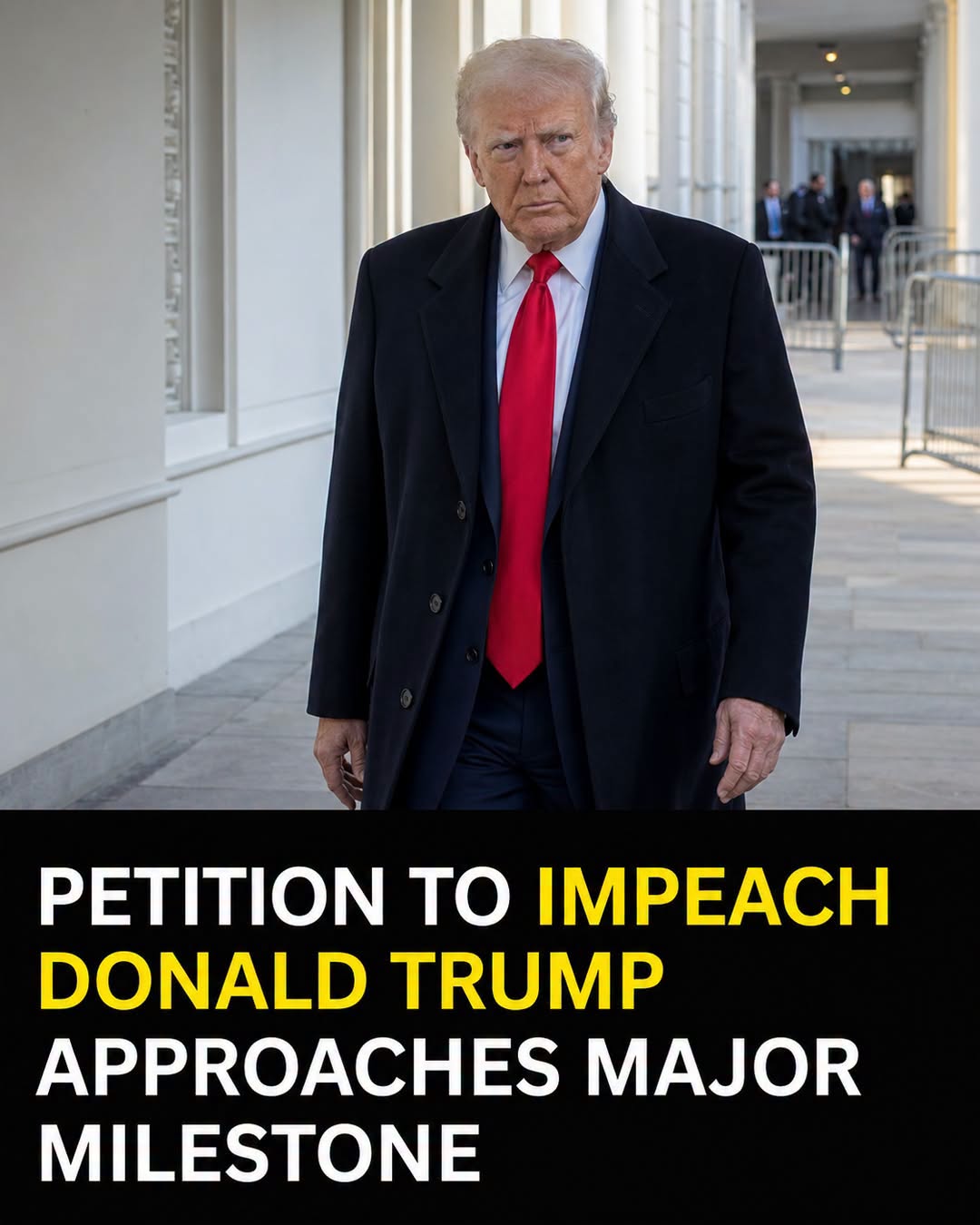
One of the latest petitions attracting widespread attention calls for the impeachment of President Donald Trump, quickly becoming a focal point for supporters, critics, and political observers alike.
Whether the petition ultimately changes anything legally is a separate question.
Its rapid spread has already accomplished something else.
It has reignited a national conversation about accountability, presidential power, and the deeply divided political landscape that continues to define American public life.
For those signing the petition, it represents an opportunity to express frustration and demand what they believe is greater accountability from the nation’s highest office.
Many supporters argue that public participation matters, even when the likelihood of immediate legislative action appears uncertain.
To them, signing is not simply about expecting an instant result.
It is about placing their views on the public record.
Others see the petition as another chapter in an already lengthy political conflict that has followed Donald Trump throughout both of his presidencies.
From investigations and legal challenges to congressional hearings and countless public debates, Trump has remained one of the most closely scrutinized political figures in modern American history.
Supporters often view many of these efforts as politically motivated.
Critics argue they reflect legitimate concerns about presidential conduct.
The petition has become another place where those competing perspectives meet.
Unlike formal legal proceedings, online petitions have no direct authority to remove a president from office.
Under the United States Constitution, impeachment begins in the House of Representatives and, if approved there, moves to the Senate for trial.
That process follows constitutional procedures rather than public signature counts.
Still, petitions can influence public discussion.
They attract media attention.
They encourage debate.
They provide lawmakers and advocacy groups with a visible measure of public engagement, even if they do not determine legal outcomes themselves.
That is one reason digital petitions have become increasingly common in American politics.
Supporters see them as accessible ways for ordinary citizens to participate in civic life.
Anyone with internet access can read the proposal, decide whether they agree, and add their name within minutes.
The simplicity of the process has transformed how political movements organize and communicate.
Decades ago, gathering support often meant standing outside public buildings with clipboards or going door to door.
Today, a campaign can spread nationally through social media, online news, and private messaging in a matter of hours.
Technology has dramatically changed how political participation looks.
At the same time, critics question how much influence online petitions actually have.
Some argue that clicking a button requires far less commitment than sustained political engagement, voting, volunteering, or contacting elected representatives directly.
Others point out that digital campaigns sometimes create the impression of immediate action while producing few measurable policy changes.
Yet even those skeptical of petitions acknowledge that they serve another important purpose.
They reveal public sentiment.
Every signature represents an individual who chose to participate in a political conversation.
Whether thousands sign or millions participate, the petition becomes a snapshot of public opinion during a particular moment in history.
That visibility can shape media coverage, influence advocacy organizations, and encourage further discussion among lawmakers and voters.
The reaction to the petition has reflected the country’s continuing political divisions.
Supporters describe it as an important expression of democratic participation.
They argue that citizens should always have opportunities to voice concerns about elected officials through peaceful and lawful means.
Opponents often see it differently.
Some believe repeated impeachment efforts or related campaigns contribute to political polarization rather than helping solve national problems.
Others argue that elections not petitions should remain the primary way voters express approval or dissatisfaction with presidents.
These differing interpretations demonstrate how even the existence of a petition can become part of a much larger national conversation.
The debate extends beyond Donald Trump himself.
It raises broader questions about how Americans communicate political disagreement in the digital era.
Social media platforms, online petitions, and internet campaigns have changed the speed and scale of public participation.
Political conversations that once unfolded primarily in town halls, newspaper editorials, or television interviews now happen continuously online.
Ideas spread faster.
Opinions become visible almost instantly.
Supporters and critics organize in real time.
As a result, public opinion often develops alongside the news itself rather than after events have passed.
Historians may eventually view these digital movements as an important feature of twenty-first-century democracy.
Future generations will likely study not only elections and legislation but also the online campaigns that reflected how ordinary citizens responded to major political events.
Petitions create a permanent public record of those moments.
They preserve debates that might otherwise fade from memory.
Regardless of where someone stands politically, the petition highlights one undeniable reality.
Americans remain deeply engaged with questions surrounding leadership, accountability, and the future direction of their government.
The intensity of those conversations reflects both the strengths and challenges of an active democracy.
Citizens continue searching for ways to make their voices heard.
Some vote.
Some volunteer.
Some attend public meetings.
Others participate by signing petitions and joining online discussions.
Each approach reflects a different understanding of civic engagement.
Whether this particular petition ultimately influences elected officials remains uncertain.
What is already clear, however, is that it has become more than a list of signatures.
It has become another chapter in the ongoing national conversation about politics, public trust, and the role ordinary citizens believe they should play in shaping the country’s future.
In today’s digital world, even a simple online petition can become far more than a webpage.
It can become a symbol of disagreement, participation, hope, frustration, and the continuing effort by millions of Americans to define what accountability means in a democracy.