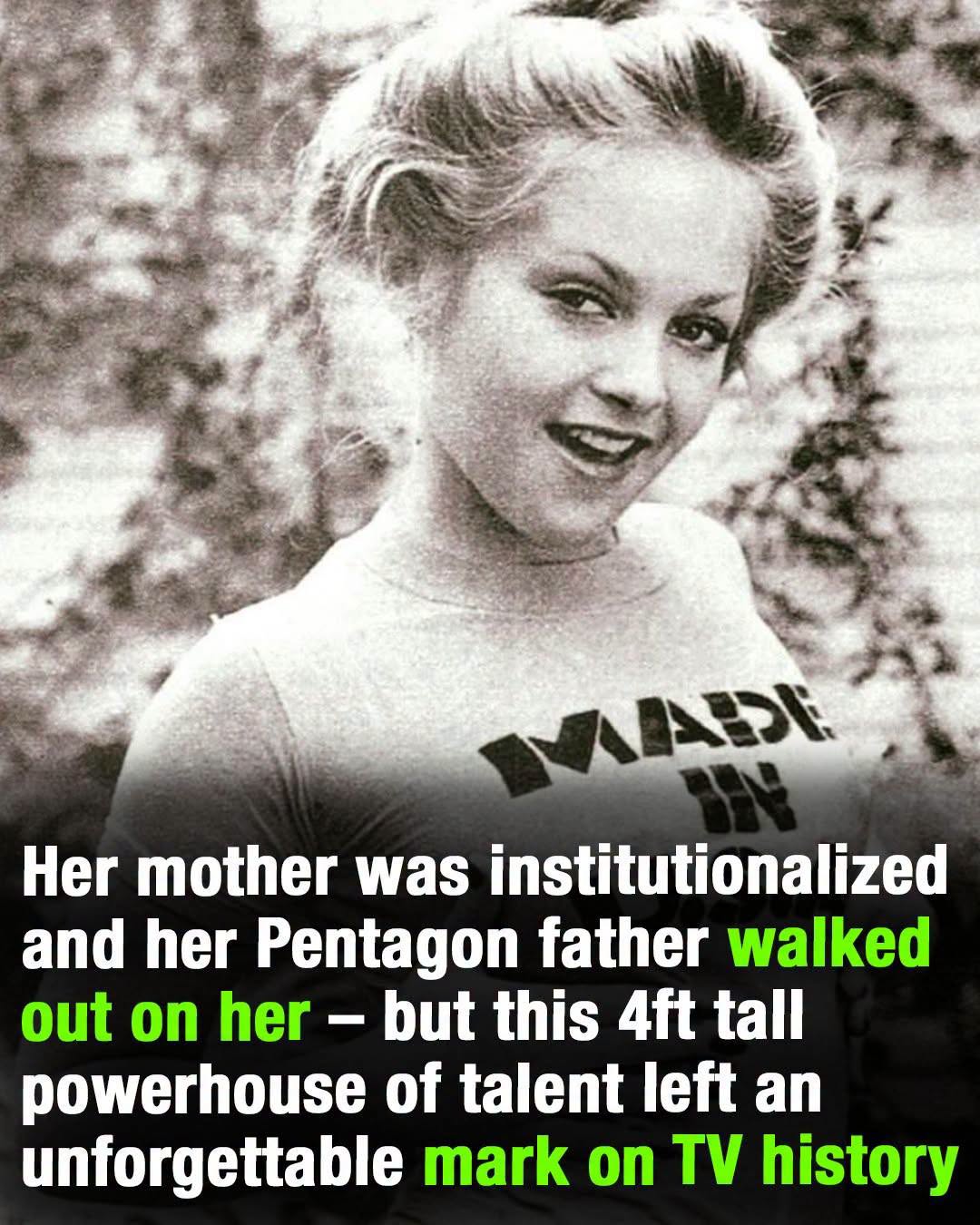
Long before Charlene Tilton became one of television’s most recognizable faces, she was a child trying to survive circumstances no child should ever have to endure.
Her story did not begin with Hollywood lights, fame, or applause.
It began with uncertainty.
Growing up, Charlene experienced abandonment, instability, and emotional pain that shaped the person she would eventually become. While millions of viewers later knew her as Lucy Ewing from the legendary television series Dallas, few understood the difficult road she traveled before becoming a household name.
Behind the confident smile and bright personality was a young girl who had already learned how to fight for herself.
Charlene’s childhood was marked by challenges that forced her to grow up far too quickly. Her father was absent from her life, leaving her without the support and guidance many children take for granted. Her mother struggled with mental health issues, creating an unpredictable environment where security was often missing.
At different points, Charlene found herself moving through foster care, searching for a place where she could feel wanted and safe.
Those experiences left deep emotional scars.
She has spoken about hearing painful conversations from adults around her, including moments when she felt like she was viewed as a burden rather than a child who deserved love and protection.
For many children, experiences like that can create a belief that they are not enough.
Charlene chose a different path.
Instead of allowing those early wounds to define her future, she found comfort in imagination, movies, and storytelling. Acting became more than a dream it became a way to escape, express herself, and create a world where she could belong.
From an early age, she was drawn to performance.
She saw actors on screen and felt a connection to the stories they told. She believed that if she could become part of that world, she might finally create a life different from the one she had known.
That determination pushed her forward.
Even when people doubted her, she continued chasing opportunities. She faced rejection, criticism, and the challenges of entering an industry that often demands confidence before success is guaranteed.
But Charlene had already learned something important from her childhood.
She knew how to keep going.
Her persistence eventually paid off when she landed the role that would transform her life forever.
In 1978, Charlene Tilton joined the cast of Dallas as Lucy Ewing, the rebellious and sometimes complicated granddaughter of the powerful Ewing family.
The show became a worldwide sensation, turning its cast members into international stars.
For Charlene, the role brought recognition almost overnight.
She became one of the most famous young actresses on television. Fans recognized her everywhere, magazines featured her, and audiences followed Lucy Ewing’s dramatic storylines week after week.
The success was extraordinary.
But fame did not erase the struggles she had carried with her.
Behind the scenes, Charlene continued facing personal battles that had nothing to do with television ratings or celebrity status.
The pressure of being famous at a young age came with its own difficulties. The public saw the glamorous side of her life, but they did not always see the emotional challenges happening privately.
Like many people, Charlene experienced moments of heartbreak and disappointment.
Her marriage ended.
Financial struggles followed.
At one point, she faced the painful reality of losing opportunities and experiencing professional setbacks. Being removed from a successful project brought feelings of rejection and uncertainty, especially after spending years connected to a role that had defined her career.
Then came one of the most devastating losses of her life.
Charlene’s fiancé died suddenly after suffering heart failure.
The loss was heartbreaking.
Losing someone she loved forced her to confront grief in a way that fame could not protect her from. No amount of success, recognition, or public admiration could make that pain disappear.
For a time, she had every reason to feel defeated.
But Charlene had survived difficult moments before.
The same strength that carried her through childhood helped her rebuild once again.
Instead of allowing pain to harden her, she searched for meaning.
She began focusing more on helping others and using her experiences to make a positive difference. Her personal journey led her toward advocacy, particularly supporting individuals and families affected by autism.
Rather than hiding from her own struggles, she used them as a source of understanding.
She knew what it felt like to be overlooked.
She knew what it felt like to feel different.
And she wanted others to know they were not alone.
Charlene became involved in autism-related causes, sharing her voice and supporting greater awareness and acceptance.
Her work reflected a major transformation.
The young girl who once wondered whether she belonged became a woman dedicated to helping others feel valued.
Over time, she also found peace through forgiveness.
Forgiving those who caused pain was not about saying the past did not matter.
It was not about excusing the choices of others.
Instead, Charlene came to understand that carrying anger forever only allowed painful memories to continue controlling her life.
Letting go became part of her healing.
Today, Charlene Tilton’s life looks very different from the days when she was constantly photographed as a television star.
Living in Nashville, she has embraced a quieter chapter filled with family, reflection, and gratitude.
She has proudly taken on the role of grandmother, affectionately known as “Glamma” to her grandchildren.
For Charlene, this stage of life represents something she once longed for as a child: stability, love, and a sense of belonging.
Her journey is a reminder that a difficult beginning does not determine the ending.
The little girl who experienced abandonment became a woman who created connections.
The actress who faced rejection became an advocate who gave others hope.
The person who endured heartbreak discovered a way to turn suffering into compassion.
Charlene Tilton’s story is not simply about fame or surviving Hollywood.
It is about resilience.
It is about refusing to let painful chapters become the entire story.
And perhaps most importantly, it is about proving that even after a lifetime of unexpected twists, a person can still find happiness, purpose, and peace.
The world may always remember her as Lucy Ewing from Dallas.
But Charlene Tilton’s greatest role has been the one she created for herself: a survivor who transformed her scars into strength.