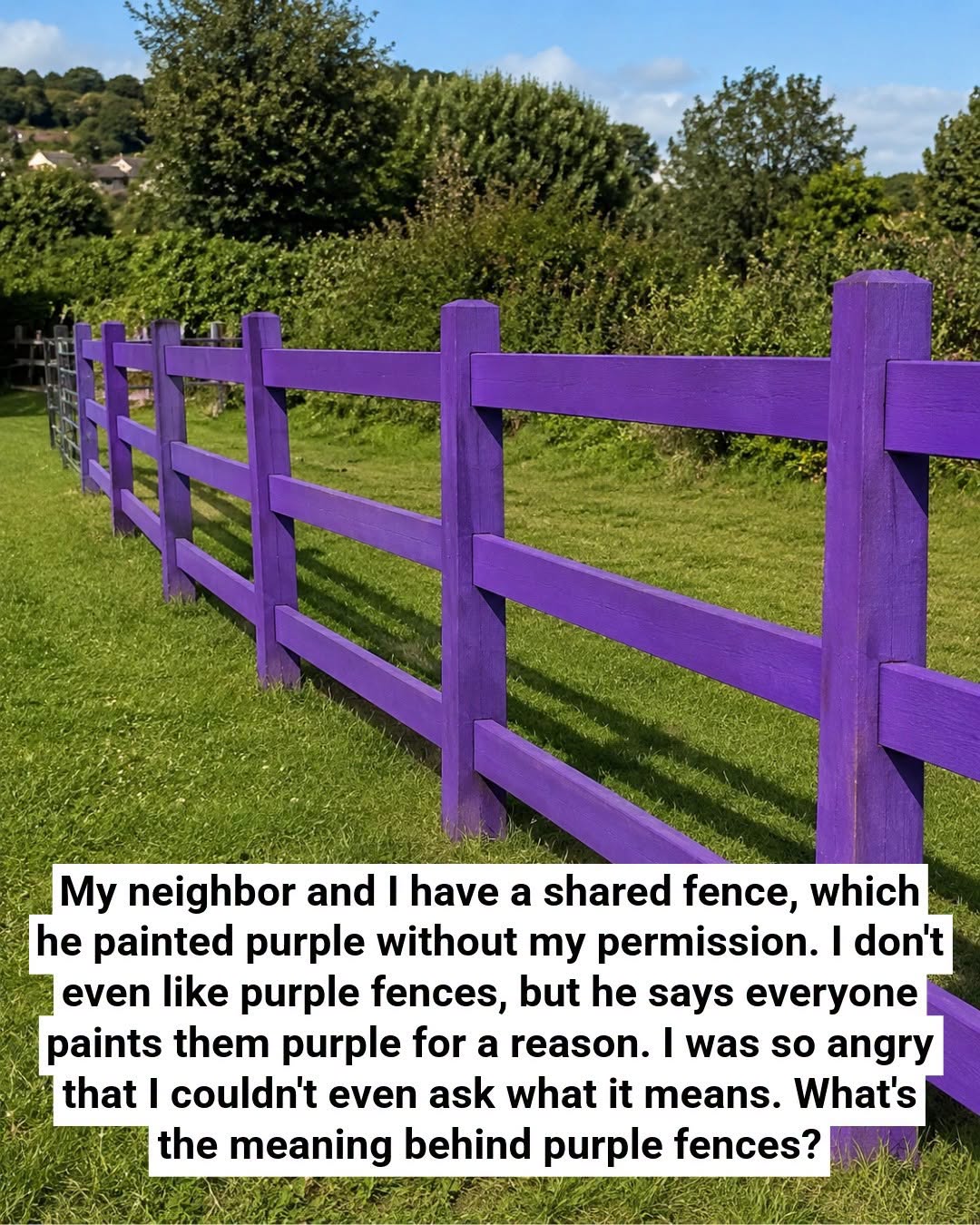
Imagine you’re hiking through the countryside or driving along a quiet rural road when something unusual catches your eye.
A fence post has a bold stripe of purple paint running down its side.
A nearby tree displays the same mysterious marking.
At first, it might seem like an artistic choice, leftover paint from a construction project, or even an odd attempt at decoration.
But that simple splash of color could be sending a very important message.
In many parts of the United States, a purple-painted fence or tree is much more than a random mark. It serves as an official warning that the property beyond it is private and that entering without permission may be considered trespassing.
For people unfamiliar with the practice, the discovery often comes as a surprise.
After all, most of us associate private property with signs that clearly read “No Trespassing.” We expect fences, gates, or posted notices to communicate where public access ends.
Instead, some landowners rely on something far simpler.
Purple paint.
It may sound unusual, but there is practical reasoning behind this system.
Traditional signs have one major weakness.
They disappear.
Signs can be blown away during storms, damaged by weather, stolen, vandalized, or become unreadable after years of exposure to the elements. A faded or missing sign may leave property boundaries unclear, creating confusion for both landowners and visitors.
Paint solves many of those problems.
A stripe applied directly to a tree or fence post cannot easily be removed by wind or rain. It requires very little maintenance and remains visible for long periods of time.
Because of its durability, several states have passed laws recognizing purple paint as an official method of marking private property.
Where these laws exist, the paint carries the same legal meaning as a posted “No Trespassing” sign.
The exact rules vary from state to state, but the general idea remains the same.
The paint must usually meet certain legal standards regarding its size, location, and spacing.
Typically, the markings are placed vertically on trees or fence posts at approximately eye level so they can easily be seen by anyone approaching the property.
The marks are often spaced every hundred feet or so along wooded areas or at intervals determined by state regulations.
This creates a visible boundary without requiring dozens of metal signs.
For property owners with hundreds or even thousands of acres, the system is often far more practical.
Large rural properties, farms, hunting land, timberland, and ranches may stretch across miles of terrain.
Installing and maintaining signs across such distances would require significant effort and expense.
A can of purple paint, on the other hand, provides a long-lasting solution.
The color itself was chosen for practical reasons.
Purple is not commonly found in nature on tree trunks or fence posts, making it highly noticeable. It also remains relatively visible throughout different seasons.
Unlike white, black, or brown markings that could blend into natural surroundings, purple tends to stand out.
Over time, it has become widely recognized in areas where these laws apply.
However, there is an important detail many people overlook.
The meaning of purple paint is not universal.
Not every state recognizes it as a legal warning.
In some places, the marks carry official legal authority.
In others, they may have no specific legal meaning at all.
This difference can create confusion for travelers who cross state lines.
Someone who grew up in a state without purple paint laws may never have encountered the practice before.
They might assume the markings are harmless decoration or forestry management symbols without realizing they are approaching private property.
Because of this, experts encourage outdoor enthusiasts, hunters, hikers, and campers to familiarize themselves with local regulations before exploring unfamiliar areas.
Understanding property boundaries helps avoid misunderstandings and protects both visitors and landowners.
Ignoring these markings in states where they are legally recognized can have serious consequences.
Depending on local laws, entering marked property without permission may result in citations, fines, or criminal trespassing charges.
Beyond legal issues, there is also the possibility of creating uncomfortable or even dangerous confrontations with property owners who believe their clearly marked boundaries have been ignored.
Most landowners who use purple paint are not trying to discourage respectful visitors.
Instead, they simply want an efficient way to communicate that the land is privately owned.
Many use the markings to protect livestock, crops, wildlife habitats, timber resources, or simply the privacy of their homes and families.
For them, the paint represents a straightforward solution to a common problem.
The practice has also gained attention through social media.
Photos of mysterious purple trees frequently appear online, accompanied by questions asking what the markings mean.
Many viewers are surprised to learn that something as simple as paint can carry legal significance.
The discovery often sparks conversations about rural traditions that many people living in cities have never encountered.
It also serves as a reminder that not every warning needs words.
Sometimes a symbol understood by local communities communicates everything necessary.
As outdoor recreation continues to grow, respecting property rights becomes increasingly important.
Many trails, forests, and scenic areas sit near privately owned land.
A small detour can sometimes lead someone across an invisible property line without realizing it.
Recognizing purple paint helps reduce those accidental mistakes.
If you ever come across a fence, tree, or post marked with bold purple stripes, take a moment before continuing.
Even if you are unsure whether the markings carry legal authority in that particular location, the safest approach is simple.
Assume they are there for a reason.
Turn around.
Choose another route.
Or seek permission from the property owner before entering.
Doing so shows respect for both the law and the people who care for the land.
A single stripe of paint may not seem as obvious as a large warning sign, but in many places, it carries exactly the same message.
What looks like an ordinary splash of color is often one of the clearest signals that the land beyond belongs to someone else.
Understanding that hidden meaning can save you from legal trouble, uncomfortable situations, and unnecessary conflict.
Sometimes the quietest warnings are the ones we should pay the closest attention to.