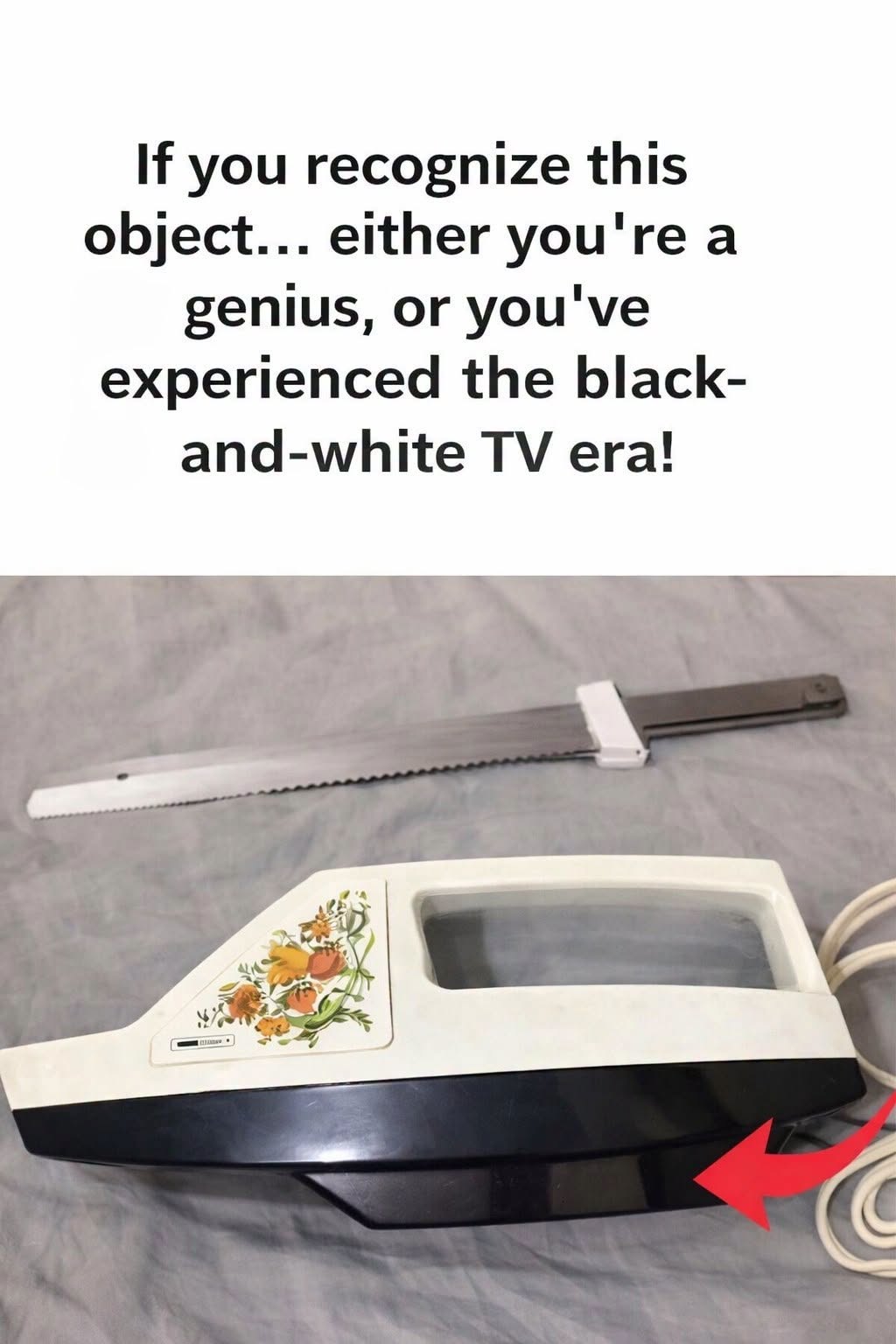
At first glance, it looks like something completely different.
The unusual shape, the decorative design, and the unfamiliar appearance have caused many people to stare at it and wonder what it could possibly be. Some guess it is an old-fashioned kitchen tool. Others think it might be a strange piece of industrial equipment or even some kind of antique appliance with a forgotten purpose.
But the truth is far more surprising.
This curious object was once considered one of the most exciting symbols of modern living: the electric kitchen saw.
Today, many people would probably struggle to understand why anyone would want such a noisy and dramatic device in their home. Yet during the middle of the 20th century, this unusual invention represented something much bigger than a simple kitchen gadget.
It represented progress.
It represented style.
It represented the idea that the future had arrived right inside the family dining room.
During the 1960s, 1970s, and even into the 1980s, electric carving knives and kitchen saws became a popular addition to many households. They were marketed as convenient, efficient, and futuristic. Instead of carefully slicing through a holiday roast with a traditional carving knife, families could now plug in a machine and let technology do the work.
For many homeowners, especially those who enjoyed entertaining guests, using an electric carving device became a small performance.
Dinner was no longer just about serving food.
It was about creating an experience.
Imagine a holiday gathering where everyone is seated around the table. The roast turkey or ham is placed proudly in the center. The host stands up, reaches for the unusual electric tool, and plugs it into the wall.
Then comes the sound.
A loud mechanical buzzing fills the room.
The blade begins moving rapidly back and forth.
Guests watch as the machine cuts through the meat with surprising speed.
Some smile.
Some laugh.
Some quietly wonder if the device is a little too powerful for something meant to be used beside a dinner plate.
But that was part of the appeal.
The electric carving knife was not just practical.
It was entertaining.
It gave the person holding it a sense of confidence and modern sophistication. It showed visitors that the household was keeping up with new technology and embracing the conveniences of the future.
In many ways, it became a symbol of its era.
The decades after World War II brought a wave of excitement around household innovation. Families were introduced to new appliances designed to make everyday life easier. Automatic coffee makers, dishwashers, televisions, mixers, and countless other inventions promised a cleaner, faster, more advanced lifestyle.
The electric kitchen saw fit perfectly into that mindset.
It transformed a simple task into something that felt almost futuristic.
The idea was simple: why spend extra effort cutting a large piece of meat by hand when electricity could do it for you?
Manufacturers promoted these devices as must-have tools for anyone who wanted a modern kitchen. They appeared in catalogs, department stores, and holiday advertisements. They were often given as gifts and became common items in homes across America and beyond.
But behind the technology was also something deeply personal.
These strange machines became part of family traditions.
For many people who grew up during that time, the memory is not really about the appliance itself.
It is about the moments surrounding it.
The excitement of preparing a holiday meal.
The laughter when someone struggled to control the vibrating blade.
The children watching from nearby, fascinated by the strange machine making so much noise.
The conversations that happened while everyone gathered together.
Like many household objects from past generations, the electric carving knife became connected to memories rather than just function.
Parents passed them down to their children.
Older family members taught younger ones how to use them.
They became part of birthdays, Thanksgiving dinners, Christmas celebrations, and Sunday meals.
Even though the device itself was unusual, it brought people together.
There was something charming about the confidence people had in these inventions. They were not afraid to experiment. They welcomed new technology into their homes, even when it seemed a little excessive.
The electric kitchen saw was a perfect example of that attitude.
It was practical, but also theatrical.
Useful, but also entertaining.
A little unnecessary, but undeniably memorable.
Over time, however, the popularity of these devices began to decline.
As kitchen trends changed, many people returned to simpler tools. Modern designs focused more on convenience, quiet operation, and minimal clutter. Large electric carving knives slowly disappeared from everyday kitchens.
Many ended up forgotten in cabinets, basements, and storage boxes.
Others found their way into thrift stores and antique markets, where younger generations now discover them and wonder what they were ever used for.
To someone unfamiliar with the era, the object can seem almost bizarre.
Why would anyone need a loud electric blade just to slice dinner?
But for those who remember, the answer is not really about necessity.
It is about nostalgia.
It is about a time when ordinary household tasks could become small events. When families gathered around the table without distractions. When new inventions were exciting because they promised a better, more modern future.
The buzzing sound of an electric carving knife may have been loud and slightly intimidating, but it also represented celebration.
It represented family.
It represented a generation that believed even dinner could be improved with a little innovation.
Today, these forgotten kitchen gadgets may seem outdated, but they still carry a unique place in cultural history.
They remind us that objects are rarely just objects.
A simple appliance can hold memories of people, places, and moments that matter.
The electric kitchen saw was never just about cutting meat.
It was about showing pride, embracing change, and creating experiences around the dinner table.
For some, it was a strange gadget that disappeared with time.
For others, it remains a reminder of holidays filled with laughter, crowded kitchens, and the unforgettable sound of a machine that made every meal feel like an event.