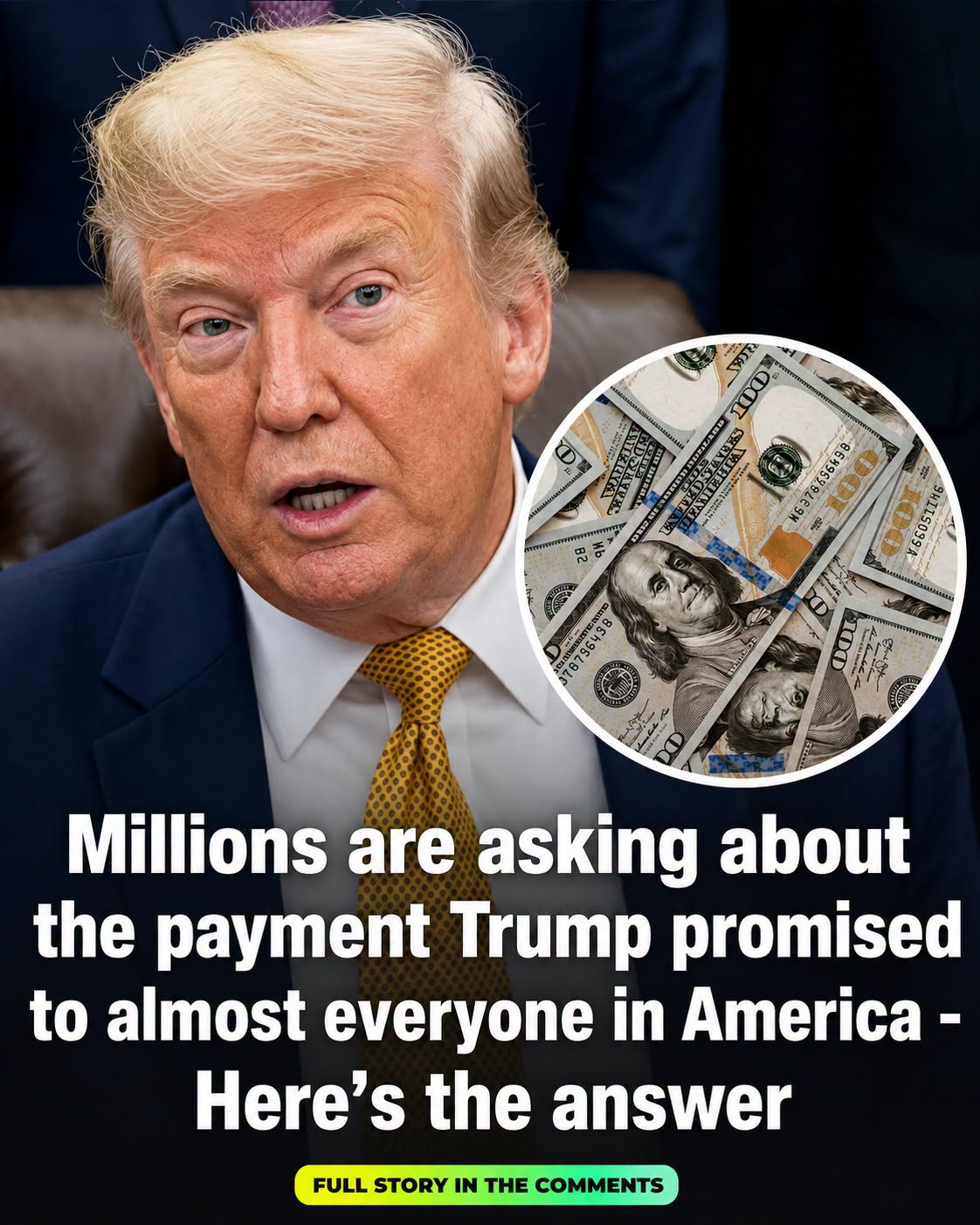
For months, conversations about a possible $2,000 payment have spread across social media, television, and online forums. Videos claiming that checks are “about to be mailed” have gathered millions of views. Headlines have fueled speculation, while countless posts insist that Americans simply need to wait a little longer before the money arrives.
For many families struggling with rising prices, higher grocery bills, and increasing living costs, the promise of another government payment has been difficult to ignore.
The idea sounded familiar.
Supporters described it as a “tariff dividend” a payment funded by revenue collected from tariffs on imported goods. Some compared it to the stimulus checks distributed during the COVID-19 pandemic, suggesting that lower- and middle-income Americans could receive up to $2,000 each if the proposal became reality.
As excitement grew, so did confusion.
Many people began asking the same questions.
When will the checks arrive?
Who qualifies?
Do people need to apply?
Has the IRS already started processing payments?
Despite the growing speculation, the answer remains much simpler than many expected.
At this time, no federal program exists that authorizes these payments.
The proposal has attracted widespread attention because of statements made during political discussions, but it has never completed the legislative process required for federal payments to be issued.
That distinction is extremely important.
When the government distributed pandemic stimulus checks, Congress passed legislation that clearly authorized the payments. Eligibility requirements were established, funding was approved, federal agencies received instructions, and the Internal Revenue Service handled distribution according to the law.
The tariff dividend proposal has not reached that stage.
It remains exactly what it has been since it was first discussed a political proposal rather than an active federal benefit.
Without congressional approval, no government agency has the authority to mail checks or deposit money into Americans’ bank accounts.
There is currently no official payment schedule.
No approved eligibility list.
No IRS registration system.
No Treasury distribution plan.
Yet the rumors continue to spread.
Part of the confusion comes from the word “tariff.”
Tariffs are taxes placed on imported goods.
When companies bring certain products into the United States, tariffs may increase the amount those businesses pay. Those additional costs generate revenue for the federal government.
Supporters of the proposal argue that some of this revenue could eventually be returned directly to American households.
The concept has been described as allowing citizens to benefit from tariff collections instead of directing all of the money elsewhere.
While the idea has generated significant political discussion, economists point out an important challenge.
The amount of money collected through tariffs is substantial, but distributing thousands of dollars to tens or even hundreds of millions of Americans would require an enormous amount of funding.
Many analysts argue that tariff revenue alone would likely be insufficient to finance payments on the scale that has been discussed without additional economic consequences or policy changes.
Whether such a program could realistically be funded remains part of an ongoing political and economic debate.
None of that changes the current reality.
No payments have been approved.
Unfortunately, the uncertainty surrounding the proposal has also created an opportunity for fraud.
Cybersecurity experts and consumer protection agencies have reported an increase in scams targeting people searching for information about the rumored payments.
Fake websites now promise early access to the money.
Text messages claim recipients must “verify eligibility.”
Emails instruct users to submit banking information.
Some scammers even pose as IRS representatives, claiming they can speed up payment processing in exchange for personal information or application fees.
These offers are fraudulent.
The IRS has announced no special portal for tariff dividend payments.
There is no application process.
There are no waiting lists.
No legitimate federal employee will contact individuals asking for payment, passwords, Social Security numbers, or banking details in order to receive a tariff refund.
If Congress were ever to approve such a program, the announcement would come through official government channels.
Federal agencies would publish clear guidance.
Major news organizations would report the legislation.
The Treasury Department and IRS would explain exactly how payments would be distributed, just as they did during previous stimulus programs.
Until that happens, any website claiming to provide early access should be viewed with extreme caution.
Financial experts recommend ignoring advertisements that promise guaranteed payments, especially those requesting sensitive personal information.
Many scammers intentionally exploit uncertainty because people hoping for financial assistance may be more willing to believe convincing messages that appear urgent or official.
Protecting personal information remains one of the most important steps consumers can take while rumors continue circulating.
The widespread interest surrounding the proposed payments also highlights a broader reality facing many Americans.
Household budgets remain under pressure.
Inflation has affected food, housing, transportation, and everyday expenses.
Against that backdrop, the possibility of another direct government payment naturally attracts attention.
People remember how stimulus checks provided temporary financial relief during the pandemic.
It is understandable that many hope similar assistance could become available again.
But hope and policy are not the same thing.
Political proposals often receive extensive public discussion long before becoming law.
Some eventually move through Congress.
Others are modified significantly.
Many never advance beyond speeches, interviews, or campaign promises.
The tariff dividend proposal currently belongs in that category.
It has generated conversation.
It has attracted support and criticism.
It has sparked economic debate.
What it has not done is become federal law.
For now, millions of Americans continue asking the same question because they want certainty in an uncertain economy.
The answer remains unchanged.
There are no approved $2,000 tariff dividend checks.
No official program exists.
No application is required because no payment system has been established.
Anyone claiming otherwise is either mistaken or attempting to deceive people.
If circumstances change in the future, official government agencies will announce any authorized payment program publicly with clear instructions explaining eligibility, timelines, and distribution methods.
Until then, the safest approach is simple: rely only on verified government information, ignore unofficial payment offers, and remain cautious of anyone promising money that has never actually been approved.
The discussion surrounding the proposal may continue, and political leaders may revisit similar ideas in the future. But as things stand today, the promised $2,000 payment is not waiting to be released.
It has not been delayed.
It has not quietly begun.
It simply has not become reality.