The morning began with disaster.
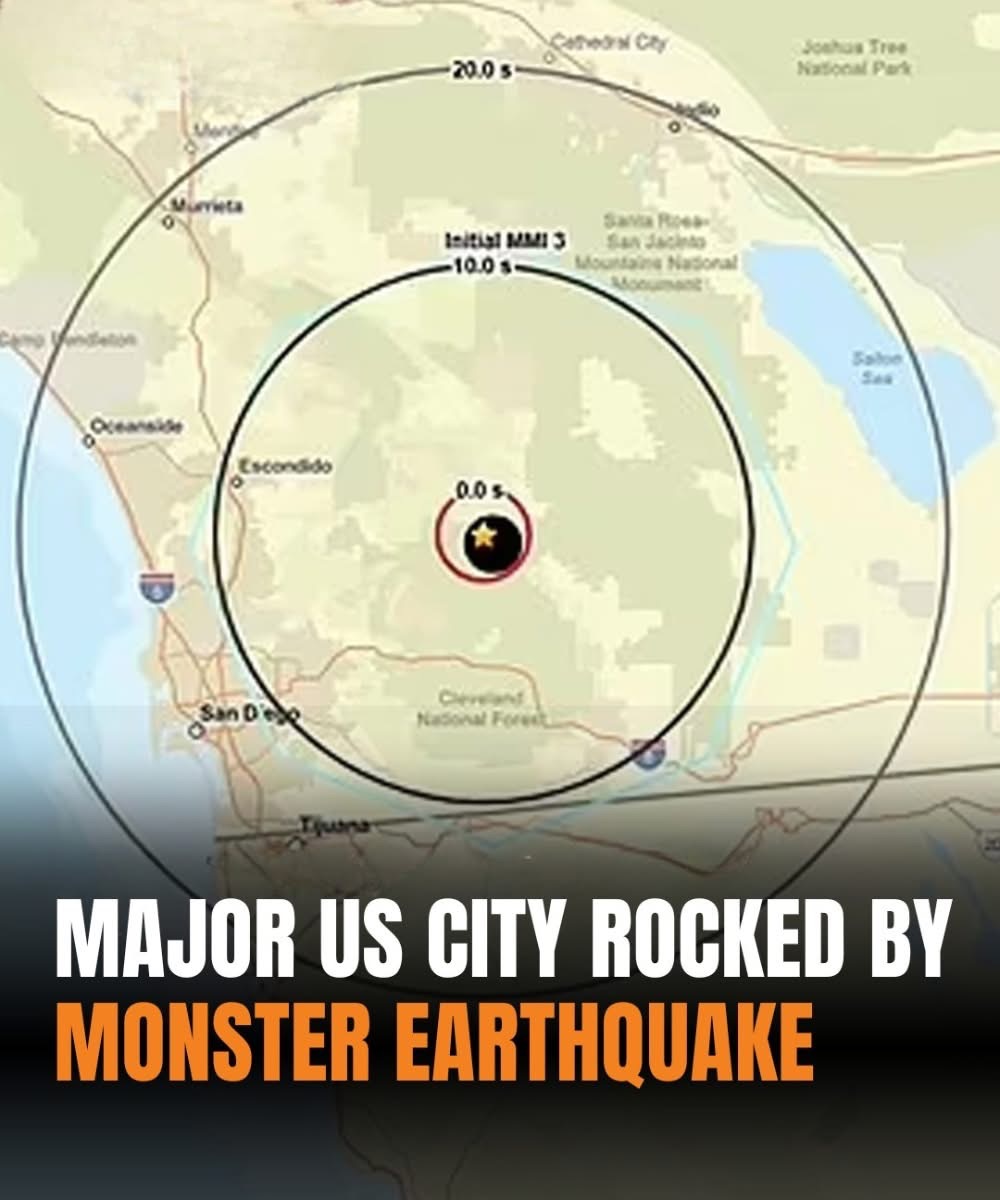
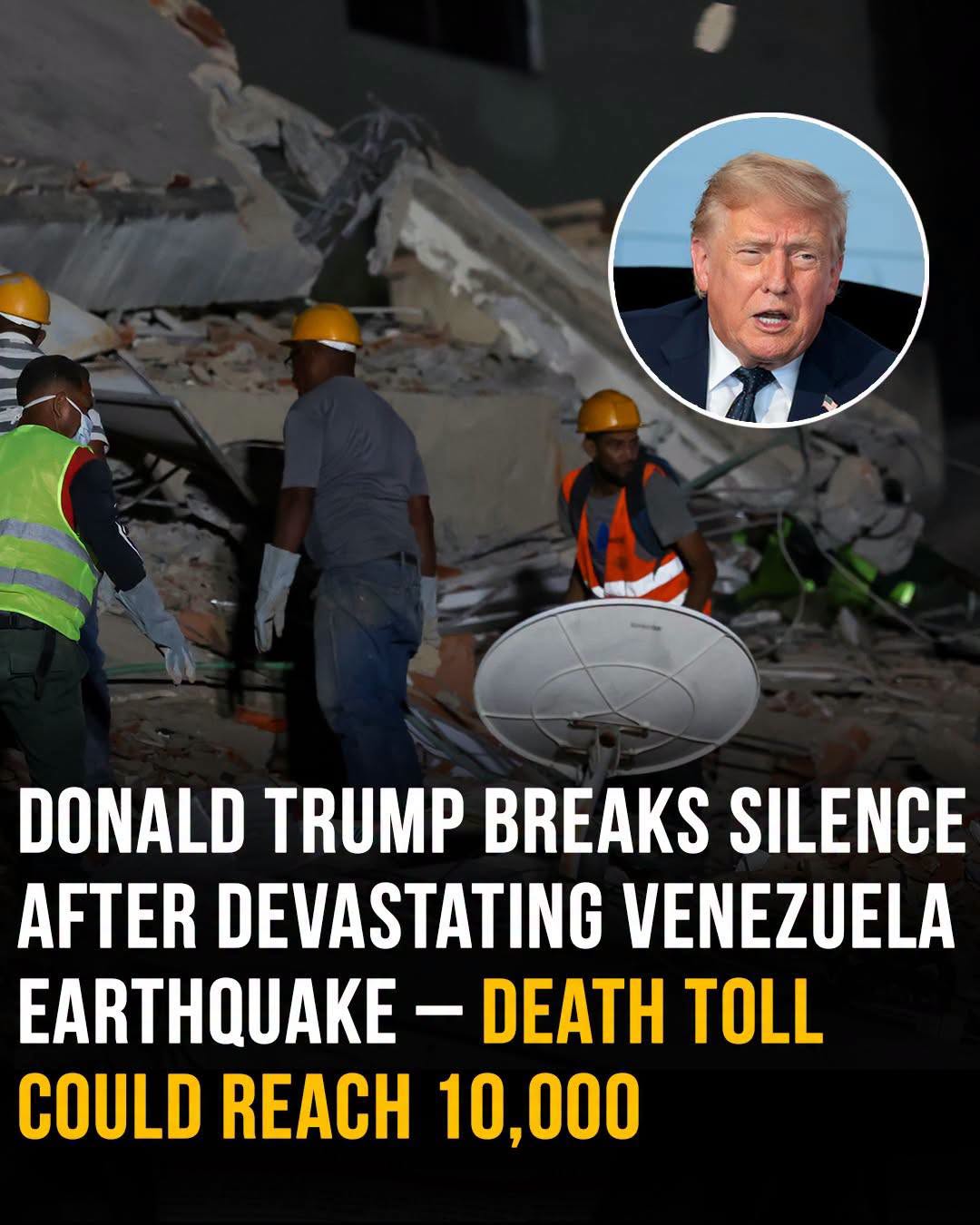
As dawn broke across Venezuela, entire neighborhoods were already buried beneath dust, broken concrete, and silence. Two powerful earthquakes struck within hours, sending shockwaves through cities and towns that had little time to prepare. Buildings cracked apart, roads split open, and terrified families rushed into the streets as the ground continued to tremble beneath them.
Rescue workers immediately began searching through collapsed homes, damaged apartment blocks, and crushed vehicles. In many places, electricity failed, communication networks became unreliable, and frightened residents gathered in open areas waiting for news about missing relatives.
The earthquakes transformed ordinary neighborhoods into scenes of devastation.
Parents searched for children.
Children searched for parents.
Entire communities waited beside piles of rubble, hoping to hear voices beneath the debris.
As emergency crews worked through the night, images from the disaster quickly spread around the world. The destruction was impossible to ignore. Streets once filled with traffic and daily life suddenly resembled disaster zones.
Amid the tragedy, an unexpected political moment captured international attention.
Former President Donald Trump issued a public statement expressing support for the Venezuelan people and offering condolences to the victims and their families. The remarks surprised many observers because relations between the United States and Venezuela have often been marked by tension and political disagreement.
For a brief moment, politics seemed to step aside.
Natural disasters have a way of reducing even the deepest divisions to something smaller. Faced with collapsed buildings and grieving families, political conflicts suddenly feel distant compared to the immediate struggle to save lives.
As rescue operations continued, the world watched anxiously.
But Venezuela was only one story unfolding that day.
Thousands of miles away, music fans experienced a scare of their own.
During a live performance, legendary singer Lionel Richie reportedly experienced a sudden health incident that interrupted the show. Audience members who had arrived expecting an evening of music instead found themselves watching medical personnel rush to assist the performer.
For decades, Richie has represented energy, warmth, and reliability on stage.
Seeing an artist who has entertained millions suddenly appear vulnerable reminded fans of something many prefer not to think about: even beloved icons are human.
Age, exhaustion, and health challenges do not spare celebrities simply because they are famous.
Social media quickly filled with concern.
Fans shared memories.
Concertgoers posted videos.
Many simply hoped that the singer would recover quickly and return to the stage.
The incident became another reminder that public figures often carry enormous expectations while privately dealing with the same physical limitations everyone eventually faces.
Elsewhere, a completely different story was dominating headlines.
Bill Gates once again found himself at the center of renewed attention involving his past association with Jeffrey Epstein. Discussions surrounding congressional testimony, personal relationships, and years-old connections brought private matters back into public view.
For years, questions about Epstein’s influence and relationships with prominent individuals have generated worldwide attention.
The latest developments highlighted how information, relationships, and personal decisions can resurface years later under entirely different circumstances.
What once seemed private can suddenly become public.
Old emails become evidence.
Personal relationships become headlines.
Reputations built over decades can find themselves reevaluated through the lens of new investigations.
The situation demonstrated how powerful individuals often discover that the past rarely stays buried forever.
Meanwhile, another debate was unfolding in classrooms rather than courtrooms.
In Texas, discussions surrounding educational policies and the role of religious materials in public schools continued to divide communities. Supporters argued that certain historical and religious texts play an important role in understanding culture and history.
Critics expressed concerns about government involvement in religious education and questioned where the boundaries should exist between personal faith and public instruction.
School board meetings became emotional.
Parents voiced their concerns.
Teachers found themselves caught between competing expectations.
For some families, the issue represented preserving important traditions.
For others, it raised concerns about educational independence and personal freedom.
The debate extended far beyond classrooms.
It touched questions that societies have struggled with for generations.
Who decides what children learn?
What role should religion play in education?
How do communities balance tradition, diversity, and personal beliefs?
The answers remain deeply personal and often deeply divisive.
At the same time, actor Joe Manganiello revealed personal health struggles that many people never knew existed.
Behind the public appearances, successful career, and seemingly strong image, he reportedly dealt with a painful medical condition that affected his life for years.
His story resonated with many people because it reflected a reality often hidden from public view.
Not every illness can be seen.
Some struggles exist entirely beneath the surface.
Many individuals live with chronic pain, invisible diseases, or physical conditions that others never notice. They continue working, smiling, and appearing fine while privately fighting battles that remain largely unseen.
Manganiello’s experience became a reminder that appearances often tell only a small part of someone’s story.
Strength does not always look dramatic.
Sometimes strength is simply continuing forward while carrying pain that nobody else can see.
As these stories unfolded throughout the day, a common thread quietly connected them.
Earthquakes destroy cities in seconds.
Health problems interrupt performances.
Old decisions return years later.
Debates divide communities.
Hidden illnesses reshape lives.
The world often appears stable until suddenly it is not.
One phone call changes everything.
One medical diagnosis alters the future.
One unexpected event forces people to confront realities they never anticipated.
The earthquakes in Venezuela may have produced the most visible destruction, but many other stories revealed quieter forms of upheaval.
Political relationships shift.
Public figures age.
Secrets emerge.
Bodies fail.
Communities argue.
Lives change.
For the people directly affected, these stories are not headlines.
They are daily reality.
Families in Venezuela now face rebuilding homes and mourning losses.
Fans worry about the health of beloved entertainers.
Communities continue debating education and values.
Individuals confront illnesses that remain invisible to the outside world.
And millions of people watching these events unfold are reminded how quickly life can change.
Perhaps that is why these stories captured so much attention.
Not because they involved famous names.
Not because they dominated television coverage.
But because they reflected something universal.
Every person understands uncertainty.
Everyone knows what it feels like to fear bad news.
Everyone recognizes the fragility that exists beneath ordinary life.
Some earthquakes shake cities.
Others shake families.
Some occur deep beneath the earth.
Others happen quietly inside human lives.
By the end of the day, rescue workers were still searching through collapsed buildings.
Doctors continued monitoring patients.
Investigators reviewed documents.
Parents debated educational policies.
And countless people around the world sat quietly, watching the headlines and recognizing a difficult truth.
Life rarely changes gradually.
More often, it shifts suddenly.
Without warning.
Without permission.
Without explanation.
The world can feel stable one moment and completely different the next.
And sometimes, all anyone can do is keep moving forward, hoping that tomorrow brings calmer ground.