It was just a photograph.
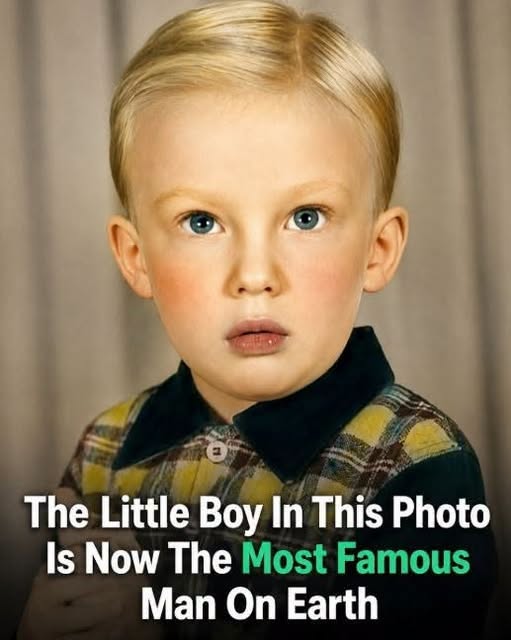
A black-and-white image of a young boy standing quietly, unaware of the extraordinary future that awaited him. There were no political slogans, no campaign rallies, no television appearances, and no headlines.
There was only a child, dressed neatly, looking into a camera with the same uncertainty and innocence found in countless family photographs across America.
Yet the moment the picture resurfaced, it sparked something far larger than anyone expected.
The little boy in the photograph was Donald Trump.
Almost instantly, the image spread across social media, news websites, and discussion forums. Millions of people looked at the same picture, yet they seemed to see completely different things. Some saw innocence. Others searched for signs of future ambition. Some looked for clues that might explain the man he would eventually become.
The photograph itself had not changed.
The boy had not changed.
Only the people looking at him had.
For supporters, the image served as a powerful reminder that even the most controversial public figures begin as children. Before the business empire, before the White House, before the endless political battles, there was simply a young boy growing up in New York with dreams, fears, and possibilities that had not yet taken shape.
Many supporters reacted emotionally.
They saw a child untouched by politics, criticism, or public opinion. They saw someone who had not yet become a symbol, a president, or a lightning rod for national debate. To them, the photograph represented humanity before fame.
Others viewed it differently.
Critics found it difficult to separate the child from the man they believe changed American politics forever. For them, decades of public statements, controversies, and political battles influenced the way they interpreted the image. Some admitted they could not look at the photograph without seeing the future president.
That reaction reveals something fascinating about human nature.
We often struggle to separate people from our opinions about them.
Once someone becomes famous, every image, every memory, and every piece of their past becomes filtered through the lens of what we already believe. We look backward through history searching for evidence that confirms the stories we tell ourselves.
The little boy in the photograph had no idea who he would become.
He did not know he would one day enter the real estate business.
He did not know he would become one of the most recognizable figures in America.
He certainly did not know that millions of strangers would someday examine his childhood face looking for signs of the future.
Children do not carry their destinies on their faces.
Yet people often act as if they do.
This tendency is especially strong with public figures. Once history has been written, we search the past for clues that appear obvious only in hindsight. We convince ourselves that the future was always visible.
But it rarely is.
The photograph reminds us that every president, every celebrity, every business leader, and every controversial figure once existed in a world without expectations.
They attended school.
They played games.
They worried about ordinary things.
They experienced childhood before the world assigned meaning to their lives.
Donald Trump’s early years have often been discussed in biographies and interviews. He grew up in Queens, New York, as the son of real estate developer Fred Trump. His upbringing was shaped by business, competition, and expectations of success.
But none of those details appear in the photograph.
The image itself remains remarkably ordinary.
And perhaps that is precisely why it affected people so strongly.
In an age of constant political division, it briefly stripped away decades of arguments and forced people to confront something simpler.
A child.
No policies.
No speeches.
No campaigns.
Just a moment frozen in time.
The public response also revealed how deeply divided modern society has become. Supporters and critics often looked at the exact same image and reached completely opposite conclusions. The picture became a kind of mirror, reflecting not the boy in the photograph but the beliefs of those viewing it.
Some people saw hope.
Others saw warning signs.
Some saw vulnerability.
Others saw ambition.
The differences said less about the child and more about the viewers themselves.
Psychologists often note that people naturally project their own beliefs, experiences, and expectations onto others. Public figures become especially powerful screens for these projections because so many people already hold strong opinions about them.
Donald Trump may be one of the clearest examples of this phenomenon.
For some Americans, he represents strength, determination, and disruption of the political establishment.
For others, he represents division, controversy, and political turmoil.
Those competing interpretations shape everything connected to him, including photographs taken decades before he entered public life.
The childhood image quietly challenged those assumptions.
It reminded people that before anyone becomes a symbol, they are simply human.
History often reduces famous individuals to a collection of achievements, mistakes, victories, and failures. We forget that they experienced childhood without knowing how their stories would unfold.
Abraham Lincoln was once a boy.
John Kennedy was once a boy.
Barack Obama was once a boy.
Donald Trump was once a boy.
None of them knew what history would eventually write about them.
The photograph also raises larger questions about how society judges people. Is it possible to see a public figure apart from their reputation? Can we separate the child from the adult? Can we recognize shared humanity without abandoning our beliefs?
The answers differ from person to person.
Some viewers found themselves unexpectedly emotional when looking at the image. Others remained unmoved. Some saw innocence. Others could only see the future through the lens of the present.
Yet the photograph itself remained silent.
It offered no opinions.
It made no arguments.
It simply existed.
And perhaps that silence is what made it so powerful.
In a world filled with endless political commentary, the image asked viewers to pause. It reminded them that every famous name once belonged to an unknown child. Every public figure once existed before the applause, before the criticism, and before the judgments.
The little boy in the photograph could not imagine the future.
He could not foresee television cameras, campaign rallies, or headlines.
He could not know that millions of people would someday debate his life, his choices, and his legacy.
He was simply a child standing before a camera.
And maybe that is the most surprising thing of all.
Because beneath every public figure, every president, every celebrity, and every controversial name, there remains a person who once stood exactly the same way young, uncertain, and completely unaware of the story that history would eventually write.
The photograph did not change Donald Trump.
It did not change history.
But it changed the way many people looked at both.
And in doing so, it quietly revealed that our judgments often tell us as much about ourselves as they do about the people we believe we already understand.