
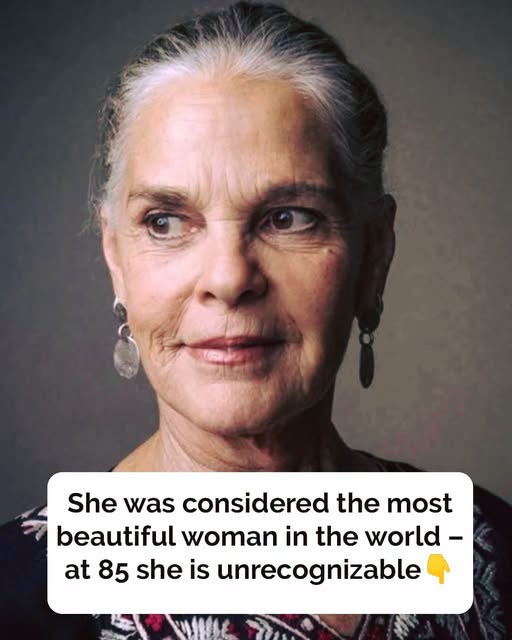
For a brief moment in the early 1970s, Ali MacGraw seemed to have everything Hollywood could offer. She was beautiful, talented, admired around the world, and starring in one of the most beloved romantic films ever made.
Magazine covers celebrated her elegance, audiences adored her performances, and studios viewed her as one of the brightest stars of her generation.
Yet behind the glamour and success was a woman searching for something much deeper than fame. The choices she made would eventually lead her away from Hollywood, through heartbreak, addiction, personal reinvention, and ultimately toward a life of peace far from the spotlight.
Born Elizabeth Alice MacGraw on April 1, 1939, in Pound Ridge, New York, she grew up in a household shaped by art, creativity, and emotional complexity. Both of her parents were artists, and while their passion for creativity influenced her deeply, family life was often difficult.
Her father carried emotional scars from a troubled childhood and struggled with anger throughout much of his life. Financial problems frequently affected the family, and the household often felt unstable. MacGraw later spoke openly about the emotional tension that surrounded her childhood, describing an environment that taught her independence at a very young age.
Although life at home was challenging, those experiences helped shape the resilience that would later define her career.
After graduating from Wellesley College, MacGraw moved to New York City with hopes of building a career in the arts. Her first opportunities came not in film but in the fashion world.
She began working at Harper’s Bazaar, where she handled entry-level assignments under the demanding supervision of influential fashion figures. The work was difficult, but it introduced her to photography, styling, and visual storytelling.
Her striking appearance soon attracted attention.
She began modeling, appearing in advertisements and magazines while developing a natural comfort in front of the camera. Her elegant features and quiet confidence quickly made her stand out in the fashion industry.
Acting opportunities soon followed.
Her early roles included appearances in smaller productions before she landed a breakthrough performance in Goodbye, Columbus in 1969. The film received strong reviews, and MacGraw earned a Golden Globe Award for Most Promising Newcomer.
Hollywood had discovered a new star.
But nothing could prepare her for what came next.
In 1970, she starred opposite Ryan O’Neal in Love Story, a romantic drama that became one of the most successful films of its era.
Her portrayal of Jenny Cavilleri touched audiences around the world.
The film became a cultural phenomenon, earning multiple Academy Award nominations and making MacGraw an international sensation almost overnight. Her performance earned her an Academy Award nomination and a Golden Globe win.
The famous line, “Love means never having to say you’re sorry,” became part of popular culture.
Suddenly, Ali MacGraw was everywhere.
She became a fashion icon, a symbol of romance, and one of the most recognizable women in the world.
At the same time, her personal life attracted increasing public attention.
She married film producer Robert Evans, one of the most powerful executives in Hollywood. Their marriage appeared glamorous from the outside, and together they welcomed their son, Joshua Evans.
Yet behind the scenes, difficulties began to emerge.
While filming The Getaway in 1972, MacGraw met Steve McQueen, who was then one of the biggest movie stars in the world.
Their chemistry was immediate.
Their relationship quickly became one of Hollywood’s most talked-about romances. MacGraw eventually left her marriage to Evans to be with McQueen, a decision that dominated entertainment headlines.
For many people, the relationship seemed like the ultimate Hollywood love story.
The reality proved far more complicated.
McQueen was intensely private and highly controlling. MacGraw later described the relationship as passionate but emotionally difficult. She often found herself sacrificing her own career and ambitions to support his.
As McQueen’s career continued, hers began to slow.
Opportunities became less frequent, and the actress who had once dominated Hollywood suddenly found herself stepping away from the spotlight.
Their marriage eventually ended in divorce in 1978.
The breakup marked a turning point in her life.
While she continued acting in several projects, none achieved the enormous success of Love Story. The momentum that once seemed unstoppable had faded.
At the same time, MacGraw faced personal struggles that extended beyond her professional life.
She openly discussed her battles with alcohol and the challenges that accompanied fame, disappointment, and changing priorities. Eventually, she sought treatment and entered rehabilitation, a decision she later credited with helping her rebuild her life.
Rather than returning aggressively to Hollywood, she began moving in a different direction.
By the early 1990s, another life-changing event occurred when her California home was destroyed by wildfire.
Instead of rebuilding in Los Angeles, MacGraw made an unexpected decision.
She moved to Tesuque, New Mexico, near Santa Fe.
There, she discovered something that Hollywood had never given her.
Peace.
Far from red carpets and movie premieres, she embraced a quieter lifestyle centered on wellness, yoga, nature, and community involvement. She became involved in animal welfare causes and charitable efforts while largely stepping away from the entertainment industry.
The move allowed her to focus on personal growth rather than public attention.
She often spoke about the importance of simplicity, describing her new life as far more fulfilling than the years spent chasing success in Hollywood.
While many stars struggle after leaving fame behind, MacGraw appeared to find freedom in it.
Her son, Joshua Evans, pursued his own career in entertainment, continuing the family’s creative legacy while allowing her to enjoy the role of mother away from the pressures of celebrity life.
Today, Ali MacGraw remains closely associated with Love Story, a film that continues to introduce her to new generations of viewers.
Yet her legacy extends far beyond a single role.
She became a fashion icon.
A Hollywood star.
A survivor of personal struggles.
A woman who rebuilt her life on her own terms.
Many actors spend their entire lives chasing fame and desperately trying to remain relevant. MacGraw chose something different.
She walked away.
She traded movie sets for quiet landscapes.
She exchanged headlines for healing.
She left behind the industry that made her famous in order to discover the person she truly wanted to become.
Looking back, her story is not simply about Hollywood success or lost opportunities.
It is about transformation.
It is about understanding that fame does not guarantee happiness.
It is about finding peace after heartbreak.
And perhaps most importantly, it is about having the courage to choose a different path when the world expects you to stay exactly where you are.
Ali MacGraw once represented Hollywood glamour at its highest level.
Today, she represents something far rarer.
A woman who found happiness after leaving it all behind.