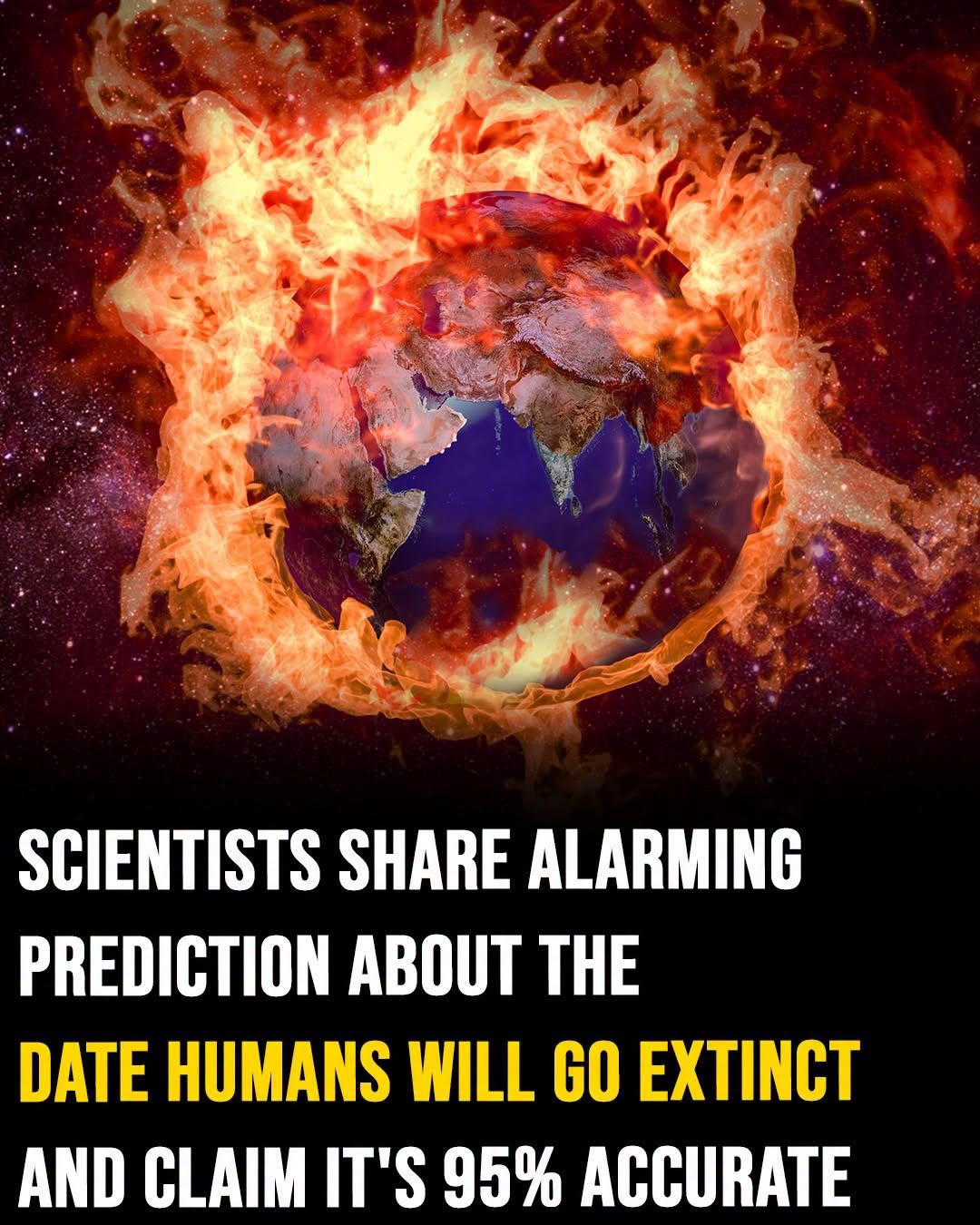
The announcement that the Doomsday Clock now sits at just 85 seconds before midnight was never intended as a precise forecast of human extinction, yet it has landed in public consciousness as something far more visceral: a symbolic countdown to catastrophe.
Each adjustment of the clock is not a prophecy written in stone, but a stark reflection of how scientists interpret the cumulative pressures building across the modern world. It is less about predicting a single moment of collapse and more about mapping how close humanity is to losing control of the systems it depends on for survival.
The scientists responsible for maintaining the clock are not fringe voices or speculative commentators. Many come from fields grounded in hard science and global policy, including nuclear physics, climate research, and international security analysis. Their assessments are shaped by decades of studying the consequences of technological escalation, geopolitical instability, and environmental strain. When they speak, they are not describing distant hypotheticals, but converging risks that already exist in real time.
At the heart of their warning is the idea that the dangers facing humanity are no longer isolated. In earlier decades, nuclear tension, climate change, and technological disruption were often treated as separate challenges, each managed within its own sphere of policy and expertise. Today, however, these forces increasingly overlap. A regional conflict can escalate under the shadow of nuclear deterrence. Climate disasters can destabilize governments and fuel migration crises. Artificial intelligence and digital systems can amplify misinformation, accelerate decision-making, or introduce new forms of unpredictability into already fragile situations.
The result, according to the Bulletin of the Atomic Scientists, is a global environment where small shocks can have disproportionately large consequences. A single miscalculation between nuclear-armed states, a breakdown in climate cooperation, or the misuse of emerging technologies could cascade into wider instability. The clock, in this sense, is not measuring time in the traditional sense, but measuring fragility.
Despite the dramatic symbolism, experts emphasize that the Doomsday Clock is not a declaration of inevitable extinction. It is a warning system designed to communicate urgency in a way that statistics and reports often fail to achieve. The closer the clock moves to midnight, the more it signals that humanity is operating with shrinking margins for error. But importantly, it also implies that movement in the opposite direction is possible.
That dual meaning is central to its purpose. Midnight represents global catastrophe, not a predetermined endpoint. Every second added or removed reflects changes in human behavior, political decisions, and international cooperation. In earlier years, the clock has been set back when diplomatic progress was made, such as arms reduction agreements or improved communication between rival powers. Likewise, it has moved forward during periods of renewed tension, climate inaction, or technological uncertainty.
The current position at 85 seconds before midnight is the closest it has ever been, and that fact alone has intensified public debate. For some observers, it reflects a world increasingly defined by instability: ongoing conflicts involving major powers, persistent nuclear modernization programs, and rising concerns about artificial intelligence systems evolving faster than regulatory frameworks can adapt. For others, it is a reminder that global cooperation has not kept pace with global risk.
One of the most frequently cited concerns is the continuing presence of nuclear weapons in a geopolitically fragmented world. Even decades after the Cold War, thousands of warheads remain active or deployable, with some nations actively modernizing their arsenals. Military doctrines that rely on deterrence assume rational decision-making under extreme pressure, a condition that experts warn cannot always be guaranteed. The clock, in this context, reflects not only the existence of these weapons, but the ongoing possibility of miscalculation.
Climate change represents another accelerating factor. Rising global temperatures, extreme weather events, and ecosystem disruption are no longer abstract projections but observable realities. Scientists warn that environmental instability can act as a threat multiplier, worsening food insecurity, straining infrastructure, and increasing the likelihood of conflict over resources. In this way, climate change is not separate from geopolitical risk—it feeds into it.
Meanwhile, the rapid development of artificial intelligence and other emerging technologies introduces a different kind of uncertainty. Unlike nuclear or environmental threats, which have been studied for decades, advanced AI systems are evolving at a pace that often outstrips regulation and public understanding. Concerns range from misinformation at scale to autonomous decision-making systems operating without sufficient oversight. While these technologies also bring significant benefits, their unpredictability in complex systems is part of what the Doomsday Clock seeks to highlight.
Despite the gravity of these warnings, the scientists behind the clock consistently emphasize that its purpose is not despair, but motivation. The metaphor is deliberately stark because it is intended to provoke action. The idea is that when people and governments recognize how narrow the safety margin has become, they may be more inclined to pursue diplomacy, strengthen international agreements, and invest in long-term solutions.
In this sense, the clock is as much about human agency as it is about risk. Every adjustment forward or backward reflects choices made in real time: whether nations engage in dialogue or confrontation, whether emissions are reduced or allowed to rise, whether technological innovation is guided by ethical frameworks or left to develop without restraint.
What makes the current moment particularly significant is not just the proximity to midnight, but the convergence of multiple high-stakes challenges occurring simultaneously. Rarely in modern history have nuclear tension, climate instability, and technological disruption intensified at the same time. This overlap is what gives the present warning its weight.
Still, experts caution against interpreting the clock as a literal countdown to extinction. Humanity has faced severe global crises before, including periods of heightened nuclear tension that did not escalate into catastrophe. The difference today lies in the complexity and interconnectedness of risks, which can amplify each other in unpredictable ways.
Ultimately, the Doomsday Clock serves as a reflection of the present rather than a prediction of the future. It captures a moment in which the world stands at a crossroads, where the direction of travel is still determined by human decisions. Midnight remains a symbol, not a destination. And while the seconds may be running thin, they have not yet run out.