
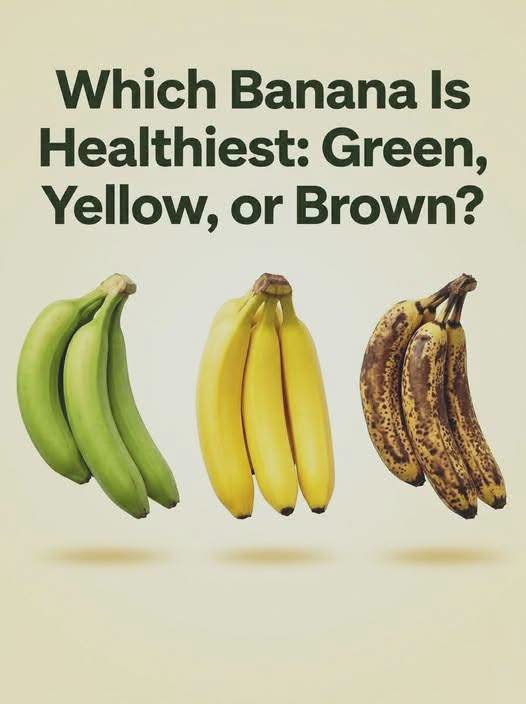
Most people think they know everything there is to know about bananas.
They are inexpensive, convenient, naturally sweet, and available almost everywhere. They sit in fruit bowls, lunch bags, office kitchens, and grocery carts around the world. For many people, grabbing a banana is almost automatic a quick snack that requires no preparation and little thought.
But hidden beneath that familiar yellow peel is a fascinating transformation that most people rarely consider.
The banana you eat today is not the same banana it was a few days ago.
In fact, every banana undergoes a remarkable biological process after it is harvested, changing its texture, flavor, sweetness, and even the way your body digests it. Understanding these changes can completely alter how you look at one of the world’s most popular fruits.
At first glance, a banana seems simple.
Yet its journey from green to yellow to brown tells a surprisingly complex story.
When bananas are first harvested, they are usually green, firm, and relatively low in sweetness. Many people assume a green banana is simply an unripe version of the fruit they know and love.
While that is technically true, there is much more happening beneath the surface.
Green bananas contain large amounts of resistant starch.
Unlike ordinary carbohydrates, resistant starch behaves differently inside the body. Instead of being fully broken down and absorbed in the small intestine, much of it passes into the large intestine, where it acts similarly to dietary fiber.
This is one reason greener bananas often feel more filling.
They digest more slowly.
They release energy more gradually.
And for some people, they provide longer-lasting satiety than fully ripe bananas.
Their texture reflects this composition.
Green bananas are firmer and denser.
Their flavor is less sweet and sometimes slightly starchy.
In many parts of the world, green bananas are intentionally used in cooking rather than eaten raw. They may be boiled, fried, mashed, or incorporated into savory dishes where their firm texture becomes an advantage.
As the days pass, however, something remarkable begins to happen.
Natural enzymes inside the fruit start transforming those complex starches into simple sugars.
This process is entirely natural.
The banana is essentially changing itself from the inside out.
Gradually, the hard texture softens.
The pale green peel turns yellow.
The taste becomes noticeably sweeter.
This stage is where most people prefer their bananas.
The bright yellow banana represents a balance between sweetness and structure. It is soft enough to eat comfortably while still maintaining its shape.
For athletes, active individuals, and anyone seeking a quick source of energy, yellow bananas are particularly appealing.
Because more of the starch has been converted into sugars such as glucose, fructose, and sucrose, the fruit becomes easier to digest and quicker to provide energy.
This is one reason bananas are commonly eaten before workouts, after exercise, or during busy days when people need a convenient snack.
Despite the changes occurring during ripening, important nutrients remain present throughout the process.
Bananas continue to provide potassium, vitamin B6, and dietary fiber regardless of their stage of ripeness.
Potassium plays an important role in muscle function and nerve signaling.
Vitamin B6 contributes to metabolism and various bodily functions.
Fiber supports digestive health.
These nutritional benefits remain largely intact even as the fruit’s texture and sweetness evolve.
Then comes the stage many people misunderstand.
The appearance of brown spots.
For some, those tiny brown speckles signal danger.
Others immediately throw the fruit away, assuming it has gone bad.
But those spots tell a different story.
They indicate that the ripening process has advanced further.
At this stage, even more starch has been converted into simple sugars.
The banana becomes softer, sweeter, and easier to mash.
Its flavor intensifies.
Its texture becomes creamy.
Many bakers actually prefer bananas in this condition.
Banana bread, muffins, pancakes, and smoothies often benefit from the rich sweetness of overripe fruit.
What some people view as a sign of spoilage is often considered the ideal ingredient in countless recipes.
This misunderstanding has contributed to many myths surrounding bananas.
Online claims frequently suggest that bananas undergo magical nutritional transformations or suddenly become “superfoods” once they develop brown spots.
The reality is more nuanced.
Scientific research confirms that ripening can influence certain compounds within fruits, including antioxidant activity. However, many exaggerated claims circulating online lack proper scientific support.
For example, bananas naturally contain small amounts of dopamine.
This fact is often presented dramatically on social media.
What is usually omitted is that dietary dopamine does not cross the blood-brain barrier in a way that directly influences mood.
The science remains interesting, but it is rarely as sensational as internet headlines suggest.
Understanding bananas also requires recognizing that different people may experience them differently.
For most individuals, bananas are an exceptionally safe and nutritious food.
However, dietary needs vary.
Some people managing blood sugar levels may pay closer attention to ripeness because riper bananas contain higher concentrations of simple sugars.
Others may prefer greener bananas because they digest more slowly.
Neither choice is universally better.
The ideal option often depends on personal preferences, nutritional goals, and individual health considerations.
Bananas are also widely regarded as gentle on digestion.
Their soft texture and fiber content make them a common recommendation during periods of digestive discomfort or recovery from illness.
Many people find them easy to tolerate when other foods feel too heavy.
This reputation has helped bananas earn a permanent place in countless diets worldwide.
Still, no food is completely universal.
A small number of individuals experience sensitivities to bananas.
One example involves latex-fruit syndrome, a condition in which certain proteins found in fruits may trigger reactions in people who are sensitive to latex.
Although relatively uncommon, it serves as a reminder that nutrition is never entirely one-size-fits-all.
Beyond their nutritional profile, bananas have become deeply integrated into cultures around the world.
In some regions, green bananas serve as staple ingredients in traditional meals.
Elsewhere, sweet ripe bananas are eaten fresh every day.
Overripe bananas find new life in desserts and baked goods.
Few fruits demonstrate such versatility.
Their ability to adapt to different culinary traditions contributes to their global popularity.
Perhaps the most fascinating lesson bananas teach is how dynamic food can be.
Many people view fruits as static objects.
A banana reveals the opposite.
It is constantly changing.
Its chemistry evolves daily.
Its texture transforms.
Its flavor develops.
Its nutritional profile shifts subtly as nature continues its work long after harvest.
The next time you pick up a banana, take a closer look.
That color is telling a story.
That texture reveals a stage in an ongoing transformation.
Whether green, yellow, spotted, or nearly brown, the fruit remains remarkably nutritious and useful.
There is no universally perfect banana.
There is only the banana that best suits your taste, your needs, and the moment you choose to eat it.
What many people never realize is that every stage offers something different.
And understanding that simple truth may change the way you see this everyday fruit forever.