Human beings communicate in countless ways without ever saying a word. A smile can express warmth, crossed arms may suggest discomfort, and eye contact often reveals confidence or hesitation.
Body language has fascinated psychologists, researchers, and everyday observers for generations because it offers clues about emotions, habits, and social behavior that often happen beneath conscious awareness.
Among the many aspects of body language people love to analyze, one of the most intriguing is the way we sit.
At first glance, the position of our legs while seated may seem completely random. After all, most of us settle into a chair without giving it much thought. Yet countless personality quizzes and social media posts claim that these everyday poses can reveal hidden aspects of who we are.
Can the way you cross your legs really uncover secrets about your personality?
The answer is more complicated than many viral posts suggest.
While there is little scientific evidence proving that specific sitting positions accurately predict personality traits, people remain fascinated by the idea. Perhaps this is because body language often reflects temporary emotions, comfort levels, and social situations. Even if these interpretations are not strict science, they can still encourage self-reflection and spark interesting conversations.
So what do some popular interpretations suggest about common sitting styles?
Let’s take a closer look.
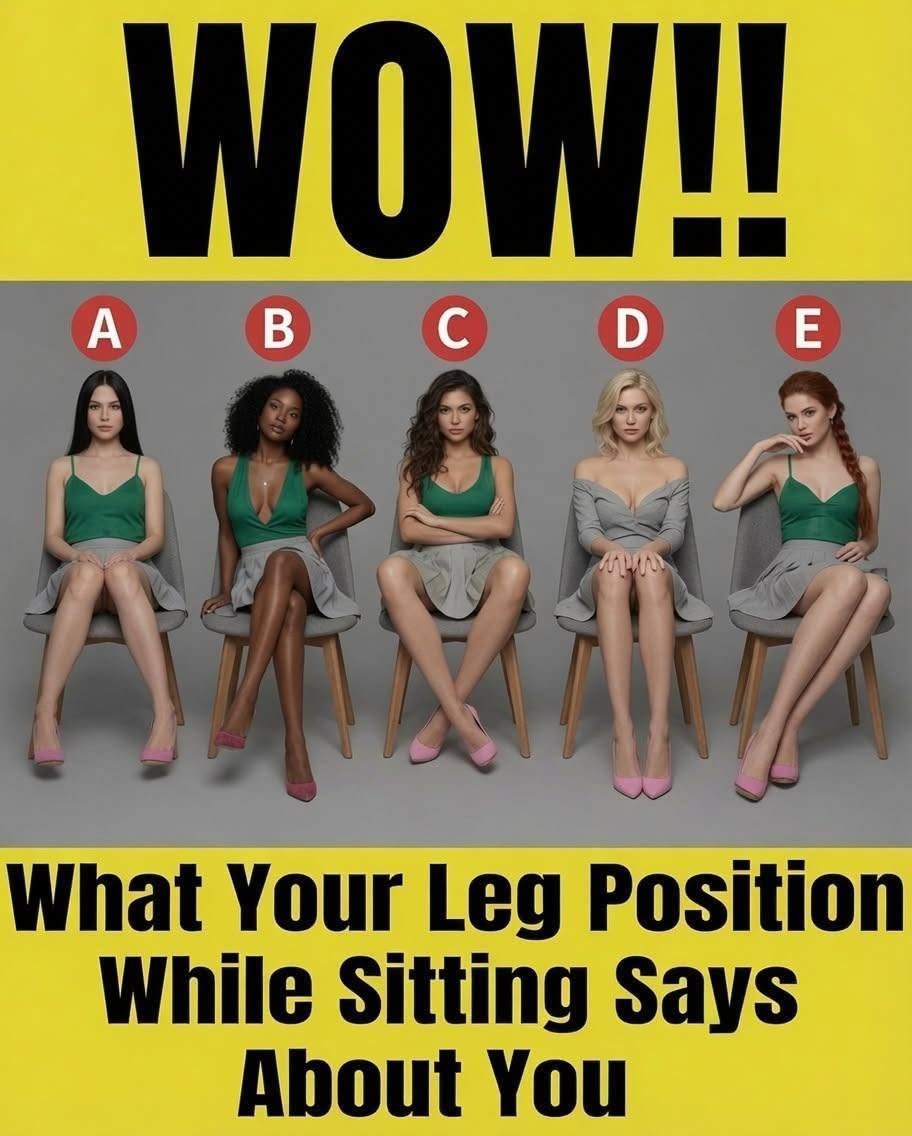
One of the most frequently discussed postures is often called the “A Position.” In this pose, a person sits with their knees together while the lower legs angle slightly apart.
According to popular personality interpretations, people who prefer this posture are often seen as imaginative and creative. They may enjoy exploring ideas, dreaming about possibilities, and approaching life with optimism.
Supporters of these interpretations suggest that individuals in this category sometimes avoid direct confrontation. Rather than tackling problems immediately, they may hope challenges resolve themselves over time.
At the same time, they are often described as warm, friendly, and enjoyable company.
Whether accurate or not, this description appeals to many people because it reflects qualities they value in themselves.
Another widely discussed posture is the “B Position,” where one leg is crossed over the other.
This sitting style is often associated with introspection and privacy. According to body language enthusiasts, individuals who sit this way may possess vivid imaginations and rich inner worlds.
They might enjoy deep conversations while still protecting certain parts of themselves from others.
Trust, according to these interpretations, is not given easily.
Instead, it is earned over time.
People described under this category are often portrayed as thoughtful observers who prefer quality relationships over large social circles.
Then there is the “C Position,” a posture commonly associated with comfort seekers.
People who sit this way may prioritize physical ease and enjoy surrounding themselves with environments that feel pleasant and aesthetically appealing.
They may value beauty, organization, and experiences that bring comfort and enjoyment.
Some interpretations also suggest that these individuals can become distracted or overwhelmed when too many things compete for their attention.
However, they are often viewed as adaptable and capable of finding joy in life’s simple pleasures.
Another posture often discussed involves sitting upright with both feet planted firmly on the ground.
This position is frequently associated with confidence, discipline, and control.
People who sit this way are sometimes perceived as practical and organized. They may approach life methodically and prefer structure over chaos.
At the same time, such individuals are often described as emotionally reserved.
They may experience emotions deeply but choose to reveal only a small portion of what they truly feel.
This posture can project calmness and reliability, even during stressful situations.
Another common style involves tucking the feet beneath the chair or drawing them close to the body.
Popular interpretations often describe these individuals as cautious and sensitive.
They may take time to open up emotionally and often feel most comfortable in familiar surroundings.
Criticism can affect them deeply, even if they do not show it outwardly.
Because of this, they may carefully choose whom they trust and prefer close relationships built on safety and understanding.
Many people who identify with this description say they value peace and stability above all else.
There is also the so-called “E Position,” where legs remain neatly aligned or crossed at the ankles.
This posture is often linked to patience, composure, and attention to detail.
According to personality enthusiasts, individuals who sit this way may work hard to maintain appearances and avoid unnecessary conflict.
They are frequently described as careful decision-makers who prefer to think before acting.
At times, they may struggle with self-doubt or worry about how others perceive them.
Yet they often project grace and calm even during difficult moments.
Why do these interpretations remain so popular despite limited scientific evidence?
Part of the answer lies in human nature.
People have always been fascinated by understanding themselves and others.
From astrology and personality tests to optical illusions and body language quizzes, humans naturally search for patterns that help explain behavior.
These systems offer stories about identity.
And stories are powerful.
Modern psychology acknowledges that body language can communicate emotions and intentions in certain situations. Researchers have shown that posture may reflect temporary emotional states such as confidence, anxiety, stress, or relaxation.
However, scientists generally caution against making broad personality judgments based on a single behavior.
Human personality is far more complex.
A person may sit differently depending on the environment, physical comfort, cultural norms, mood, or even the type of chair they are using.
Someone may cross their legs during a formal meeting but sit entirely differently while relaxing at home.
This flexibility reminds us that behavior often changes with circumstances.
Still, there is something undeniably appealing about these personality interpretations.
They encourage reflection.
They invite conversation.
And they remind us that communication extends far beyond spoken words.
The way we sit, move, gesture, and interact with the world contributes to the unique impression we leave on others.
Whether or not your favorite sitting position truly reveals hidden traits, it may still offer insight into how you feel in certain moments.
Perhaps that is why these quizzes continue to capture attention across generations.
Not because they provide definitive answers.
But because they tap into a universal curiosity.
The desire to understand ourselves.
The desire to understand others.
And the hope that even in our smallest habits, there may be clues about who we are.
In the end, your sitting posture may not determine your personality.
But the questions it raises about identity, behavior, and human connection remain endlessly fascinating.
Sometimes, the most ordinary gestures tell the most interesting stories.