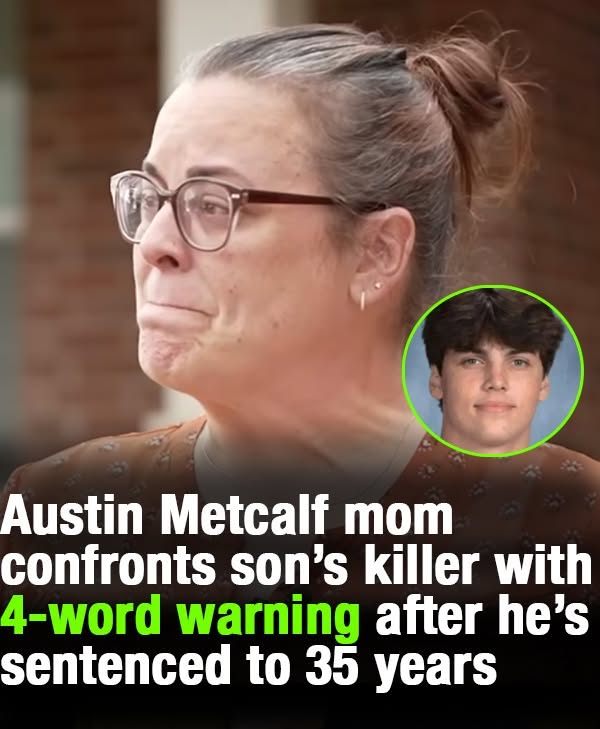
The final chapter of a case that captured national attention unfolded inside a Texas courtroom as the family of 17-year-old Austin Metcalf came face to face with the young man convicted of taking his life.
What began as a tragic confrontation at a high school track meet ultimately ended with a lengthy prison sentence, emotional victim-impact statements, and heartbreaking scenes that left few people in the courtroom untouched.
For Austin’s family, the sentencing hearing was about far more than legal consequences. It was an opportunity to speak directly about the devastating loss that has shaped every day of their lives since Austin’s death. While the court focused on punishment and accountability, his loved ones focused on something else entirely: the boy who would never come home.
The tragedy traces back to an incident that occurred during a school track meet, where a disagreement escalated into violence. What should have been an ordinary day filled with competition, friendship, and school spirit instead became a nightmare that changed multiple families forever.
Prosecutors argued throughout the case that a brief conflict ended with a fatal decision that cost Austin his life. The courtroom heard testimony, reviewed evidence, and listened to witnesses as both sides presented their arguments. After deliberations, jurors found Karmelo Anthony guilty, bringing the trial phase of the case to a close.
Yet for Austin’s family, no verdict could truly feel like victory.
As sentencing proceedings began, emotions quickly filled the room. Family members stepped forward one by one, sharing memories of Austin and describing the enormous void left behind by his absence.
His mother, Meghan Metcalf, delivered some of the most emotional remarks of the hearing. Speaking through tears, she painted a picture of the son she lost and the future that disappeared alongside him.
She described Austin not as a headline or courtroom exhibit, but as a loving teenager whose presence brought warmth to those around him. According to family members, he was known for his kindness, his ability to make people feel welcome, and his habit of greeting friends and relatives with hugs.
For Meghan, the hardest reality is not what happened that day it is everything that has happened since.
She spoke about walking past Austin’s bedroom, seeing the belongings he left behind, and facing the daily reminder that he is gone. She described moments when grief appears unexpectedly, transforming ordinary tasks into painful reminders of what her family has lost.
The image she presented was one familiar to many parents who have experienced unimaginable loss: a home that still contains traces of a child who will never return.
Perhaps the most heartbreaking moment came when she explained that her conversations with her son have not ended. They have simply changed.
Instead of speaking with him across a dinner table or in the family living room, she now visits his gravesite.
The courtroom fell silent as she described talking to Austin there, sharing thoughts she once would have spoken directly to him.
For many observers, her words captured the permanent nature of grief. While prison sentences eventually end, the absence left by a lost child remains.
Austin’s father, Jeff Metcalf, also addressed the court.
His remarks reflected a different kind of pain one marked by heartbreak, frustration, and a determination to ensure his son would be remembered for who he truly was.
Jeff spoke about Austin’s character, recalling a young man filled with potential and ambition. He discussed the dreams Austin carried, the opportunities that lay ahead, and the life that was suddenly cut short.
He also addressed the emotional toll the tragedy has taken on his family.
According to Jeff, the loss transformed every aspect of their lives. Celebrations feel different. Holidays carry sadness. Everyday moments now include reminders of the person who should still be there.
At one point, he directly addressed Anthony, delivering words that resonated throughout the courtroom.
He expressed disbelief that someone could make a decision with such irreversible consequences. Looking toward the young man convicted of killing his son, Jeff questioned how a single moment could leave so much devastation behind.
Yet despite his anger and sorrow, he also spoke about forgiveness not as acceptance of what happened, but as a personal choice to avoid being consumed entirely by hatred.
His comments reflected the complicated emotional reality many families face after tragedy. Forgiveness, if it exists at all, does not erase pain. It does not eliminate grief. It simply becomes part of a larger struggle to move forward.
Austin’s twin brother, Hunter Metcalf, delivered one of the hearing’s most emotional statements.
The bond between twins is often described as unique, and Hunter’s remarks illustrated just how deep that connection had been.
He spoke about growing up alongside Austin, sharing experiences, milestones, and dreams. He described what it feels like to continue living while carrying the absence of someone who was once part of every chapter of his life.
Hunter talked about future events Austin will never witness: birthdays, graduations, careers, marriages, and countless moments that most families take for granted.
The pain in his voice reflected the reality that grief is not limited to the past. It extends into the future, affecting experiences that have not even happened yet.
One of the most powerful moments occurred when Hunter described waking up each day and being reminded that his brother is gone.
For him, the sentence could not restore what was taken. It could only acknowledge that a terrible wrong had occurred.
Across the courtroom sat Anthony and his family, facing their own painful reality.
His mother reportedly struggled to contain her emotions during the proceedings. Earlier in the hearing, she pleaded for mercy, asking the court to remember that the young man being sentenced was still her son.
Her words reflected a heartbreaking truth often present in criminal cases: tragedy can affect more than one family.
While the Metcalfs mourn Austin’s death, Anthony’s loved ones now face the prospect of watching a family member spend decades behind bars.
When the sentence was finally announced, emotions erupted throughout the courtroom.
Anthony reportedly broke down as the reality of the punishment became clear.
For the Metcalf family, however, the moment offered little sense of celebration.
Justice and healing are not always the same thing.
The sentence represented accountability under the law, but it could not restore birthdays missed, memories lost, or futures erased.
In the days following the hearing, many people reflected on the broader lessons of the case. A conflict that lasted only moments created consequences that will last a lifetime.
One teenager lost his life.
Another lost his freedom.
Two families were forever changed.
The tragedy serves as a stark reminder of how quickly decisions made in anger can alter countless lives. What might seem insignificant in one moment can become irreversible in the next.
For Austin’s family, the legal process may be over, but the grieving process continues.
They will continue celebrating Austin’s memory, honoring the impact he had on those who knew him, and carrying forward the love they still feel for him.
As the courtroom emptied and the proceedings came to an end, one truth remained unmistakably clear.
A prison sentence can close a case file, but it cannot close the space left behind by a son, a brother, and a friend who should still be here. For the Metcalf family, the verdict marked an ending in the legal system. The loss itself, however, is something they will carry for the rest of their lives.