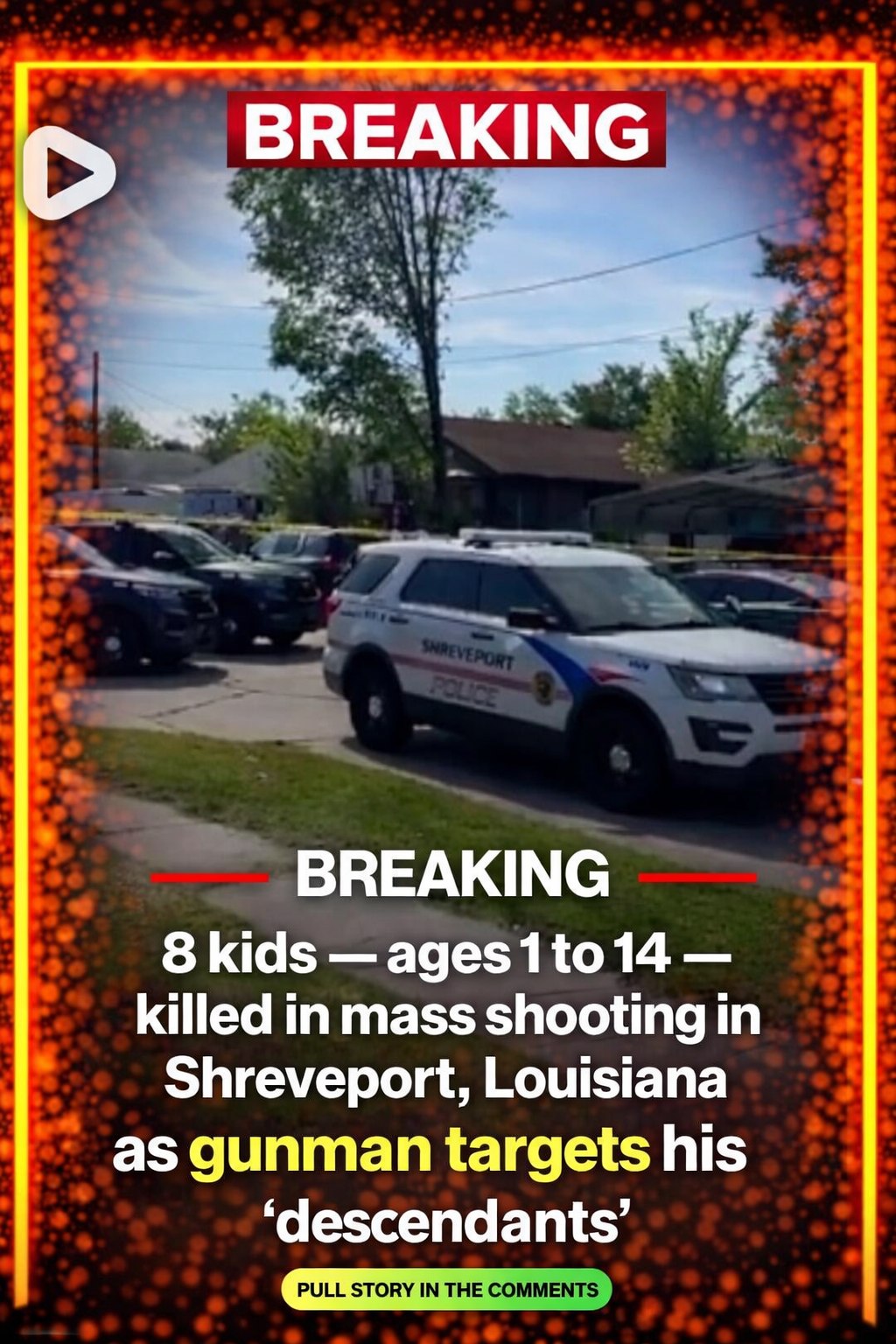
Neighbors will never forget the silence after the gunfire stopped. The kind that feels heavier than any sound, pressing down on the night like a physical weight.
It was not the absence of noise. It was the absence of hope. Police moved from room to room under flashing red and blue lights, finding children who had gone to bed expecting only another ordinary night. They had brushed their teeth. They had said their prayers. They had been tucked in by parents who believed morning would come. It did not. Not for eight of them.
Investigators say the shooter targeted three homes, killing eight children between the ages of one and fourteen, then fleeing on foot before forcing a driver out of a car at gunpoint. The rampage spanned multiple locations, turning quiet residential streets into crime scenes. The youngest victim was barely more than a baby. The oldest was just beginning to imagine high school, first loves, a future. All of them were related to the gunman. He knew their names. He knew their faces. He knew where they slept. And he came for them anyway.
Officers caught up with him near West 79th Street and Linwood Avenue, ending the pursuit in a burst of bullets that left the gunman dead in the street. The confrontation was swift and final. Police had no choice, they said. He was armed. He was dangerous. He had already proven he would not hesitate. Behind them, an extensive crime scene stretched across two blocks and three shattered households. Evidence markers dotted driveways and sidewalks. Yellow tape fluttered in the wind. Neighbors stood in bathrobes, clutching coffee cups, staring at something they could not process.
As Shreveport s police chief spoke to cameras, families clung to each other, trying to understand how a man could turn on his own blood, and how a city is supposed to breathe again after this. His voice cracked. He did not apologize for it. There are no words for this. There is no script. There is only grief, raw and unmanageable, and the terrible responsibility of speaking for the dead when the living cannot find their voices.
The details are still emerging. Motives are being examined. Investigators are combing through phone records, social media posts, and witness statements. They are trying to piece together a timeline, to understand what could drive someone to such unimaginable violence. But understanding does not bring back the children. Understanding does not fill the empty beds. Understanding does not answer the question that every parent in Shreveport is asking tonight. Could this have happened to us.
The city is in mourning. Flags have been lowered. Churches have opened their doors for prayer vigils. Crisis counselors have been deployed to schools. The governor has issued a statement expressing horror and promising support. But none of that touches the families directly impacted. They are not thinking about politics or policy. They are thinking about the last time they saw their children alive. The last hug. The last goodnight. The last laugh. Those memories are now both treasure and torture.
Neighbors have started leaving flowers at the scene. Teddy bears. Candles. Handwritten notes. Strangers are driving from across the state to pay respects. They do not know the families. They do not need to. Grief is communal. Tragedy has a way of reminding us that we are all connected, that the line between safety and disaster is thinner than we want to believe. These children could have been anyone s children. That is what haunts the city most.
The shooter is dead. He will never face a jury. He will never explain why. He will never apologize. Some will say that is justice. Others will feel cheated, robbed of the chance to look him in the eye and ask how. Either way, the outcome is the same. Eight families are destroyed. A community is shattered. And the only person who could have answered the questions is gone.
The funerals will begin soon. There will be tiny caskets. There will be songs and scriptures and sobbing. There will be photographs of smiling children that no one can look at without crying. There will be words of comfort that feel hollow. There will be moments of anger, of disbelief, of numbness. Grief does not follow a schedule. It comes in waves. It pulls you under when you least expect it. The families will need help for years, not days. They will need neighbors to remember, to check in, to not disappear when the cameras leave.
Shreveport will heal, or try to. It will hold vigils and fundraisers and counseling sessions. It will talk about mental health and gun safety and warning signs. It will do all the things communities do after something unthinkable happens. But some wounds do not fully close. Some losses are carried forever. The city will never be the same. Neither will the families. Neither will the first responders who walked through those homes. Neither will the neighbors who heard the shots and prayed it was not their door being kicked in.
The silence after the gunfire stopped will linger. It will live in the empty playgrounds, the unused backpacks, the beds that will never be slept in again. It will live in the eyes of parents who no longer know how to face the morning. It will live in the hearts of a city that watched its children fall and could not stop it. That is the true horror of what happened. Not just the violence, but the helplessness. The knowledge that no matter how much you love your children, no matter how hard you try to protect them, you cannot control everything. You cannot save them from everyone. Not even from family.
The investigation will continue. Reports will be written. Theories will be debated. But the only truth that matters is this. Eight children are dead. They had names. They had favorite foods and favorite shows and favorite people. They had dreams. They had futures. And now they have only memories. That is not justice. That is not closure. That is just the unbearable weight of what remains. And the city, and the country, will carry it together, because there is no other choice. There is only moving forward, one breath at a time, hoping that somehow, somewhere, those children are at peace. Hoping that their families find strength. Hoping that this never happens again. But hoping is not enough. It never is. And that is the hardest truth of all.