
It started as one of those ordinary afternoons that don’t seem important at the time. I had gone to visit a friend, expecting nothing more than a quiet catch-up, a few hours of coffee, conversation, and the comforting rhythm of shared stories that drift from topic to topic without any real direction.
The kind of visit where time softens and nothing unusual is supposed to happen.
We sat in her kitchen for what felt like hours, cups refilled more than once, talking about work, family, small frustrations, and everything in between. It was easy, familiar, the kind of conversation that doesn’t demand attention because it flows so naturally. But somewhere between the laughter and the pauses, something in the bathroom caught my attention in a way I didn’t expect.
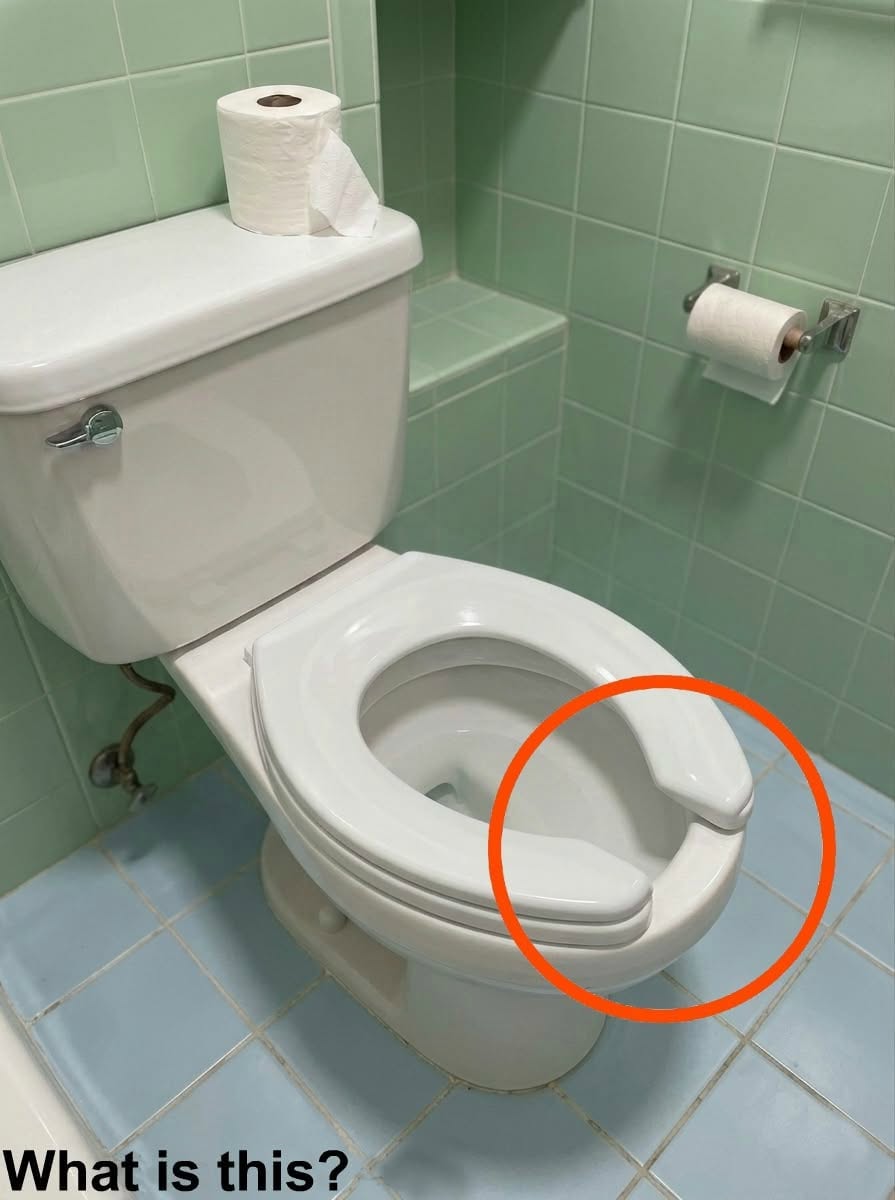
At first, I barely registered it. It was just a detail in the background, something peripheral that the brain usually filters out. But later, when I went to use the bathroom, it suddenly came into focus. The toilet seat looked… wrong. Not broken exactly, just incomplete. Like someone had taken a normal seat and erased a portion of it, leaving an open curve instead of a full circle.
I remember pausing for a moment, trying to make sense of it. It wasn’t dramatic or alarming, just unfamiliar in a way that felt oddly unsettling. It was the kind of object you’ve seen thousands of times in your life, the kind of thing you assume you fully understand without ever really thinking about it. And yet, there it was, behaving like a small contradiction in the middle of an otherwise ordinary room.
When I came back to the kitchen, I mentioned it casually, expecting a simple explanation. Instead, my friend laughed. Not unkindly, but with the kind of amused disbelief that suggests you’ve pointed out something obvious you somehow missed. Her reaction only deepened my confusion. The more she laughed, the more the object in my mind seemed to shift from a simple bathroom fixture into something strangely puzzling.
It’s a curious thing when someone laughs at your confusion about something so basic. It doesn’t just make you question the object; it makes you question your own perception. How could something so familiar suddenly appear so unfamiliar? How could something I had used my entire life suddenly feel like I was seeing it for the first time?
I tried to let it go, to push the image out of my mind and return to the conversation. But it lingered. The rest of the evening continued as normal, yet somewhere in the background of my thoughts, that incomplete circle kept returning. It wasn’t even about curiosity anymore. It was about discomfort, the feeling that there was something I should know but didn’t.
Later, when I got home, I mentioned it to my husband almost in passing, expecting him to dismiss it or explain it immediately. Instead, he stared at me for a moment, genuinely unsure. He admitted he had never really thought about it either. That small moment of shared confusion somehow made it worse and better at the same time. I no longer felt silly for not knowing, but I was now fully invested in understanding what I had overlooked for so long.
That night, long after everything else had settled, I found myself doing something I hadn’t planned on doing: searching for answers. What began as casual curiosity turned into a quiet deep dive into forums, design discussions, and articles about everyday objects that go unnoticed despite being carefully engineered.
And that was when the answer finally emerged.
The toilet seat wasn’t broken. It wasn’t missing a piece. It wasn’t an unfinished design waiting for completion. It was intentional.
The open-front shape, I learned, exists for practical reasons that most people never think about. It is designed to improve hygiene by reducing contact in areas where cleanliness matters most. It helps minimize unnecessary touching, particularly in shared or public spaces where sanitation is a priority. It also makes cleaning easier, allowing better access for maintenance and reducing buildup in hard-to-reach areas.
What had initially looked like a strange omission was actually a small but deliberate improvement, refined over time to serve both function and hygiene. It was not a mistake in design, but a solution to problems most users never consciously consider.
Sitting with that realization, I found myself thinking differently about the object I had overlooked for so long. It wasn’t just a toilet seat anymore. It was an example of how design quietly shapes everyday life without demanding attention or explanation. It was a reminder that many of the things we assume are simple are often the result of careful thought, trial, and intention.
What struck me most was not the explanation itself, but the experience of not knowing. How easily something so ordinary can slip past years of familiarity without ever being truly understood. How confidence in our assumptions can make us blind to details that are right in front of us.
In a strange way, the discovery stayed with me longer than the confusion. It changed how I looked at other everyday objects, the ones I use without thinking, the ones that seem too simple to question. Because if something as basic as a toilet seat can carry hidden purpose, then how many other small details in daily life are quietly doing the same?
What began as a moment of embarrassment in a friend’s bathroom turned into something unexpectedly reflective. A reminder that not everything unfamiliar is wrong, and not everything familiar is fully understood. Sometimes, the world hides its logic in the most ordinary places, waiting for a moment of curiosity to reveal it.