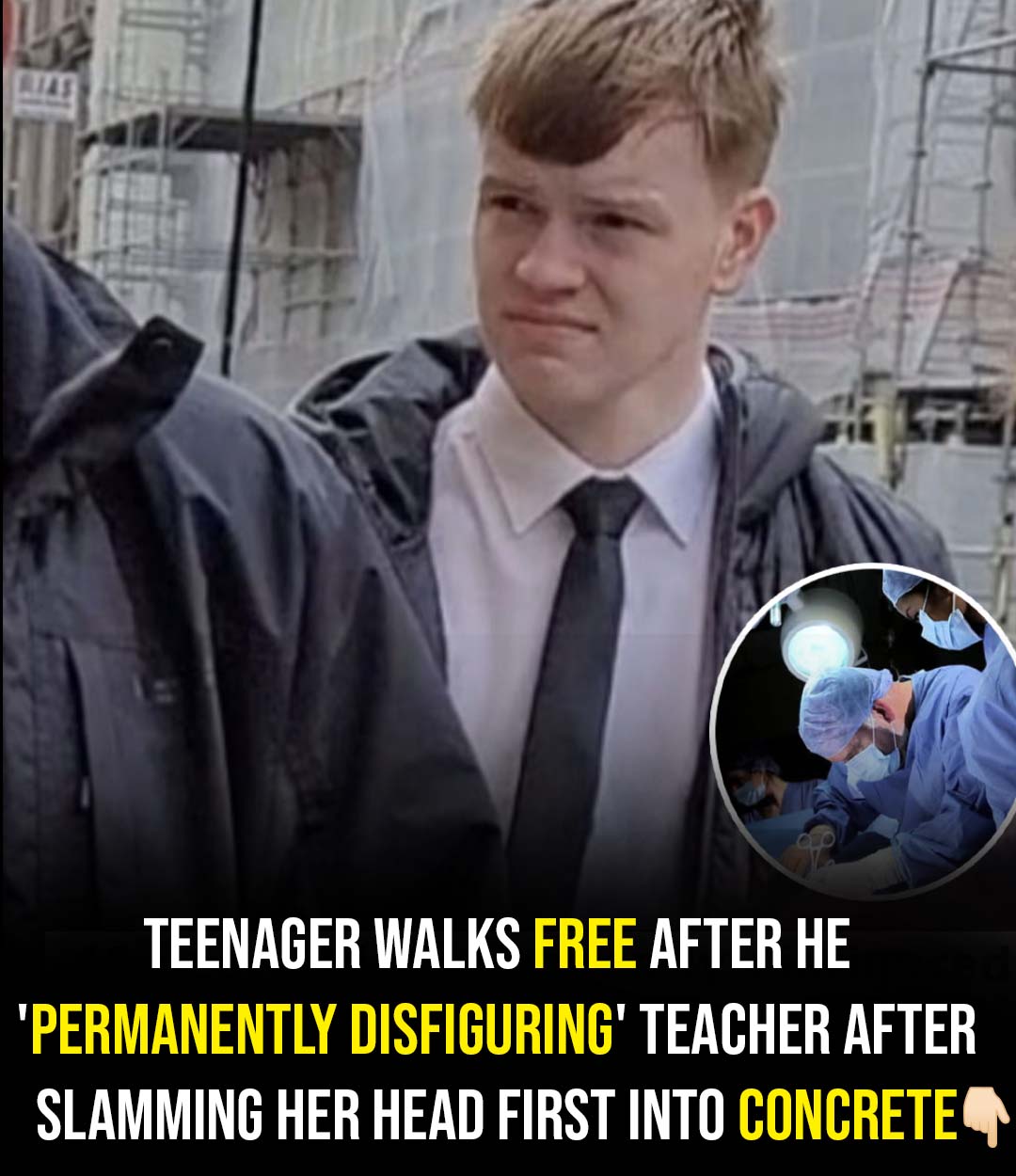
What began as an ordinary school day ended with a tragedy that would alter two lives forever and ignite a heated debate about justice, accountability, and rehabilitation.
For years, teachers had known Carol Shaw as someone who cared deeply about her students. Like many educators, she often found herself stepping into difficult situations, trying to calm tensions, resolve conflicts, and support young people facing challenges beyond the classroom.
On the day everything changed, she did what countless teachers do every day.
She tried to help.
What followed would leave her physically and emotionally scarred, forcing her to confront consequences that would last far beyond the walls of the school where she had dedicated so much of her life.
The incident involved Kieran Matthew, a teenager whose troubled history had already been marked by significant hardship. Reports later revealed a childhood filled with severe difficulties, including abuse, trauma, learning challenges, and persistent struggles that had shaped much of his young life.
Yet on that day, none of those details could prevent what happened.
A situation that began as a disciplinary or behavioral issue quickly escalated. As tensions rose, Shaw stepped forward in an effort to de-escalate the confrontation. She was not acting as an enforcer or adversary. She was acting as a trusted adult attempting to restore calm and protect those around her.
Instead, she became the victim of a violent attack.
The injuries she sustained were devastating.
Medical treatment addressed the immediate physical damage, but some consequences could never be fully repaired. The attack left permanent scars that would serve as a daily reminder of the moment her life changed.
For Shaw, recovery proved far more complicated than healing wounds.
The physical injuries were only one part of the story.
The emotional impact lingered long after hospital visits ended. Confidence that had once come naturally became more difficult to find. Activities that previously felt routine suddenly carried anxiety and uncertainty. Returning to normal life was not simply a matter of time.
Many victims of serious violence describe a similar experience.
The event itself may last only seconds or minutes.
Its effects can last for years.
Every scar carries a memory.
Every reminder brings emotions back to the surface.
For Shaw, the attack affected not only her health but also her sense of security, independence, and professional identity.
Teaching had been more than a job.
It had been a calling.
Now the very environment where she had devoted her energy and compassion became linked to one of the most traumatic experiences of her life.
As details of the case emerged, public attention intensified.
People struggled to understand how such a devastating outcome could occur in a school setting. Many focused on Shaw’s suffering and the extraordinary courage required to move forward after such a life-altering event.
Others began examining the background of the teenager responsible.
What they found was a deeply troubling history.
Court proceedings revealed that Kieran Matthew had endured severe challenges throughout his childhood. Reports described abuse, psychological trauma, learning disabilities, and repeated experiences that left lasting emotional wounds.
Experts pointed to conditions including post-traumatic stress and developmental difficulties that had affected his behavior and decision-making.
To some observers, these details helped explain how events reached such a tragic point.
To others, they changed nothing.
The attack had happened.
A teacher had been permanently injured.
A life had been dramatically altered.
No amount of explanation could erase those facts.
The legal proceedings ultimately brought another layer of controversy.
When sentencing was announced, many members of the public reacted with surprise and frustration.
Rather than imposing a traditional custodial sentence, the court emphasized rehabilitation and treatment. The decision reflected a belief that addressing underlying issues offered a greater chance of preventing future harm than imprisonment alone.
Judges considered expert testimony, psychological evaluations, and the extensive history of trauma that had shaped Matthew’s life.
The court acknowledged both the severity of the attack and the extraordinary difficulties he had experienced growing up.
The resulting sentence sought to balance public safety, accountability, and rehabilitation.
Yet for many observers, the decision felt deeply unsatisfying.
Supporters of a harsher punishment argued that the gravity of Shaw’s injuries demanded stronger consequences. They questioned whether justice had truly been served when the victim would continue living with permanent physical and emotional scars.
Their argument was simple.
Regardless of the circumstances leading up to the attack, the damage inflicted could never be undone.
Shaw’s life had changed forever.
Why, they asked, should the person responsible avoid prison?
Others viewed the case differently.
They argued that the justice system must consider not only the harm caused but also the factors that contributed to it. In their view, Matthew’s traumatic upbringing represented a series of failures by institutions and adults long before the attack occurred.
They believed that punishment alone would do little to address the deeper issues at the heart of the case.
This division transformed the story into something larger than a single courtroom decision.
It became a national conversation about competing ideas of justice.
Should courts focus primarily on punishment?
Should rehabilitation take precedence when severe trauma plays a role?
Can both goals coexist?
And perhaps most importantly, how should society respond when the needs of victims and offenders appear to pull in different directions?
For many people, Carol Shaw’s experience remains the emotional center of those questions.
Her suffering is visible.
The scars remain.
The memories remain.
The consequences continue every day.
While legal proceedings eventually conclude, victims often continue navigating challenges long after public attention fades.
Medical appointments may end, but emotional recovery rarely follows a predictable timeline.
Many survivors must rebuild confidence piece by piece.
They learn to navigate fears, triggers, and uncertainties that others cannot easily see.
The attack became a chapter in Shaw’s life that she never chose, yet one she must continue carrying.
At the same time, supporters of rehabilitation point out that Matthew’s story also reflects painful realities.
Children who experience severe abuse, neglect, and trauma often face enormous obstacles throughout their lives. Without effective intervention, those struggles can grow more severe over time.
The tragedy, they argue, began long before the day of the attack.
It started with years of suffering that were never adequately addressed.
That perspective does not excuse what happened.
Rather, it seeks to understand how it became possible.
The tension between these viewpoints explains why the case continues to provoke strong reactions.
People naturally empathize with Shaw’s pain.
Many also recognize the profound hardship Matthew endured before reaching adulthood.
The challenge lies in determining how justice should respond when both realities exist simultaneously.
Years later, the case continues to raise difficult questions without offering easy answers.
A teacher who tried to help suffered life-changing injuries.
A troubled teenager became responsible for devastating harm.
A court attempted to balance accountability with rehabilitation.
And a public searching for fairness found itself divided.
Perhaps that is why the story remains so powerful.
It refuses to fit neatly into simple categories of right and wrong.
Instead, it exposes the complicated intersection of trauma, responsibility, compassion, and justice.
For Carol Shaw, the consequences remain deeply personal.
For Kieran Matthew, the future depends on whether rehabilitation succeeds.
And for everyone following the case, one question continues to linger long after the courtroom emptied:
When tragedy leaves lasting scars on both sides, what does true justice actually look like?