
The fragile calm hanging over Gaza was shattered once again after Hamas confirmed that one of the senior figures connected to its military wing was targeted during a major overnight air strike in Gaza City.
The development immediately intensified fears that the already unstable situation in the region could spiral further, especially as residents struggle through months of devastation, uncertainty, and repeated disruptions to daily life.
According to statements released on Wednesday, Hamas confirmed that Mohammed Odeh was among those affected during the strike, which reportedly hit a residential area in the northern part of Gaza late Tuesday evening. The group stated that members of his family were also caught in the attack, which took place as many residents were preparing for the upcoming Eid al-Adha holiday.
The incident quickly drew international attention because of Odeh’s reported position within Hamas’s armed structure. He was believed to have recently assumed a senior leadership role connected to the Qassam Brigades following a series of previous Israeli operations targeting top figures within the organization.
Israeli officials publicly addressed the operation shortly after reports emerged from Gaza.
Israeli Defence Minister Israel Katz described the strike as a major development in Israel’s ongoing campaign against Hamas leadership figures. Prime Minister Benjamin Netanyahu also referenced the operation, while the Israeli military stated that the mission followed what it described as months of intelligence monitoring and surveillance.
According to the Israeli military, Odeh had allegedly played a role in coordinating operations connected to the October 2023 attacks in southern Israel. Israeli officials further described him as one of the remaining senior figures still active within Hamas’s military structure after numerous leadership changes over the course of the conflict.
Inside Gaza City, however, the atmosphere following the strike was one of shock, confusion, and destruction.
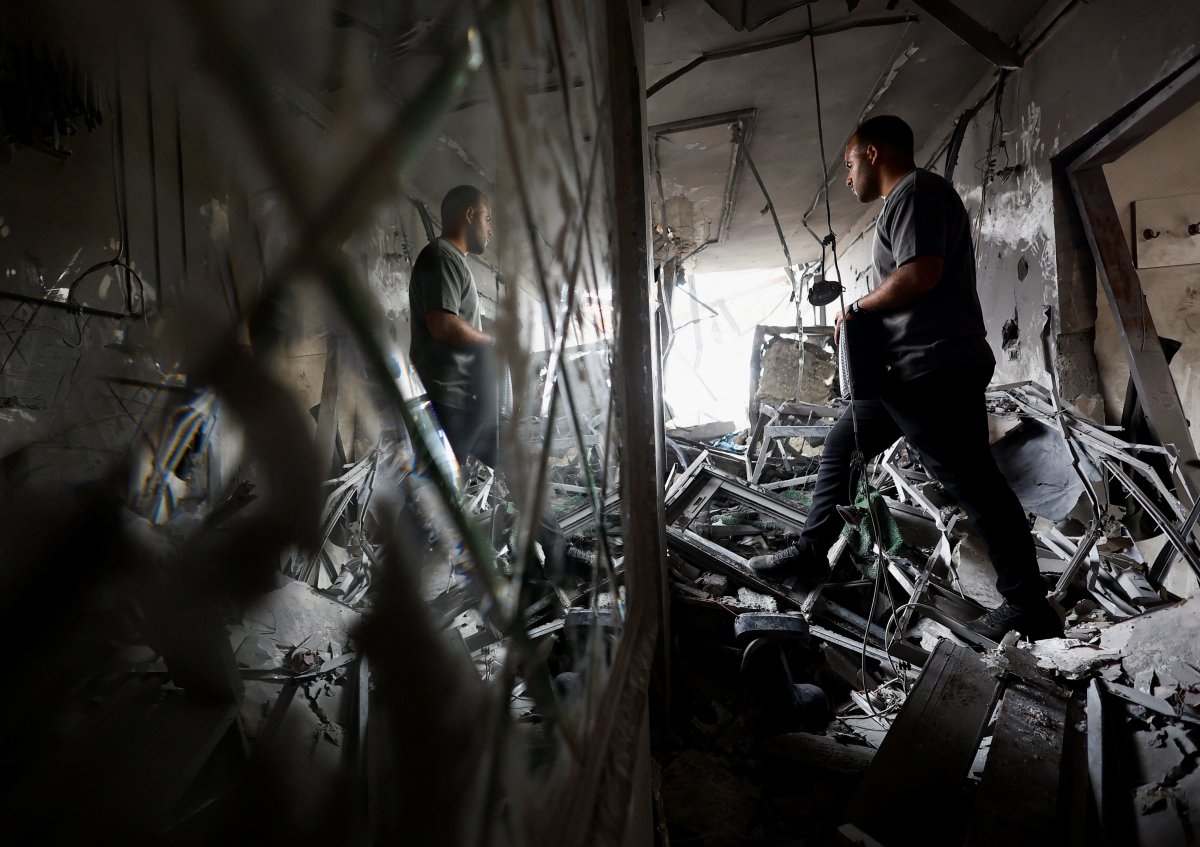
Residents described hearing several powerful explosions late in the evening as people crowded markets and stores ahead of the religious holiday. The Remal neighborhood, one of Gaza City’s busiest urban areas, reportedly suffered extensive damage after the strike hit near commercial and residential sections filled with civilians preparing for Eid celebrations.
Witnesses spoke about scenes of panic as families rushed through smoke-filled streets searching for relatives and attempting to understand what had happened. Videos and images circulating online appeared to show shattered storefronts, damaged apartments, and debris scattered across roads that had been crowded with shoppers only moments earlier.
For many people in Gaza, the timing of the strike deepened the emotional impact.
Eid al-Adha is traditionally a period centered around prayer, family gatherings, meals, and moments of peace. Instead, residents once again found themselves navigating fear, uncertainty, and destruction during what should have been one of the holiest and most joyful periods of the year.
Journalists reporting from Gaza City described a chaotic scene unfolding almost immediately after the explosions. Emergency responders rushed into the area while crowds gathered near damaged buildings trying to locate survivors and assist the injured. Hospitals already operating under severe strain reportedly received another influx of patients overnight.
The strike also highlighted how densely populated urban environments continue to complicate the conflict.
In Gaza, military targets and civilian life often exist within extremely close proximity. Residential buildings, crowded markets, schools, and commercial districts frequently become part of larger military operations, leaving ordinary civilians trapped between armed groups and military responses far beyond their control.
As news spread about Odeh, analysts quickly began discussing what the development could mean for Hamas internally.
Over the course of the conflict, Israel has repeatedly focused operations on senior Hamas figures in an effort to weaken the group’s command structure. Several prominent political and military leaders connected to Hamas have already been targeted since the war began, creating constant changes within the organization’s leadership hierarchy.
Despite these operations, Hamas has continued functioning across Gaza, adapting to losses while maintaining its presence in various parts of the territory. Experts note that leadership transitions inside armed groups often create temporary disruption, but rarely end conflicts on their own.
At the same time, the broader humanitarian situation inside Gaza continues worsening.
Large parts of the territory remain heavily damaged after months of air strikes, ground operations, displacement, and shortages affecting food, electricity, fuel, and medical supplies. International aid organizations have repeatedly warned that civilians are facing severe hardships as infrastructure struggles to function under continuous pressure.
The latest strike also reignited debate surrounding the so-called ceasefire currently under strain.
Although attempts at reducing violence and stabilizing conditions have been discussed repeatedly by international mediators, clashes and military operations continue to erupt across different parts of Gaza. Many residents say the word “ceasefire” no longer reflects the reality they experience daily.
Instead, periods of relative quiet are often interrupted suddenly by new operations, explosions, or escalating tensions.
For families living in Gaza, uncertainty has become constant.
Parents attempt to comfort children frightened by overnight blasts. Shop owners reopen damaged businesses only to face new risks days later. Hospitals continue operating under pressure while humanitarian workers warn that long-term recovery becomes harder with every new escalation.
Meanwhile, political rhetoric surrounding the conflict continues intensifying on all sides.
Israeli leaders maintain that operations targeting Hamas commanders are necessary for national security and future stability. Hamas, on the other hand, portrays such operations as part of a broader campaign against Palestinians in Gaza. International reactions remain deeply divided, with governments and organizations debating military strategy, humanitarian law, civilian safety, and the future of the region.
The strike involving Mohammed Odeh also underscored how symbolic figures become during prolonged conflicts.
For supporters of Israel’s military strategy, operations against senior Hamas figures represent strategic progress and proof of intelligence capabilities. For many Palestinians, however, the destruction surrounding such operations reinforces feelings of collective trauma and instability that extend far beyond political leadership.
Caught between these competing narratives are millions of ordinary civilians simply trying to survive another day.
Children still attend makeshift schools where possible. Vendors reopen damaged stalls. Families gather around limited electricity hoping for updates about missing relatives or safer areas to relocate. Life continues in fragments, interrupted repeatedly by the realities of war.
As regional tensions remain high, international observers fear that any major development involving senior Hamas figures could trigger further instability. Diplomatic efforts to reduce escalation continue behind closed doors, but trust between the sides remains dangerously low.
For now, Gaza wakes once again to another morning filled with smoke, uncertainty, and unanswered questions.
In the middle of political statements, military announcements, and global headlines, many residents are focused on far simpler concerns: finding loved ones, repairing homes, securing food, and making it safely through another night.
And as the conflict stretches further into the future, the distance between political objectives and human suffering continues to grow harder for the world to ignore.