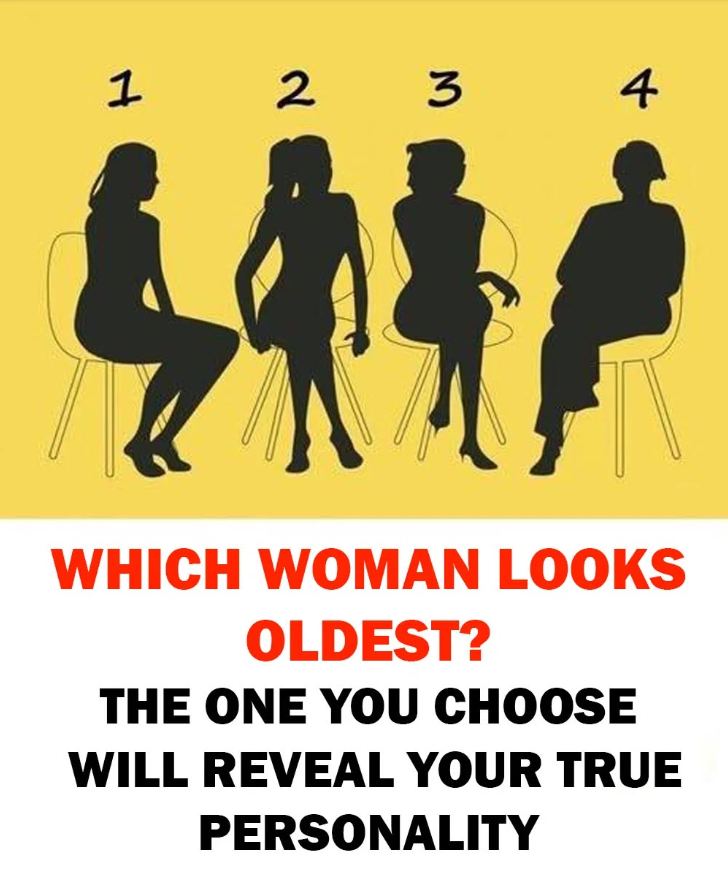
At first glance, it seems like nothing more than a simple internet image. Four women standing side by side, each with a different posture, hairstyle, and silhouette. The question appears harmless enough: Which woman looks the oldest to you?
Most people answer within seconds.
That instant reaction is exactly what makes these personality tests so fascinating. Before logic fully steps in, the brain makes a rapid judgment based on instinct, emotion, memory, and personal perception. In many ways, the answer says less about the women in the image and more about the person looking at them.
Over the last few years, visual personality quizzes like this have exploded across social media because they create an unusual combination of curiosity and self-reflection. People love discovering what their subconscious choices might reveal about their fears, habits, relationships, strengths, and emotional patterns. Some treat the results as entertainment, while others are shocked by how strangely accurate they feel.
The truth is that the human mind constantly forms impressions without conscious effort. In everyday life, people evaluate trustworthiness, confidence, age, mood, and even intelligence within seconds of seeing someone. Small details like posture, clothing, body language, or facial expression can completely change how a person is perceived. Tests like this simply turn that hidden mental process into a game.
The image itself is deceptively simple. Four women appear from behind, each carrying a slightly different posture and energy. There are no obvious clues, no faces, and no clear “correct” answer. Yet almost everyone immediately gravitates toward one choice. Some people focus on body shape. Others notice posture, confidence, hair, or movement. Even personal experiences can influence the answer. Someone raised around strict authority figures may perceive maturity differently from someone who values creativity or independence.
Psychologists have long understood that perception is deeply personal. Two people can stare at the same image and walk away with completely different interpretations because their brains prioritize different information. That is why personality quizzes based on first impressions feel oddly revealing. They expose not only what people notice first, but also what their minds instinctively associate with age, confidence, stability, or vulnerability.
Those who choose Woman #1 are often described as calm, balanced, and emotionally grounded individuals. Something about her silhouette tends to attract people who value elegance, composure, and reliability. These are usually individuals who dislike unnecessary conflict and prefer harmony over chaos. They often become the “stable” person in their family or friend group the one others lean on during difficult moments.
People connected to this choice tend to observe quietly before speaking. They notice emotional shifts, hidden tensions, and subtle details many others miss entirely. Because of this, they are frequently trusted with secrets and advice. Friends often describe them as mature beyond their years.
Yet beneath that calm exterior is often a hidden exhaustion. Many people who identify with Woman #1 carry emotional burdens silently. They feel responsible for maintaining peace and keeping things together, even when they themselves feel overwhelmed. Their strength becomes both a gift and a pressure they rarely admit aloud.
Those drawn to Woman #2 usually carry a very different energy. This choice often reflects ambition, boldness, and fierce independence. These individuals admire confidence and determination, both in themselves and others. They tend to move quickly through life, constantly planning, achieving, and pushing toward the next goal.
People in this category are often direct communicators. They speak honestly, sometimes bluntly, because they value authenticity over politeness. Others may see them as fearless or intimidating, but internally they often worry about being misunderstood. Their strong personalities can unintentionally create distance, even when they deeply care about the people around them.
What defines them most is resilience. Life may knock them down repeatedly, but they rarely stay down for long. Challenges tend to sharpen them rather than break them. They may not always ask for help, but their ability to keep moving forward through hardship becomes one of their greatest strengths.
Those who instantly notice Woman #3 are often highly intuitive and emotionally sensitive people. This choice is frequently connected to creativity, empathy, and emotional awareness. These individuals tend to absorb the energy of the people around them almost like emotional sponges.
They notice tension quickly. A shift in tone, an awkward silence, or hidden sadness rarely escapes them. Because of this sensitivity, they often become deeply compassionate listeners and loyal friends. Superficial conversations usually leave them drained because they crave authenticity and emotional depth.
Creativity often plays a major role in their lives as well. Many are drawn toward art, writing, music, or imagination because it gives them a safe way to process emotions that feel too heavy to carry silently.
However, emotional intelligence can come with a cost. People who identify with Woman #3 often overthink situations endlessly. Conversations replay in their minds long after they end. A single misunderstanding can haunt them for days. They may struggle to separate their emotions from the emotions of others, making boundaries difficult to maintain.
Still, their empathy is often what makes them unforgettable. People trust them because they feel understood around them in ways they rarely experience elsewhere.
Meanwhile, those who select Woman #4 are usually practical, independent thinkers who value logic and realism. They tend to focus less on appearances and more on substance. These individuals often approach life cautiously, preferring careful decisions over impulsive reactions.
At first, they may appear distant or reserved. They rarely reveal emotions immediately because trust matters deeply to them. But once someone earns their loyalty, they become incredibly dependable and protective.
People connected to this choice often dislike relying on others. Independence feels safer than vulnerability, and solving problems alone gives them a sense of control. They usually handle stressful situations calmly and logically, even when everyone else around them is panicking.
Yet that same self-protective nature can sometimes make them seem emotionally unavailable. In reality, many simply guard their feelings carefully because they fear disappointment or betrayal more than they admit.
What makes this personality test so intriguing is not whether the descriptions are scientifically accurate, but how strongly people react to them. Some laugh at the results. Others feel strangely exposed. Entire comment sections online fill with debates from people convinced the test described them perfectly.
That reaction reveals something important about human nature. People are constantly searching for ways to better understand themselves. Even a simple image can become a mirror reflecting insecurities, desires, fears, strengths, and emotional habits people rarely stop to examine.
The popularity of these tests also highlights how differently human beings experience the exact same world. One person sees confidence where another sees age. One notices posture while another notices emotion. The image itself never changes, but perception transforms everything.
In the end, personality quizzes like this are less about proving truth and more about sparking reflection. They remind people that first impressions are powerful, instincts reveal hidden patterns, and perception says as much about the observer as it does about the thing being observed.
And perhaps that is why these tests continue spreading across the internet so quickly. Beneath the entertainment and curiosity lies a deeper question people quietly carry every day: What does the way I see the world reveal about me?