The atmosphere aboard the stranded cruise ship changed long before passengers received official answers.
At first, there was only uncertainty. Travelers noticed increased activity among medical staff, quiet conversations between crew members, and growing tension surrounding several sick passengers. Then came the reports no one wanted to hear: multiple people had died, health officials were investigating a rare hantavirus outbreak, and authorities were working urgently to track everyone who may have been exposed.
Within hours, anxiety spread faster than information.
Passengers stood in narrow hallways whispering theories to one another. Families locked themselves inside cabins refreshing news updates on their phones while trying to contact relatives back home. Every cough became alarming. Every headache suddenly felt suspicious. What had begun as a luxury voyage quickly transformed into a floating center of fear drifting near the coast of Cape Verde.
The ship, carrying travelers from multiple countries, found itself trapped between caution and uncertainty. Several ports reportedly hesitated before allowing the vessel to dock, fearful of bringing a possible health threat onto land. Meanwhile, medical authorities raced to understand what exactly they were dealing with.
The World Health Organization soon confirmed several suspected hantavirus cases connected to the voyage, along with three deaths that intensified global attention almost immediately. Although officials repeatedly emphasized that the outbreak appeared limited, the psychological effect was already impossible to contain.
For millions of people watching online, the situation felt hauntingly familiar.
Images of quarantined passengers, health screenings, and international concern instantly revived memories of the Covid-19 pandemic. Even though experts stressed that hantavirus spreads very differently and far less easily than Covid, public fear did not wait for detailed explanations. Years after living through lockdowns, border closures, and overwhelming uncertainty, many people remain deeply sensitive to any story involving mysterious illnesses and cruise ships.
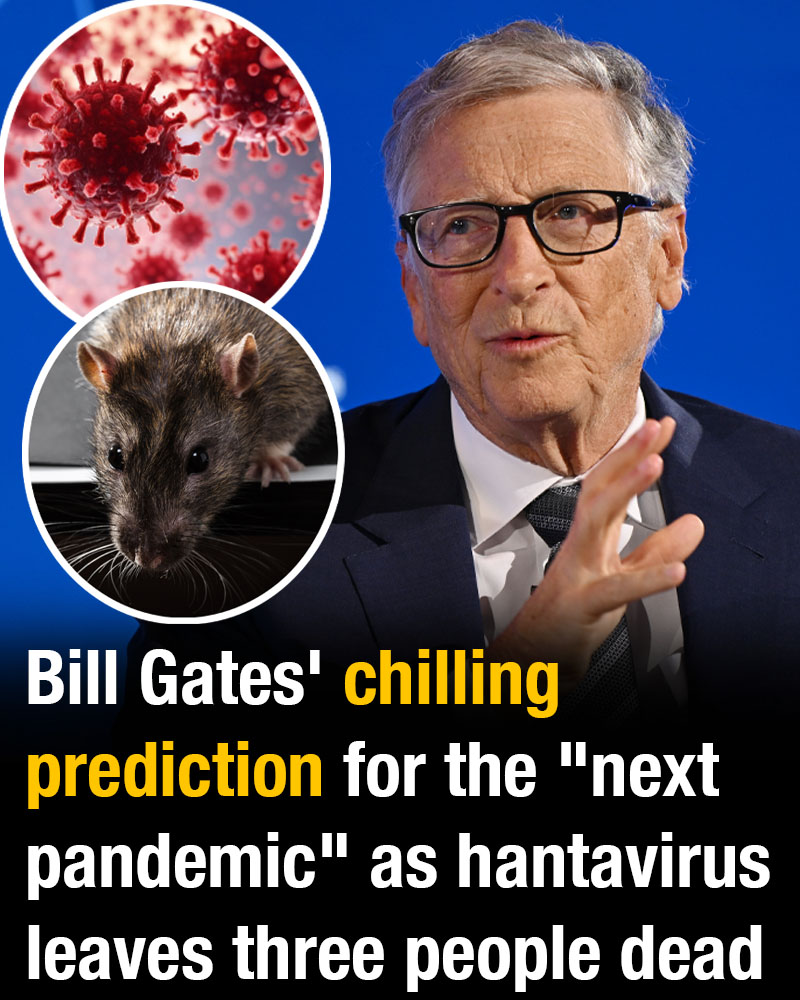
That fear only intensified when an old interview featuring Bill Gates suddenly resurfaced online.
In the clip, Gates discussed the possibility of future pandemics and warned that the world could one day face a virus even more disruptive than Covid-19. The interview, originally intended as a broader discussion about global preparedness and public health infrastructure, quickly began circulating across social media alongside headlines about the cruise ship outbreak.
For some viewers, the timing felt chilling.
His calm remarks about “the next pandemic” suddenly seemed less theoretical and more immediate. Social media users began sharing dramatic reactions, connecting unrelated fears and speculating wildly about what might happen next. Conspiracy theories spread rapidly. Videos discussing worst-case scenarios accumulated millions of views within hours.
The emotional response revealed how deeply the pandemic years continue to shape public psychology.
Before Covid, most people likely would have viewed a small outbreak of a rare illness as a distant medical story. Now, even isolated cases can trigger widespread anxiety because memories of global shutdowns remain fresh. Public trust in health messaging has also become more fragile, making reassurance harder for authorities to deliver effectively.
Still, experts repeatedly urged calm.
Epidemiologists emphasized that hantavirus is not easily transmitted between people under normal circumstances and that infections remain extremely rare compared to common viral illnesses. Unlike airborne respiratory viruses that spread rapidly through crowds, hantavirus infections are usually linked to specific environmental exposure, particularly contact with rodent droppings, urine, or contaminated dust particles.
Investigators tracing the cruise ship cases reportedly focused on an earlier excursion involving birdwatching activities near a landfill site in Ushuaia. Officials suspected that exposure to contaminated environmental conditions during that stop may have played a role in the infections.
That detail shifted the narrative significantly.
Rather than signaling the start of a highly contagious global outbreak, health experts explained that the situation appeared tied to a localized exposure event. Most people around the world, they stressed, would likely never encounter hantavirus directly in their lives.
But fear rarely operates according to statistical probability.
For passengers trapped aboard the vessel, the danger felt intensely personal regardless of how uncommon the virus actually was. Every passing hour deepened uncertainty. Medical evaluations continued while health authorities quietly reconstructed passengers’ movements across borders, trying to identify who may have interacted with infected individuals before the ship was finally permitted to dock in the Canary Islands.
Behind the scenes, public health teams moved carefully to prevent panic while still taking the situation seriously.
That balance has become one of the greatest challenges of the post-pandemic era.
Officials must respond quickly enough to maintain public safety while avoiding language that fuels unnecessary hysteria. Yet in the age of social media, emotional reactions often spread much faster than factual explanations. By the time experts clarify risks, fear has frequently already taken hold online.
The cruise ship incident became a perfect example of that dynamic.
Three deaths, an unfamiliar virus, international travel, and a stranded vessel created a story almost designed to trigger collective anxiety. The resurfaced Bill Gates interview only amplified those emotions further, transforming a contained medical investigation into a much larger conversation about global vulnerability and preparedness.
At the center of the fear was a question many people quietly carry now:
Could it happen again?
The Covid-19 pandemic permanently altered how society responds to health scares. People learned how quickly ordinary routines can disappear. They witnessed borders close, hospitals overflow, and entire economies freeze under the pressure of an invisible threat. Even years later, those experiences continue shaping reactions to new outbreaks, no matter how different the diseases themselves may actually be.
That lingering psychological impact explains why even experts’ reassurances sometimes struggle to calm public concern.
People no longer hear medical updates in isolation. They interpret them through memories of uncertainty, conflicting information, and emotional exhaustion from previous crises. Trust became harder to rebuild after years of fear, political conflict, and changing guidance during the pandemic.
Yet many health specialists insist there is also a positive side to heightened awareness.
Global surveillance systems now identify unusual outbreaks more rapidly. International cooperation between medical agencies improved significantly after Covid. Public health organizations are quicker to investigate suspicious clusters, trace exposures, and communicate risks before situations escalate further.
In that sense, the response to the cruise ship outbreak reflected lessons already learned.
Passengers were monitored quickly. International agencies coordinated across borders. Cases were traced carefully. Medical authorities responded with caution while continuing to emphasize that widespread transmission appeared unlikely.
For some observers, the incident became less about imminent catastrophe and more about the fragile emotional state the world still inhabits after years of collective trauma.
The fear aboard the ship was real.
The deaths were real.
The suffering experienced by affected passengers and families was undeniably real.
But so too was the reminder that fear itself can spread faster than illness when uncertainty fills the gaps between facts.
As the ship finally reached port and investigations continued, experts returned to the same message repeatedly: vigilance matters, but panic helps no one. Hantavirus remains rare, exposure risks are usually specific and limited, and most people are unlikely ever to encounter it directly.
Still, the episode left behind something difficult to ignore.
Not simply fear of disease, but awareness of how quickly the world can become anxious again.
How one outbreak can reopen memories people thought they had buried.
And how, in the years after a pandemic reshaped humanity, even a distant virus on a stranded ship can make the entire world pause and wonder what comes next.