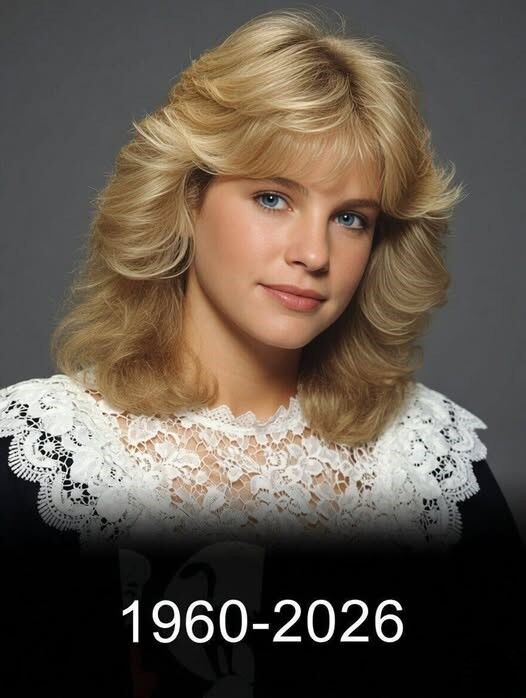
At a time when many young actors spend years chasing recognition, fighting for auditions, and hoping for a single breakthrough, Jennifer Runyon found herself in a position others only dream about.
The 1980s had opened the door to opportunity, and she stepped through it with a presence that was both natural and memorable. Her performances carried a sincerity that made audiences pay attention, not through spectacle, but through authenticity. It was the kind of momentum that often leads to bigger roles, higher visibility, and a long career in the spotlight.
But just as the path ahead began to widen, she made a decision that defied the logic of the industry around her.
Instead of pushing forward, instead of building on her growing recognition, she chose to step away.
To many, it might have seemed unthinkable. Hollywood is built on persistence, on staying visible, on capitalizing on every opportunity before it slips away. Walking away at the moment when doors are opening is often seen as a risk, even a mistake. Yet for Runyon, it was neither. It was a deliberate choice, grounded not in fear or failure, but in clarity.
She chose a different kind of life.
Rather than holding tightly to the spotlight, she moved toward something quieter, more grounded, and deeply personal. The world of premieres, interviews, and scripted roles gave way to everyday experiences that rarely make headlines but shape a life in lasting ways. School events replaced red carpets. Family dinners took the place of industry gatherings. The rhythm of her days shifted from production schedules to the unpredictable, often messy, but meaningful flow of real life.
In doing so, she quietly challenged one of Hollywood’s most persistent assumptions that success must always be pursued, expanded, and never voluntarily left behind.
Her decision was not about rejecting her past, but about redefining her future. She did not walk away because the industry had nothing left to offer her. She walked away because she recognized that there was something else she valued more. In a culture that often measures worth by visibility and recognition, choosing privacy can feel like stepping into obscurity. But for Runyon, it was a step toward presence rather than absence.
The roles she played during her time on screen did not disappear with her departure. If anything, they gained a different kind of weight. There was a grounded honesty in her performances, a sense that she was not trying to become larger than life, but rather to reflect it in a way that felt real. That authenticity has allowed her work to endure beyond the decade that first introduced it to audiences.
Looking back, her career does not feel incomplete. It feels intentional.
There is a tendency to view careers in entertainment as unfinished if they do not stretch across decades or reach ever-higher levels of fame. But that perspective assumes that the goal is always expansion. In Runyon’s case, the arc of her career resembles something more self-contained, more purposeful. It begins, unfolds, and concludes not because opportunities ran out, but because she chose a different direction.
This distinction matters.
By stepping away, she avoided the pressures that often come with prolonged exposure in the public eye. The constant need to maintain relevance, the scrutiny that extends beyond professional work into personal life, and the challenge of balancing identity with public perception all of these are part of the cost of staying in the spotlight. Her choice allowed her to build a life that existed outside of those demands.
It also reflects a broader truth about fulfillment. Success, as defined by external recognition, is only one measure among many. For some, it aligns with personal goals and values. For others, it does not. Runyon’s story highlights the possibility that fulfillment can be found not in continuing to climb, but in choosing where to stand.
There is a quiet strength in that kind of decision.
It requires a willingness to step away from expectations, both those imposed by others and those we internalize ourselves. It means accepting that certain opportunities will pass, and that the path ahead may not be as visible or as celebrated. But it also opens the door to a different kind of richness, one that is not dependent on public validation.
Her life after Hollywood has been defined less by what she left behind and more by what she chose to embrace. Family, privacy, and a sense of balance became central. These are not choices that generate headlines, but they are the foundation of a life that feels complete on its own terms.
For those who remember her from her time on screen, there is a sense of curiosity about what might have been. What roles could she have taken? How might her career have evolved? These questions are natural, but they also miss the point. Her story is not about unrealized potential. It is about realized intention.
She did not fade from view in the traditional sense. She redirected her presence.
In a world that often equates visibility with value, that distinction can be difficult to recognize. Yet it is precisely what makes her journey stand out. She demonstrated that stepping away is not always a loss. Sometimes, it is a gain one that is measured not in awards or recognition, but in the quality of life that follows.
The legacy she leaves behind is therefore not confined to her work in film and television. It extends into the example she set by choosing differently. She showed that it is possible to engage with an industry, contribute meaningfully to it, and then move on without regret.
Her story resonates because it speaks to a universal question: what does it mean to live a fulfilling life?
For some, the answer lies in continued ambition and achievement. For others, it lies in connection, stability, and presence. Jennifer Runyon’s journey suggests that the answer does not have to be the same for everyone, and that choosing one path over another is not a sign of failure, but of self-awareness.
In the end, her career is not defined by its length, but by its integrity. And her life beyond it is not defined by absence, but by intention.
She did not walk away from success. She walked toward something else and in doing so, she redefined what success could look like.