What was meant to be an unforgettable journey through one of the most remote and breathtaking regions on Earth has taken a dark and terrifying turn.
The MV Hondius, a vessel known for its high-end Antarctic expeditions, has become the center of a growing crisis after a suspected outbreak of a rare and deadly virus left passengers stranded at sea, cut off from safety and answers.
The ship, once filled with excitement and anticipation, now sits in a state of eerie stillness. Its engines may be idle, but inside, tension is anything but calm. Doors remain closed, movement is restricted, and a sense of uncertainty hangs heavily in the air. Passengers who days ago were admiring glaciers and wildlife are now confined to their cabins, watching events unfold through fragments of information and rising speculation.
The alarm was first raised when a Dutch couple onboard fell seriously ill. Their condition deteriorated rapidly, and within a matter of days, both had died. The sudden loss sent shockwaves through the ship, turning concern into fear. Soon after, another passenger a British traveler was reported to be in critical condition, later transferred to an intensive care unit after evacuation. As reports of additional individuals showing symptoms began to surface, what initially seemed like an isolated incident quickly escalated into something far more serious.
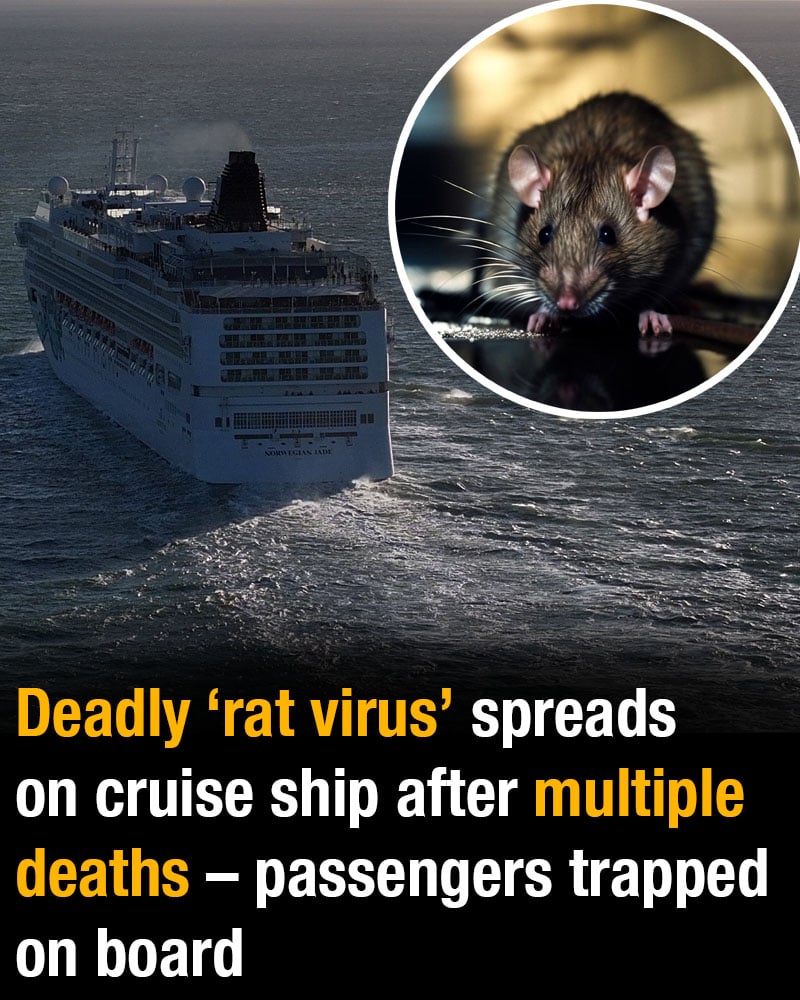
Health authorities suspect the involvement of a hantavirus, a rare but potentially lethal pathogen typically carried by rodents. The idea that such a virus could appear on a tightly controlled cruise ship in the remote Antarctic region has raised urgent questions. How did it get there? Was it introduced before departure, or did it somehow spread during the voyage? And perhaps most frightening of all could it be transmitting between people?
As investigators scramble for answers, the passengers remain in a state of forced waiting. With 149 individuals onboard, the ship has effectively become a floating quarantine zone. Despite being within sight of land at times, the vessel has been denied immediate docking clearance as authorities assess the risks. The irony is not lost on those inside: so close to help, yet completely out of reach.
Daily life onboard has been transformed into a controlled routine. Crew members, now operating under strict safety protocols, deliver meals while wearing masks and protective gloves. Interaction is kept to a minimum. Hallways that once buzzed with conversation are silent. The usual comforts of a luxury cruise shared dining, excursions, social gatherings have been replaced by isolation and caution.
For the passengers, the psychological strain is becoming as significant as the physical threat. With limited official updates and a constant stream of rumors circulating among cabins, uncertainty fuels anxiety. People refresh their phones repeatedly, searching for news, hoping for clarity. Each new piece of information, whether confirmed or not, carries the weight of life-or-death implications.
The involvement of global health authorities has added urgency to the situation. Experts are working to determine whether the virus remains confined to its traditional mode of transmission typically through contact with contaminated rodent droppings or urine or whether there is any evidence of human-to-human spread. This distinction is critical. If the virus is capable of spreading between people in close quarters, the implications for those onboard become far more severe.
Meanwhile, logistical challenges complicate any immediate response. The ship’s remote location, combined with the need to prevent further spread, makes evacuation and treatment efforts delicate and complex. Authorities must balance the urgency of medical intervention with the risk of introducing the virus to new environments.
Families of those onboard watch from afar, powerless and desperate for updates. For them, the situation is unfolding not on the deck of a ship, but through fragmented reports and secondhand information. Every delay, every unanswered question, deepens the sense of helplessness.
What makes the crisis particularly unsettling is the contrast between expectation and reality. A cruise, especially one to a destination as extraordinary as Antarctica, is often seen as a symbol of escape, adventure, and comfort. To have that experience transformed into a scenario of confinement and fear is something few could have imagined.
Inside the MV Hondius, time seems to move differently now. Hours stretch longer, days blur together, and the future feels uncertain. Conversations, when they happen, revolve around the same questions: What is happening? How serious is it? When will it end?
The ship itself has become a paradox. Surrounded by the vast openness of the ocean, those onboard feel more confined than ever. The horizon offers no reassurance, only distance. The silence of the sea contrasts sharply with the tension inside, where every cough, every symptom, every update is scrutinized with growing concern.
As investigations continue and decisions are weighed, one thing is clear: this is no longer just a voyage. It is a crisis that has turned a place of leisure into a test of endurance, resilience, and uncertainty. The outcome remains unknown, and for those aboard, the waiting is perhaps the hardest part of all.
Each passing hour brings the same unspoken question to the forefront, echoing through cabins and corridors alike who will leave this ship, and when?