A story shared by Mehmet Oz has drawn attention not just for its unusual details, but for what it may reveal about how personal beliefs can influence health choices, even at the highest levels of power.
The account, set aboard Air Force One, offers a rare and almost unexpectedly personal glimpse into a moment involving Donald Trump.
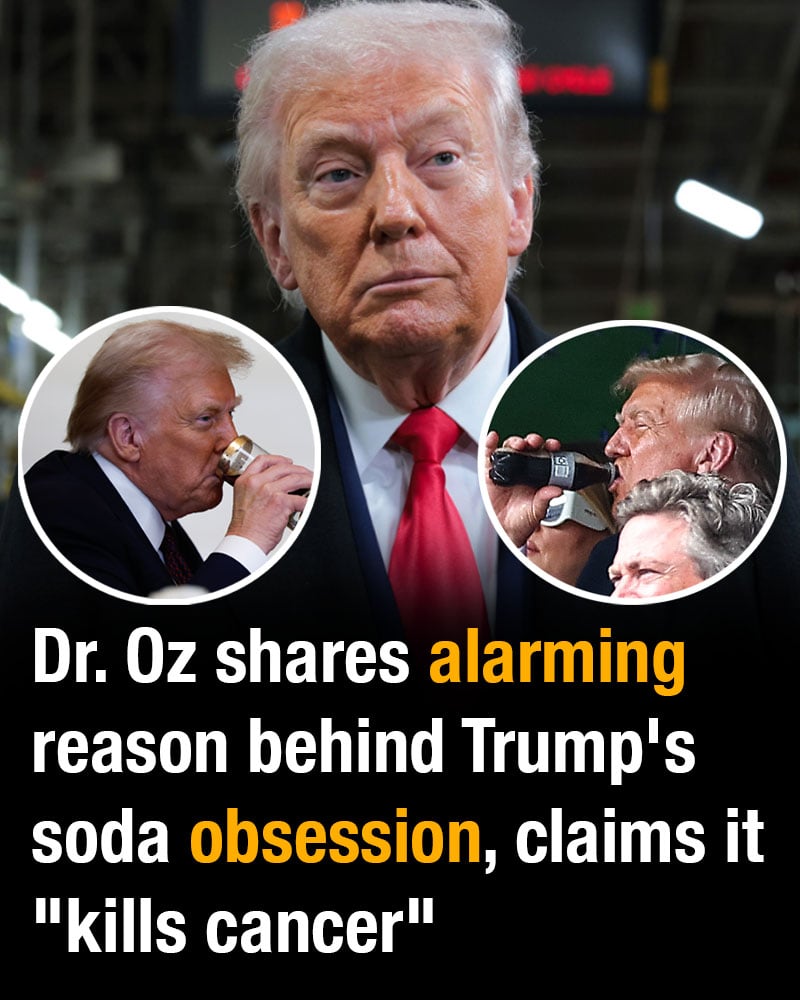
According to Oz, the interaction unfolded in a way that felt both casual and revealing. Trump, known for his long-standing preference for soda, was seen holding an orange Fanta and speaking with a kind of lighthearted confidence about his reasoning. He reportedly suggested that the drink might have cancer-fighting properties, drawing a comparison that sounded more like a personal theory than a scientifically grounded claim. The idea, as described, was that if something could damage grass, it might also have an effect on harmful cells in the body.
At first glance, the moment might come across as humorous or even absurd. The image of a former president casually explaining such a belief in an informal setting creates a striking contrast with the seriousness typically associated with discussions about health. Yet beneath that surface, the story touches on something more complex and deeply human.
Trump’s preference for diet soda has been widely noted over the years, often described as a simple habit or personal quirk. However, this anecdote suggests that there may be more behind it than taste or routine. It points to the possibility that personal beliefs formed through a mix of experience, intuition, and informal reasoning can shape behaviors in ways that are not always visible from the outside.
What makes this particularly interesting is not the claim itself, but the mindset it reflects. Even in an era where access to scientific information is greater than ever, people often rely on their own interpretations when making decisions about their health. These interpretations may not always align with established evidence, but they can feel convincing on a personal level.
In this case, the belief described by Oz appears to connect with a broader pattern of thinking, where cause and effect are linked through observation rather than scientific validation. The idea that something perceived as strong or potent might have beneficial effects against illness is not uncommon. It reflects a natural human tendency to search for simple explanations and solutions, especially when dealing with complex issues like health and disease.
Behind the humor of the situation lies a more serious reality. Health myths, even when they seem harmless, can influence behavior in meaningful ways. When individuals act on these beliefs, they may make choices that are not supported by evidence, potentially affecting their well-being over time.
At the same time, the story also highlights the emotional side of health decisions. For many people, habits are not just about logic or information; they are tied to comfort, identity, and personal reassurance. The idea that a familiar routine might offer some form of protection, even if not scientifically proven, can be psychologically appealing.
This is where the human aspect of the story becomes most evident. Beyond the public persona and political image, the moment described by Oz presents a more relatable picture. It shows an individual navigating questions about health and aging in a way that many people can recognize. The confidence, the humor, and the personal reasoning all reflect an attempt to make sense of something that can feel uncertain or out of control.
The reference to praise from family members about energy, memory, and stamina adds another layer to this perspective. Positive reinforcement can strengthen existing beliefs, making them feel validated even without external evidence. When people hear that they are doing well, they may be more likely to attribute that success to their current habits, reinforcing the idea that those habits are beneficial.
However, scientific research provides a different viewpoint. Experts consistently emphasize that diet soda does not have cancer-fighting properties and offers limited nutritional value. While it may serve as a low-calorie alternative to sugary drinks, it is not considered a health-promoting choice in the way that water or nutrient-rich beverages are.
This contrast between belief and evidence is not unique to one individual. It reflects a broader challenge in public health communication. Even when accurate information is widely available, it does not always translate into behavior. Personal experiences, cultural influences, and psychological factors all play a role in shaping how people interpret and apply what they know.
The story shared by Mehmet Oz brings this dynamic into focus in a way that is both specific and universal. It shows how easily misconceptions can take root, and how strongly they can be held, even in the face of contradictory evidence. It also underscores the importance of understanding the reasons behind people’s choices, rather than simply dismissing them.
In many ways, the moment serves as a reminder that health decisions are rarely based on facts alone. They are influenced by a combination of knowledge, belief, habit, and emotion. Addressing misinformation, therefore, requires more than just presenting data. It involves engaging with the underlying motivations and perspectives that drive behavior.
At its core, this story is not just about soda or a single comment. It is about the complex relationship between belief and reality, and how that relationship shapes the way people care for themselves. It highlights the gap that can exist between what is scientifically proven and what feels personally convincing.
As discussions around health continue to evolve, moments like this offer an opportunity to reflect on how information is understood and applied. They remind us that even the most unexpected anecdotes can reveal deeper truths about human behavior.
In the end, the image of a casual conversation on Air Force One becomes something more than just an unusual story. It becomes a lens through which to examine how people think, what they believe, and why those beliefs matter.