Ivanka s account of that day is less about politics than about a daughter trying to protect her children while watching her father s life hang in the balance.
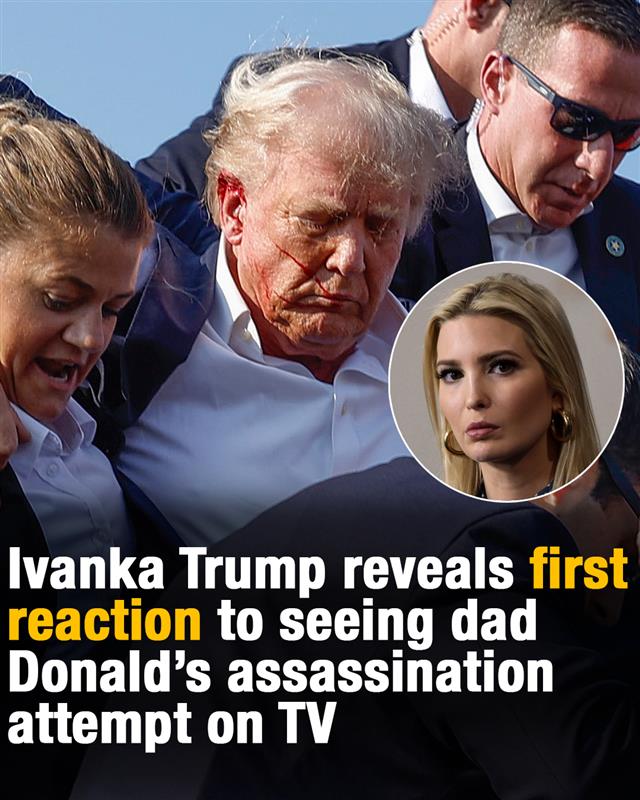
She describes the moment as a collision of horror and certainty. Horror at seeing him struck. Certainty that he would survive. That instinct did not erase the fear, but it gave her something to hold onto as the scene unfolded almost in real time on television. The images were chaotic. Secret Service agents swarming. The former president grabbing his ear. Blood visible even from a distance. The anchor s voice trembling. And Ivanka, sitting in her living room, children nearby, trying to process what her eyes were telling her.
In interviews since, she has been careful not to relive every detail. But the emotions are still raw. She speaks of a split second when everything stopped. When the noise of the broadcast faded and all that remained was the image of her father, a man she has known her entire life, in danger. She did not scream. She did not cry immediately. She went cold. Then she went into motion. Her first instinct was not political. It was primal. Protect the children. Shield them from the screen. Keep them from seeing what she was seeing. That is what mothers do. That is what daughters do.
In the aftermath, she frames the assassination attempt as a brutal reminder of life s fragility. She chooses to respond not with bitterness but with a renewed commitment to love and perspective. She acknowledges that she could be traumatized and angry. She could retreat from public life entirely. She could spend her days replaying the footage, wondering what if. Instead, she deliberately leans toward gratitude. Gratitude that her father is still alive. Gratitude that the children did not see more than they did. Gratitude for the Secret Service agents who acted without hesitation. For her, the choice is clear. Dwell on the darkness of that day, or let it sharpen her appreciation for the people she might have lost.
She has spoken about the phone call that followed. The frantic dialing. The busy signals. The relief when she finally heard his voice. He was angry, she said. Not scared. Angry. That anger, familiar to anyone who knows the former president, was almost comforting. It meant he was still himself. Still fighting. Still refusing to be defined by the attack. She did not try to calm him down. She just listened. That is what she has always done. Listened. Supported. Stood by him even when it was not easy. Even when the world was watching. Even when the criticism was relentless.
The public reaction to the assassination attempt was immediate and intense. Political figures from both parties condemned the violence. Supporters rallied around the former president. Conspiracy theories flourished online. But for Ivanka, the days that followed were not about politics. They were about family. About hospital visits. About quiet conversations away from cameras. About making sure her father was resting, that he was following doctors orders, that he was not pushing himself too hard. It was a role she has played before, but never under these circumstances. Never with the weight of knowing how close they came to losing him.
She has also reflected on how the event changed her relationship with her father. Not in dramatic ways. They are still close. Still speak regularly. Still share the bond that has always defined their family. But there is something new. An awareness of time. An urgency to say things that might otherwise go unsaid. She finds herself hugging him longer. Listening more carefully. Not taking any moment for granted. It is a lesson she wishes she had learned without the trauma, but she is grateful to have learned it at all.
In her public statements, she has avoided assigning blame or speculating about motives. That is not her role, she says. Others can investigate. Others can prosecute. Others can argue about security failures and political rhetoric. Her role is simpler. To be there. To support. To remind her father that he is loved. Not as a former president. Not as a political figure. As her dad. That is the title that matters most to her. And it is the one she nearly lost.
The experience has also shaped how she thinks about her own future. She has stepped back from frontline politics in recent years, choosing to focus on her family and her business. That decision now feels even more justified. Life is short. Unpredictable. Fragile. She does not want to look back and wish she had spent more time with her children, her husband, her father. The assassination attempt was a wake up call. Not just for her, but for everyone who watched it unfold. You never know when the last moment will be. So you better make the moments count.
For Ivanka, that means being present. Not performing. Not politicking. Just being. Being a daughter. Being a mother. Being a wife. Being someone who, when faced with the unthinkable, chose gratitude over grief, love over fear, and family over everything else. That is her first reaction, and it remains her lasting one. The footage will always exist. The memory will always be there. But so will the choice she made. To hold onto what matters. To let go of the rest. And to keep moving forward, one day at a time, grateful for every single one of them. That is not just survival. That is grace. And in a world that often forgets what matters, it is worth remembering.