Ann Margret is widely regarded as one of the most charismatic and talented entertainers of her generation, admired for her warmth, versatility, and long lasting influence in both film and music across decades.
Born Ann Margret Olsson in Sweden, she moved to the United States with her family as a young girl. The transition was not easy. A new country, a new language, a new way of life. But she carried with her a sense of discipline and humility that would later define her professional career. Her early life in Sweden shaped her personality in ways that Hollywood could never replicate.
After settling in America, she studied performing arts and quickly developed a reputation for her energetic stage presence. She could sing. She could dance. She could act. And she did all three with a remarkable natural confidence that caught the attention of agents and producers almost immediately. Her breakthrough came in the early 1960s when she signed with a major film studio. She began appearing in musical films that showcased her vibrant screen presence and distinctive talent. Audiences could not take their eyes off her.
One of her earliest major successes was the musical film Bye Bye Birdie. She gained widespread recognition and quickly became a rising star in Hollywood s golden era of musicals. Her performance demonstrated not only her singing ability but also her comedic timing and screen charm. She was funny. She was beautiful. She was magnetic. Critics took notice. Fans adored her. She became one of the most talked about new actresses of the time.
Shortly afterward, she appeared in Viva Las Vegas alongside Elvis Presley. That film remains one of her most iconic roles and a defining moment in her career. The chemistry between Ann Margret and Elvis was electric. Every scene crackled with energy. Their professional collaboration became a widely discussed part of entertainment history. Although they shared a close bond during filming, their relationship remained primarily within the context of Hollywood. It did not define her long term personal life. She was her own woman, with her own ambitions and her own path.
During the 1960s, Ann Margret became one of the most recognizable faces in American entertainment. She was admired for her energetic performances and her unique blend of glamour and approachability. She could light up a screen like few others. But behind the scenes, something else was brewing. A love story that would eventually pull her away from the spotlight entirely.
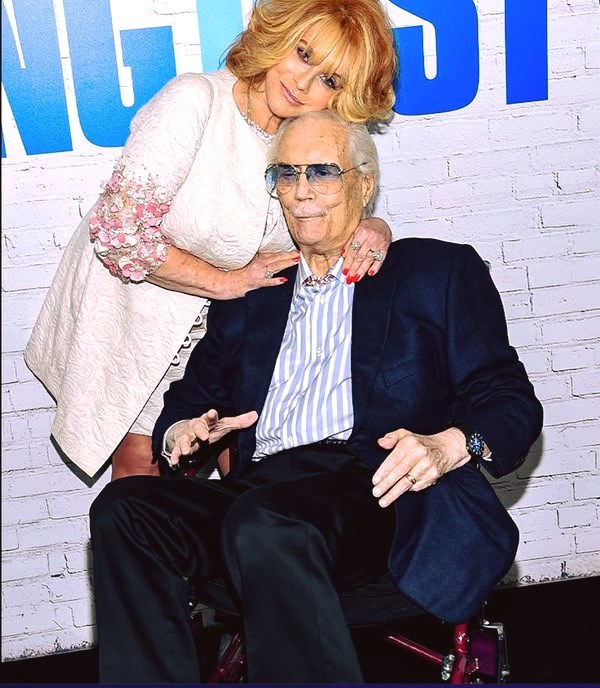
She met Roger Smith, an actor turned producer, in the early 1960s. He was charming, intelligent, and deeply devoted to her. They married in 1967. It was a union that would last more than fifty years. But it was not an easy one. Smith suffered from myasthenia gravis, a chronic neuromuscular disease that gradually robbed him of his strength. As his health declined, Ann Margret faced a choice. Continue her career at full throttle or step back and care for the man she loved.
She chose him. Without hesitation. Without regret. She turned down roles. She canceled appearances. She walked away from a career that most performers would kill to have. The tabloids speculated. The industry moved on. But Ann Margret did not care. She was where she needed to be. By his side. Day after day. Year after year.
For five decades, she cared for him. Through good days and bad. Through hospital stays and quiet nights at home. She was not just his wife. She was his nurse, his advocate, his anchor. The woman who once commanded stages and screens now found her greatest purpose in a private room, holding the hand of a man who could not hold hers back.
Roger Smith passed away in 2017. Ann Margret was devastated. The man she had devoted her life to was gone. For three years, she disappeared from public view entirely. No interviews. No appearances. No announcements. She was grieving, and she needed time.
Then, slowly, she began to return. Not to the spotlight as it had once been. She was older now. The industry had changed. But she still had something to offer. She gave interviews. She attended events. She reminded the world why they had fallen in love with her in the first place.
Her story is not just about fame. It is about devotion. It is about choosing love over ambition, not because ambition is bad, but because love is deeper. Ann Margret could have had it all. In many ways, she did. But what she valued most was not the applause. It was the quiet moments. The ones no camera ever captured. The ones that outlast any career. She gave up Hollywood for love. And she never looked back. Until it was too late to say goodbye. And even then, she held on. That is her legacy. Not the films. Not the songs. The love.