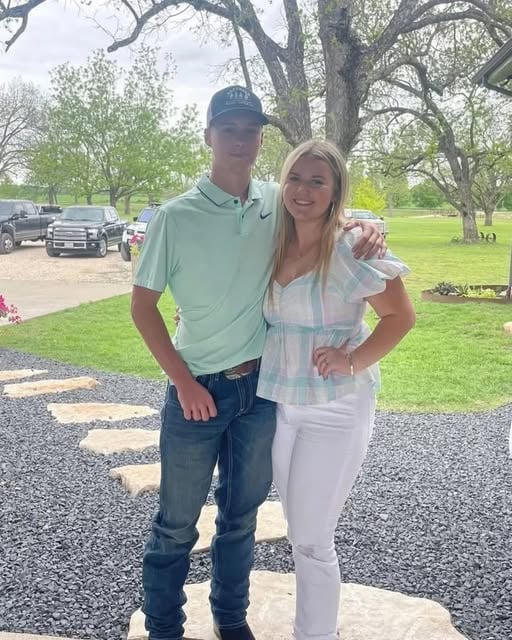
Ace Patton Ashford didn’t just chase rodeo dreams; he lived them with a kind of fearless devotion that drew people in and held them close. Long before the accident that claimed his life, he was already a quiet legend in the making: the kid who showed up early, stayed late, and never complained about the miles, the mud, or the pain. To those who watched him grow up in the arena coaches, fellow riders, barn owners, and childhood friends he was proof that heart could outwork talent, and that humility could live beside raw, electric ambition.
A Life Lived Fully in the Arena
From a young age, Ace understood something that many riders take years to learn: rodeo is not about winning every competition. It is about showing up. It is about respecting the animal, the terrain, and the tradition. It is about getting thrown off and climbing back on before the pain has even faded. Ace did all of that and more. He was the first to arrive at practice and the last to leave. He helped clean stalls without being asked. He loaned equipment to younger riders who couldn’t afford their own. He never acted as though he was above the work, even as his reputation grew.
Those who knew him best describe a young man who carried himself with an old soul’s wisdom. He didn’t chase fame. He didn’t post every ride on social media or seek attention between events. Instead, he let his actions speak. And in the rodeo world where talk is cheap and results are everything that silence made him unforgettable.
The Accident That Shook the Community
The accident that took Ace’s life happened suddenly, as such things often do. One moment he was doing what he loved, preparing for another run, another chance to prove himself. The next, the unthinkable occurred. Details remain private out of respect for the family, but the impact of the loss has been felt far beyond the arena where he fell. Rodeo communities are tightly knit. When one of their own falls, the ripple effects spread across state lines, across generations, across the shared language of leather, dust, and determination.
In the wake of his death, the ache is sharp, but so is the pride. Friends, family, and fellow competitors trade stories that sound almost unreal in their consistency Ace helping a younger roper fix his loop, Ace taking time with a nervous horse, Ace grinning through bruises and setbacks, refusing to let bad luck ruin his spirit. These are not the polished memories of a funeral program. They are raw, lived-in recollections shared between tears and laughter, often in the same breath.
The Stories They Tell
One friend remembers Ace staying up half the night to help calm a panicked horse before a big competition, missing his own warm-up in the process. Another recalls him driving hours out of his way to pick up a struggling teammate who had no ride to an event. A coach speaks of the way Ace listened truly listened when given advice, then went out and applied it immediately, without ego or argument.
These stories matter because they reveal who Ace was when no cameras were rolling, when no trophies were on the line, when the only reward was the quiet satisfaction of doing the right thing. In a sport often associated with rugged individualism, Ace stood out for his generosity. He understood that success is sweeter when shared, and that lifting others does not diminish your own light.
A Presence That Lingers
His body is gone from the saddle, but his presence lingers in every practice pen, every jackpot, every teenager loading a horse in the dark and daring to hope. For them, Ace’s story is no longer just about how it ended, but about how fiercely he lived, and how deeply he is still loved. Young riders who never met him now hear his name spoken with reverence. They learn his techniques, his habits, his quiet discipline. In that way, Ace continues to teach. Continues to guide. Continues to matter.
The rodeo community has responded with an outpouring of support that reflects the depth of their loss. Fundraisers have been organized. Memorial rides have been planned. Social media has filled with photos of Ace in his element on a horse, in the dust, smiling with the kind of joy that cannot be faked. The hashtags bearing his name have become gathering places for grief and gratitude, intertwined.
What Ace Leaves Behind
Ace Patton Ashford leaves behind more than a collection of competition wins or a highlight reel of impressive rides. He leaves behind a blueprint for how to live: with passion, with humility, with a willingness to help others even when no one is watching. He leaves behind grieving parents, siblings, and friends who must now learn to navigate a world without his steady presence. He leaves behind a horse that will never carry him again, and a barn that feels emptier without his footsteps.
But he also leaves behind a legacy of kindness. In an era where rodeo like so many other worlds can sometimes feel dominated by ego and commercial pressure, Ace represented something purer. He rode because he loved it. He helped because he believed in it. He smiled through pain because he understood that setbacks are not endings.
A Grieving Nation Looks for Meaning
The entire nation, it seems, has taken notice. News of Ace’s passing spread far beyond the usual rodeo circles. People who had never seen him ride shared his story, moved by the outpouring of love from those who knew him best. Comment sections filled with messages of condolence from strangers who felt, somehow, that they had lost someone they knew. There is something about a life cut short that forces us all to pause to ask ourselves whether we are living with the same intensity, the same gratitude, the same willingness to help others.
Ace’s story, tragic as it is, has become a mirror. It asks uncomfortable questions: Are we showing up for the people in our lives the way Ace showed up for his fellow riders? Are we offering our help without expecting anything in return? Are we smiling through our own bruises and refusing to let hardship harden us?
Honoring His Memory
The best way to honor Ace Patton Ashford is not to mourn him endlessly, but to carry forward what he embodied. To show up early and stay late. To help someone who cannot repay you. To face pain with a grin and a stubborn refusal to quit. To love the work, not just the recognition.
His body is gone. But his spirit if you believe in such things is still out there, in the dust of a thousand arenas, in the whispered prayers of nervous rookies, in the quiet moments before a ride when everything else falls away and only the horse, the rope, and the dream remain.
For those who knew him, and even for those who didn’t, Ace’s story is now a part of rodeo’s long, winding history. And as long as there are young riders loading horses in the dark, daring to hope, his name will be spoken. His example will be followed. His light will continue to glow.
Rest easy, Ace. The arena misses you. The whole country misses you. And you will not be forgotten.