What began as a single late-night joke quickly grew into something far bigger than anyone inside the studio expected.
The audience laughed.
The cameras kept rolling.
The show moved on to the next segment.
For a few brief moments, it seemed like just another night in the world of late-night television, where political humor has long been part of the formula.
But outside the studio walls, the reaction was only beginning.
Within hours, clips from the broadcast were circulating across social media platforms.
Some viewers replayed the moment repeatedly, calling it one of the sharpest jokes of the night.
Others reacted with disbelief, arguing that the comment had crossed a line that comedy should never approach.
Almost overnight, the conversation shifted away from the joke itself and toward a much larger question.
Where is the line between satire and disrespect?
For decades, late-night television has relied on political humor.
Presidents, lawmakers, celebrities, and public figures have all found themselves at the center of monologues designed to entertain audiences by highlighting contradictions, controversies, or unusual moments from public life.
Hosts have built careers around saying the things many people hesitate to say aloud.
Supporters argue that comedy plays an important role in democracy.
By making powerful people the subject of jokes, comedians remind audiences that no public figure is beyond criticism.
Humor can challenge authority.
It can expose hypocrisy.
It can encourage conversations that serious political debates sometimes fail to create.
Critics, however, believe there are limits.
They argue that not every target deserves the same treatment and that certain jokes risk becoming personal rather than political.
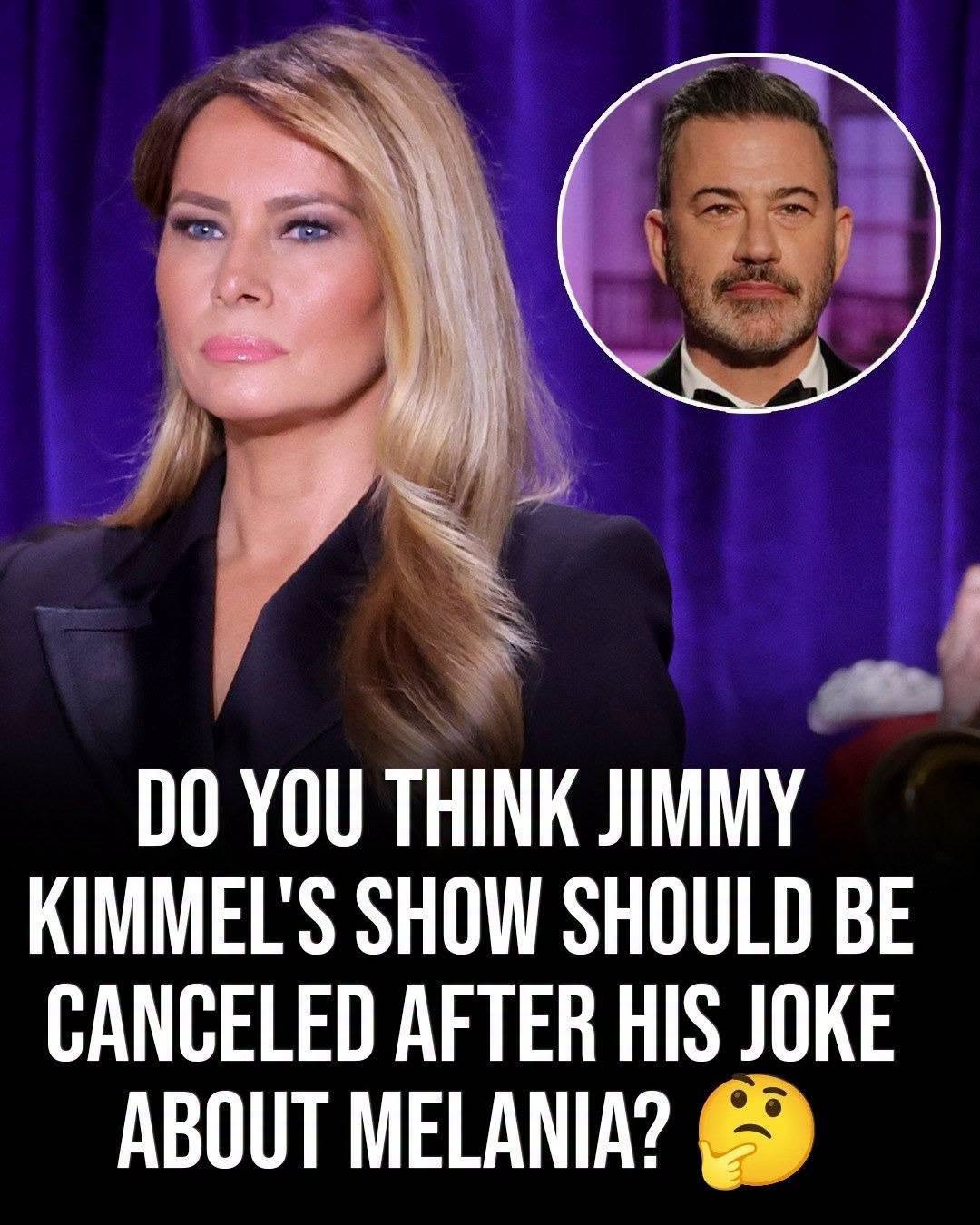
That disagreement became the center of the controversy surrounding Jimmy Kimmel’s remarks.
Almost immediately after the broadcast ended, social media filled with competing reactions.
Some viewers praised the comedian for refusing to soften his material despite increasing political polarization.
They argued that late-night comedy has always pushed boundaries and that public figures should expect scrutiny.
Others strongly disagreed.
They described the joke as unnecessary, mean-spirited, or simply inappropriate.
For them, the issue was not whether politicians should be criticized.
It was how that criticism is delivered.
The debate spread rapidly.
News websites published articles analyzing the moment.
Commentators offered opposing interpretations.
Podcasts devoted entire episodes to discussing whether modern comedy has become too aggressive or whether audiences have simply become more sensitive.
Inside television circles, attention quickly turned toward the production itself.
According to reports and industry speculation, producers carefully reviewed audience reactions as criticism continued to grow.
Television programs routinely monitor public response after major broadcasts.
Viewer feedback, media coverage, and online engagement all help networks understand how particular moments are being received.
Some wondered whether the segment would create lasting damage.
Others believed the controversy would simply generate additional publicity.
That uncertainty fueled even more discussion.
Within the show’s creative team, observers imagined the kinds of conversations that often follow controversial broadcasts.
Should future material become more cautious?
Would changing direction appear as an apology?
Or would continuing exactly as before reinforce the show’s identity?
Comedy has always involved difficult creative decisions.
Writers constantly balance originality, relevance, humor, and audience expectations.
No single joke exists in isolation.
Every monologue contributes to a program’s reputation.
Every controversial moment forces creators to consider not only what audiences laughed at, but also what they remember afterward.
Sponsors and advertisers also become part of the equation.
While companies rarely respond publicly to individual jokes, businesses closely monitor public sentiment surrounding programs they support.
Controversy attracts attention.
Sometimes that attention increases ratings.
Other times it creates concerns about brand association.
Networks understand that every major public debate carries potential business consequences alongside creative ones.
Yet perhaps the most fascinating part of the entire situation was how differently people interpreted exactly the same moment.
Two viewers could watch the identical clip and reach completely opposite conclusions.
One saw fearless satire.
Another saw needless cruelty.
Neither questioned what had been said.
Instead, they disagreed about what it meant.
Those different interpretations reveal something larger about today’s media landscape.
Increasingly, public reactions reflect broader beliefs people already hold about politics, entertainment, and public discourse.
Rather than changing minds, controversial moments often reinforce existing perspectives.
People who already enjoy political satire may view sharp jokes as honest commentary.
Those who believe public conversation has become unnecessarily hostile may see the very same joke as evidence that respect has disappeared.
In that sense, the conversation extended well beyond Jimmy Kimmel or Melania Trump.
It became part of a much broader discussion about modern comedy itself.
What responsibilities do comedians have?
Should humor avoid offending people whenever possible?
Or is discomfort sometimes the very point of satire?
History offers examples supporting both views.
Many comedians who were once criticized for controversial material later became celebrated for challenging accepted norms.
At the same time, there are countless moments where jokes have aged poorly, reflecting attitudes that audiences later rejected.
Comedy constantly evolves because society itself evolves.
Each generation redraws the boundaries of acceptable humor.
Those boundaries rarely remain fixed for long.
For television hosts, navigating those changing expectations has become increasingly complicated.
Every broadcast now reaches audiences far beyond the live studio.
A joke lasting only a few seconds can be clipped, shared, analyzed, criticized, defended, and debated by millions of people within hours.
What once disappeared after a single broadcast now remains permanently available online.
Every word can be replayed.
Every facial expression examined.
Every reaction interpreted.
That reality has fundamentally changed late-night television.
Hosts are no longer speaking only to the audience sitting inside the studio.
They are speaking to an internet audience that may encounter individual jokes completely separated from the rest of the program.
Context often disappears.
Only the most controversial moments continue circulating.
As the discussion surrounding Kimmel’s joke continued, one conclusion became increasingly clear.
The real story was no longer the punchline itself.
It was the conversation that followed.
Some people defended the comedian’s right to challenge powerful public figures without restraint.
Others argued that humor should never lose sight of basic respect.
Both sides believed they were protecting something important.
Perhaps that explains why the debate became so intense.
It was never simply about one joke.
It became a reflection of how people think comedy should function in a divided society.
Should it comfort audiences?
Challenge them?
Offend them?
Unite them?
The answers remain deeply personal.
Long after the laughter faded inside the studio, the questions continued.
The ratings would eventually be measured.
The headlines would move on.
Another monologue would replace the previous one.
But the larger discussion would remain.
Because sometimes a single joke becomes much more than entertainment.
Sometimes it becomes a mirror, reflecting not only the comedian on stage but also the audience watching, each person revealing where they believe humor ends and responsibility begins.