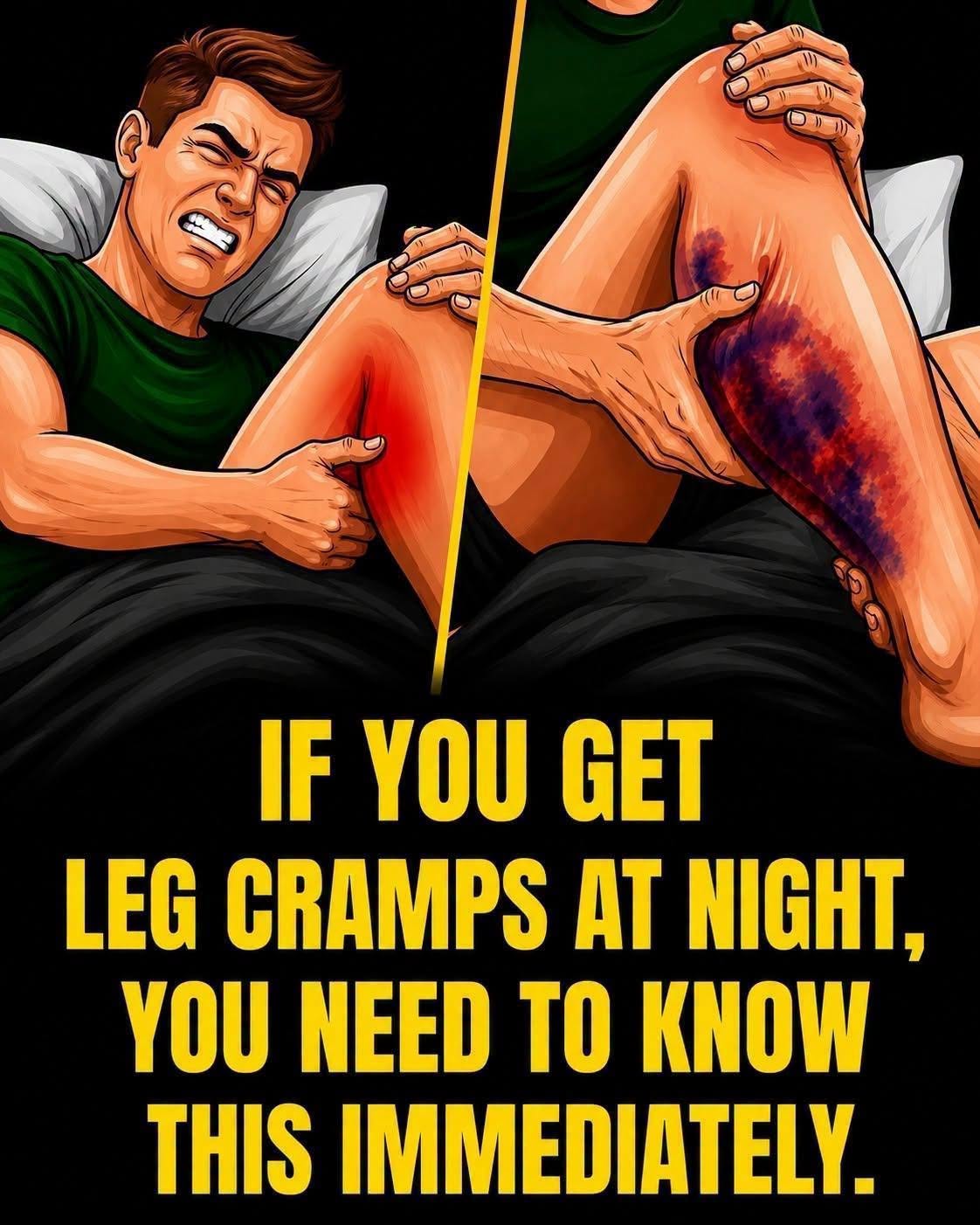
The sudden pain arrives without warning.
You are finally asleep, your body relaxed after a long day, when a sharp, unbearable tightening shoots through your calf or foot. Within seconds, your peaceful night turns into a battle against a muscle that feels like it has locked itself in place.
Many people dismiss these episodes as nothing more than an annoying inconvenience. They stretch their leg, wait for the pain to fade, and move on the next morning.
But sometimes, those painful nighttime cramps are more than a simple disturbance.
They can be your body’s way of signaling that something is out of balance.
A leg cramp is not just a muscle randomly deciding to hurt. It happens when a muscle contracts suddenly and refuses to relax normally. The result is a powerful, involuntary squeeze that can feel frighteningly intense.
For some people, the cause is harmless. A long day standing, a difficult workout, dehydration, or sleeping in an awkward position can place extra stress on the muscles.
But when cramps become frequent, severe, or appear alongside other symptoms, they may point toward deeper issues that deserve attention.
One of the most common triggers is dehydration.
Your muscles depend on a careful balance of fluids and minerals to work properly. When your body does not have enough water, the communication between your nerves and muscles can become disrupted.
Electrolytes such as potassium, magnesium, calcium, and sodium play important roles in muscle contraction and relaxation. When these levels become too low or unbalanced, muscles can begin firing incorrectly, creating painful spasms.
This is why cramps are more likely to appear after heavy sweating, intense physical activity, hot weather, or not drinking enough fluids throughout the day.
The problem is that dehydration is not always obvious.
You may not feel extremely thirsty. You may not notice anything unusual until your muscles begin sending a painful warning in the middle of the night.
Age can also play a role.
As people get older, muscles naturally lose flexibility and strength. Tendons and connective tissues can become less elastic, making the body more vulnerable to sudden contractions.
The activities that once felt effortless may place more strain on muscles that now require additional recovery time.
This does not mean nighttime cramps are an unavoidable part of aging, but it does mean that maintaining mobility, stretching regularly, and supporting muscle health become increasingly important.
Lifestyle habits can also contribute.
Spending many hours sitting during the day can reduce circulation and cause muscles to become stiff. On the other hand, excessive exercise without proper warm-ups or recovery can overwork muscle fibers and increase the chance of spasms.
The body often reacts when it is pushed too far.
Sometimes, medications can also be involved.
Certain drugs, including some used for blood pressure, cholesterol, and other health conditions, may contribute to muscle discomfort or cramping in some individuals. This does not mean medication should be stopped without medical advice, but it does mean recurring cramps should be discussed with a healthcare professional if they appear after starting a new treatment.
The most important question is not whether one cramp is dangerous.
The question is whether there is a pattern.
Occasional cramps after a busy day are usually not a reason for panic. However, repeated nighttime cramps that continue for weeks or months deserve closer attention.
In some cases, frequent muscle spasms may be connected to underlying health conditions.
Diabetes, for example, can affect nerves and circulation, sometimes causing discomfort, tingling, numbness, or cramping sensations in the legs.
Peripheral artery disease, a condition involving reduced blood flow to the limbs, can also cause leg discomfort because muscles may not receive enough oxygen during activity or rest.
Kidney problems can influence the body’s fluid and mineral balance, potentially contributing to muscle issues.
Nerve compression, especially in the lower back, may also create symptoms that travel into the legs, including pain, weakness, or unusual sensations.
The key is paying attention to what happens alongside the cramps.
A simple nighttime leg cramp is different from cramps accompanied by warning signs such as swelling, persistent weakness, numbness, changes in skin color, severe pain, or difficulty walking.
Those symptoms should not be ignored.
Fortunately, there are many steps people can take to reduce the likelihood of nighttime cramps.
Creating a simple evening routine can make a noticeable difference.
Gentle stretching before bed, especially targeting the calves and hamstrings, may help relax tight muscles. Holding stretches slowly and comfortably is often more beneficial than forcing the body into uncomfortable positions.
Hydration throughout the day is equally important.
Waiting until bedtime to drink a large amount of water may not solve the problem. Consistent fluid intake helps the body maintain balance before symptoms appear.
Nutrition also matters.
Foods rich in important minerals can support normal muscle function. Leafy greens, nuts, seeds, dairy products, fruits, vegetables, and other nutrient-dense foods provide the building blocks muscles need.
Exercise habits should also be adjusted carefully.
A proper warm-up prepares muscles for movement, while cooling down afterward allows the body to gradually return to a resting state. Increasing workout intensity too quickly can overwhelm muscles and increase the risk of painful spasms.
Small changes often create the biggest improvements.
Many people search for complicated solutions while overlooking simple daily habits that protect muscle health.
However, prevention is only part of the story.
If cramps become more frequent, stronger, or harder to explain, seeking medical advice is the safest choice. A healthcare provider can review medications, check for underlying conditions, and determine whether additional testing is needed.
Your body communicates constantly.
Sometimes it speaks through fatigue.
Sometimes through discomfort.
And sometimes through pain strong enough to wake you from sleep.
Nighttime leg cramps may seem like a minor irritation, but they are still a message worth noticing. In many cases, the solution may be simple: better hydration, improved stretching, and healthier routines.
But when the warning signs appear, ignoring them could mean missing an opportunity to discover a bigger problem early.
The next time your leg suddenly tightens in the middle of the night, do not only focus on stopping the pain.
Pay attention to what your body may be trying to tell you.