Most dog owners know their pet’s habits better than anyone.
They notice when their dog sleeps in a different spot, eats a little less enthusiastically, walks slower than usual, or behaves in a way that feels slightly unusual.
That is why seeing something strange during a routine walk can immediately grab your attention.
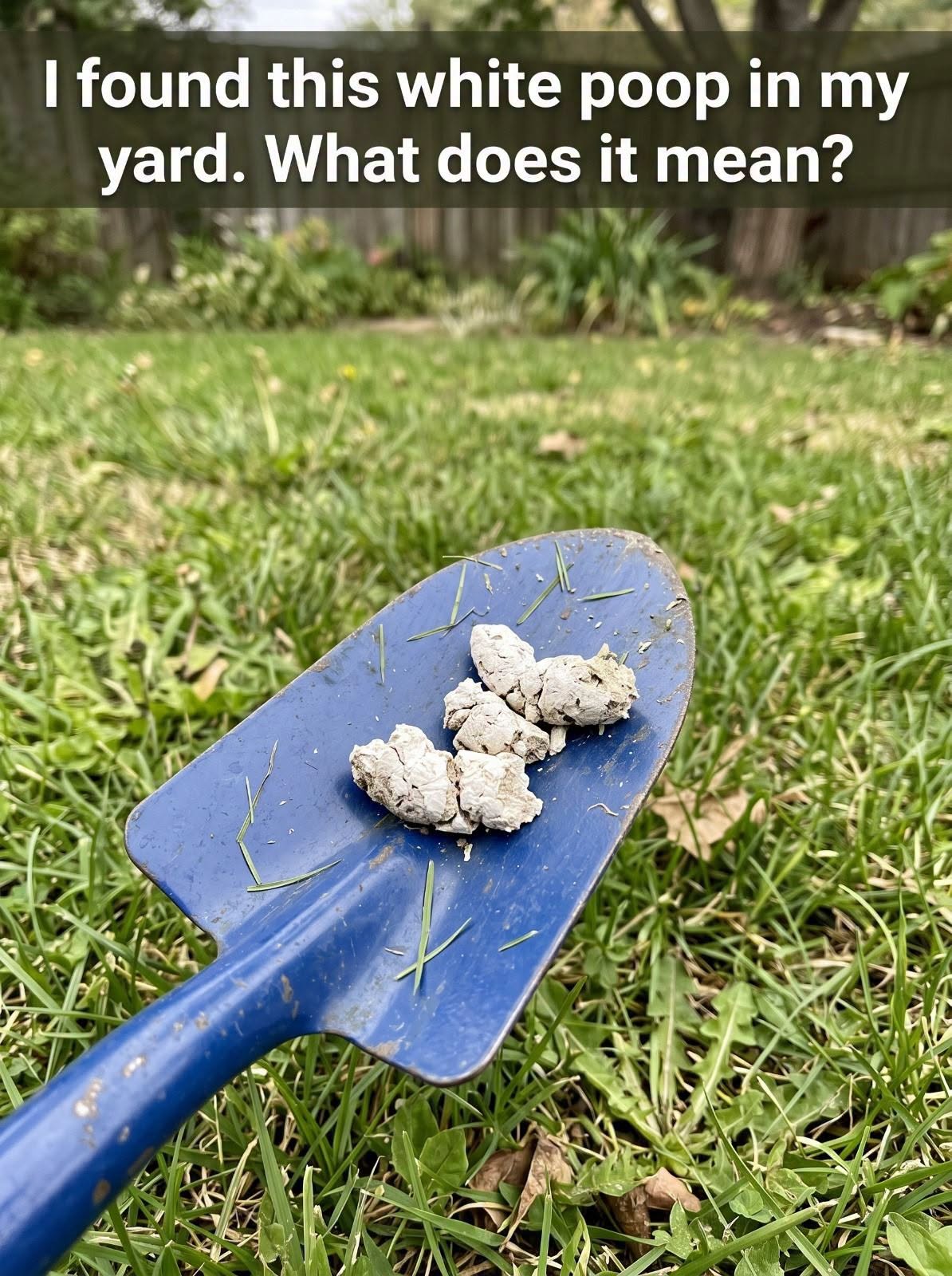
A pile of white or pale-colored poop is one of those moments that can leave owners confused.
At first glance, it may look alarming.
After all, dog waste is normally brown, so a sudden change in color naturally raises questions.
Is something wrong?
Did your dog eat something unusual?
Should you call the veterinarian?
The truth is that white poop can happen for several different reasons. Sometimes it is a harmless result of diet, while other times it may be a sign that your dog’s body is struggling with an underlying issue.
Understanding the difference can help you respond quickly and appropriately.
One of the most common explanations for white dog poop is too much calcium in the diet.
Dogs that regularly chew on bones or eat certain types of treats can sometimes produce stools that become pale, chalky, or almost completely white.
This happens because the digestive system cannot absorb all of the calcium, leaving behind excess minerals that pass through the body.
The result is a stool that looks very different from what most owners expect.
This is especially common with dogs that eat large amounts of raw bones, especially hard bones with high mineral content.
Some treats and commercial products may also contain bone meal or added calcium, which can contribute to the change.
In these cases, the solution is often relatively simple.
Reducing the amount of bones, switching treats, or reviewing the ingredients in your dog’s food may help restore normal stool color.
Many owners are surprised by how quickly things return to normal once the dietary cause is removed.
However, white poop should not always be dismissed as a food issue.
The color of stool is closely connected to how the digestive system processes food, especially the role of bile.
Bile is produced by the liver and stored in the gallbladder. It helps break down fats and gives stool its typical brown color.
If something interferes with the production, movement, or release of bile, your dog’s stool may become unusually pale.
Problems involving the liver, gallbladder, or bile ducts can sometimes lead to lighter-colored waste.
These conditions require veterinary attention because they may affect your dog’s overall health.
A temporary color change after eating something unusual is usually less concerning than a repeated pattern that continues for several days.
The timing and frequency matter.
If your dog has one unusual bowel movement and otherwise seems completely normal, monitoring may be reasonable.
But if white or grayish stool keeps appearing, it is a sign that something deserves a closer look.
Parasites can also play a role in digestive changes.
Certain intestinal problems may affect how your dog absorbs nutrients or processes food, leading to unusual stool appearance.
While parasites are not always the cause of white poop, they are one reason veterinarians may want to examine a stool sample.
Medication can also influence digestion.
Some treatments may change how the body processes food, alter gut bacteria, or affect stool consistency and color.
If your dog recently started a new medication or supplement, it is important to mention that when speaking with your veterinarian.
A complete picture of your dog’s routine can help identify the cause faster.
Pay attention to what comes with the color change.
The stool itself is only one piece of information.
A dog that produces a single pale stool but continues eating, playing, and behaving normally may simply need observation.
However, white poop combined with other symptoms can be more serious.
Signs that should increase concern include vomiting, diarrhea, weakness, unusual tiredness, abdominal discomfort, loss of appetite, weight loss, or changes in drinking and bathroom habits.
Dogs often hide discomfort, so even small behavioral changes can provide important clues.
If you decide to contact your veterinarian, bringing a stool sample can make the process easier.
A fresh sample can help the veterinarian check for parasites, digestive problems, or other abnormalities.
It is also helpful to make a list of everything your dog has eaten recently.
Include regular food, treats, bones, supplements, table scraps, and anything unusual they may have found while exploring.
Dogs are naturally curious creatures, and many owners have discovered their pets eating things they never expected.
A forgotten piece of food from the floor, something found outside, or a new chew toy can sometimes explain sudden digestive changes.
Prevention often starts with awareness.
A balanced diet is one of the most important parts of maintaining healthy digestion.
While many dogs enjoy chewing bones, too much of anything can create problems.
Treats should complement a complete diet rather than replace it.
Regular veterinary checkups can also catch potential problems before they become serious.
Your dog cannot tell you when something feels wrong, but their body often communicates through small changes.
A different stool color, a change in energy, or a shift in appetite may be their only way of showing that something needs attention.
The most important thing for owners to remember is not to panic but also not to ignore unusual signs.
White poop does not automatically mean a serious illness.
In many cases, it is simply the result of diet and can be corrected with small adjustments.
But when the change continues or appears alongside other symptoms, getting professional advice is the safest choice.
You know your dog better than anyone.
You know their normal behavior, their favorite foods, their habits, and their personality.
That knowledge is powerful.
Sometimes the smallest detail a strange-looking stool during a morning walk can be the first clue that helps protect your pet’s health.
A little attention today can make a big difference tomorrow.