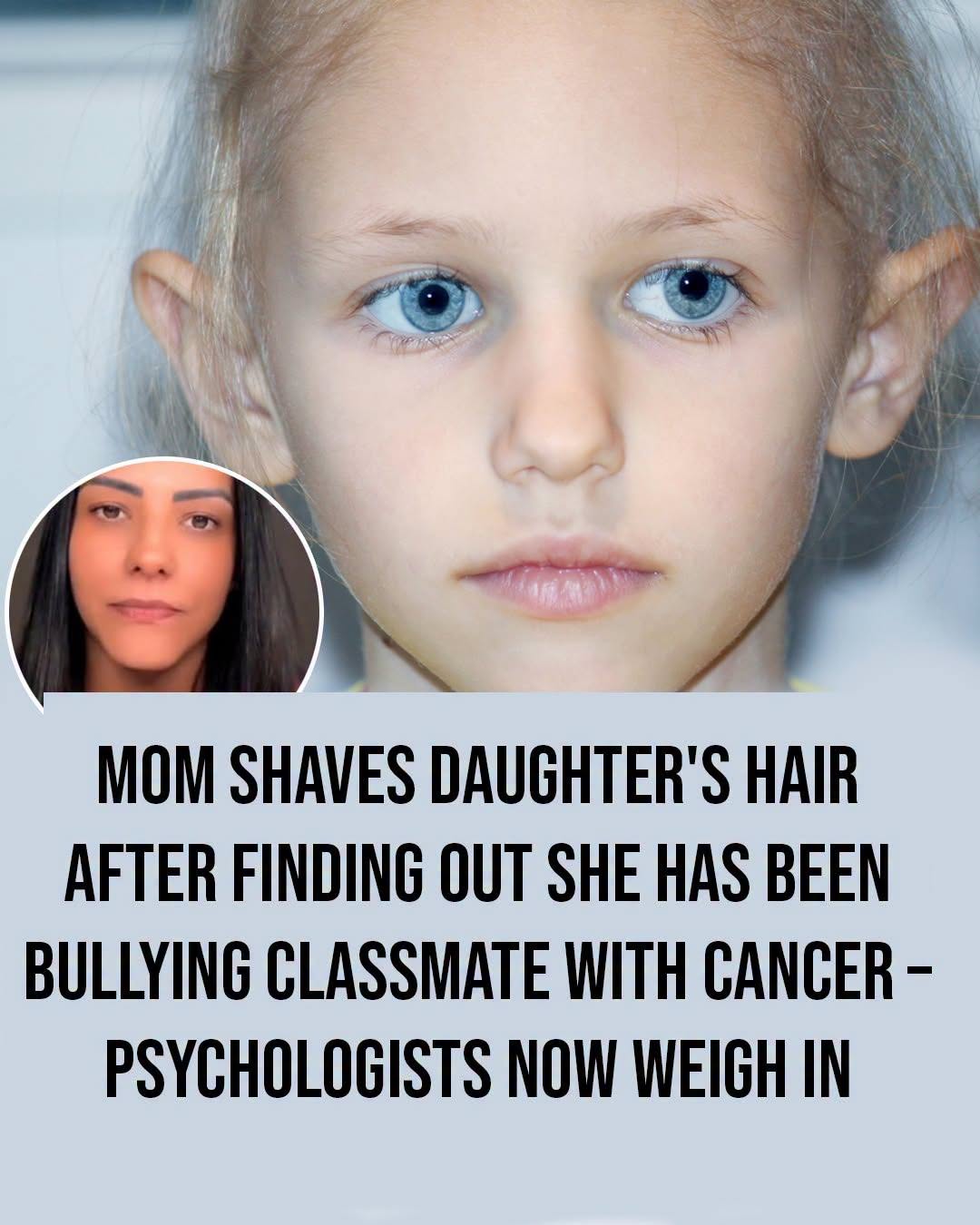
What began as an ordinary school bullying case quickly became one of the most debated parenting stories on the internet.
An 11-year-old girl had repeatedly mocked a classmate who had lost her hair while undergoing cancer treatment. According to reports, the teasing continued despite repeated warnings from teachers and school staff. What started as cruel comments eventually became so severe that the child being bullied experienced overwhelming emotional distress.
When the victim’s family learned just how deeply the harassment had affected their daughter, the situation became impossible to ignore.
School officials contacted the girl’s parents, explaining that multiple incidents had taken place and that previous interventions had failed to stop the behavior.
For the girl’s mother, the phone call was devastating.
She later described feeling shocked, heartbroken, and deeply disappointed that her own daughter had been responsible for causing another child so much pain.
Like many parents placed in an unexpected situation, she struggled with one difficult question.
How do you teach a child to understand the suffering they have caused someone else?
The answer she chose would soon divide millions of people online.
Rather than relying solely on grounding, taking away electronics, or additional school discipline, the mother decided on a punishment that she believed would force her daughter to confront the emotional consequences of her actions.
With tears streaming down both of their faces, she shaved off her daughter’s long hair.
The experience was emotional for everyone involved.
The mother later explained that she wanted her daughter to understand, even in a small way, what it feels like to lose something that forms part of your identity.
For the young girl, watching her hair fall away was upsetting.
She cried throughout the process.
Her mother cried too.
The punishment was not carried out in anger, she insisted, but in the hope that it would create empathy where repeated warnings had failed.
But the haircut was only part of what happened.
Afterward, the family visited the home of the classmate who had been bullied.
There, the daughter apologized face to face.
Instead of hiding behind messages, teachers, or parents, she was encouraged to look directly at the child she had hurt and acknowledge the pain her actions had caused.
The meeting was emotional for both families.
For some people, this personal apology represented the most meaningful part of the entire story.
Soon after details emerged online, debate exploded across social media.
Many praised the mother’s decision.
Supporters argued that traditional punishments often fail to address the emotional damage bullying creates.
They believed the experience could help the girl understand that appearance-based cruelty leaves lasting scars.
Some commented that children often learn empathy most effectively when they experience discomfort themselves.
Others believed the mother showed courage by refusing to excuse her daughter’s behavior.
They argued that allowing repeated bullying to continue without serious consequences would send an even more damaging message.
To them, protecting the victim mattered more than preserving the bully’s comfort.
But many others strongly disagreed.
Critics argued that shaving the child’s head crossed an important line.
Rather than teaching compassion, they feared it simply replaced one humiliation with another.
Some questioned whether publicly altering a child’s appearance could create shame rather than genuine understanding.
Others worried that the punishment itself mirrored the very behavior it was intended to discourage.
Instead of helping the girl develop empathy, they argued, it might leave her feeling resentment or embarrassment.
As opinions spread across television, radio, and social media, psychologists and child development specialists also entered the conversation.
Most agreed on one point.
Bullying should never be minimized.
Children who experience repeated harassment often carry emotional wounds long after the incidents themselves have ended.
Studies have linked severe bullying to anxiety, depression, declining academic performance, social withdrawal, and, in extreme cases, self-harm.
When a child undergoing cancer treatment becomes the target of ridicule, the emotional impact can be even greater.
Medical treatment already forces young patients to cope with enormous physical and psychological challenges.
Hair loss caused by chemotherapy often becomes one of the most visible reminders of their illness.
Mocking that experience can deepen feelings of isolation, embarrassment, and sadness.
Experts emphasized that protecting vulnerable children must remain the highest priority.
Where psychologists differed was in evaluating the punishment itself.
Some believed that experiencing temporary hair loss could help the girl develop empathy by connecting emotionally with what her classmate had experienced.
They argued that consequences should be meaningful rather than symbolic.
Others cautioned that empathy rarely develops through humiliation alone.
Instead, they recommended combining accountability with education.
They suggested that children who bully often benefit from counseling, guided conversations about empathy, restorative justice programs, volunteer work, and opportunities to rebuild trust with those they have harmed.
Simply punishing behavior without exploring its underlying causes may fail to create lasting change.
Child psychologists frequently explain that bullying can develop for many reasons.
Some children imitate behavior they observe elsewhere.
Others seek social status or acceptance.
Some struggle with emotional regulation, insecurity, or unresolved problems in their own lives.
Addressing these deeper issues often requires patience rather than immediate punishment alone.
Specialists also encouraged parents to avoid viewing bullying as evidence that a child is permanently cruel.
Children are still learning.
Poor decisions, while serious, can become opportunities for growth if adults respond thoughtfully.
The goal should not simply be making children suffer for mistakes.
It should be helping them understand why those mistakes caused harm and giving them the tools to make better choices in the future.
Many experts praised one aspect of the mother’s response that received less attention than the haircut.
The face-to-face apology.
Restorative conversations allow children to see the real emotional consequences of their actions.
Looking into another person’s eyes while apologizing often creates a level of understanding that punishment alone cannot achieve.
Rather than reducing conflict to rules and consequences, these conversations encourage accountability, empathy, and healing.
As discussion continued online, many parents reflected on how they might respond if placed in a similar situation.
Some admitted they understood the mother’s frustration.
Others said they would have chosen counseling, community service, or volunteer work supporting children facing serious illnesses.
There was no universal agreement.
What almost everyone shared, however, was concern for the child who had been bullied.
Her experience reminded people that words can leave invisible wounds just as painful as physical injuries.
Children fighting illnesses like cancer already carry burdens few adults can imagine.
Compassion from classmates can make an enormous difference during that journey.
Cruelty can make it even harder.
Perhaps that is the lesson many people ultimately took away from the story.
Not whether shaving the girl’s head was right or wrong.
Not whether the punishment was too harsh or not harsh enough.
But that empathy is something children must actively learn.
Parents, teachers, schools, and communities all play important roles in helping young people understand that every classmate carries struggles others may never see.
Whether through conversations, counseling, meaningful consequences, or simple acts of kindness, teaching compassion remains one of the most important responsibilities adults have.
Because behind every bullying incident is another child hoping to be accepted, understood, and treated with dignity.
And helping children recognize that truth may be the most powerful lesson of all.