
Few foods capture the feeling of summer quite like fresh corn on the cob. Whether it’s served at a backyard barbecue, a family picnic, or alongside a simple weeknight dinner, there’s something special about biting into juicy, sweet kernels that burst with flavor. Yet despite how common it is, many people unknowingly overcook corn, turning what should be tender and naturally sweet into something chewy, bland, and disappointing.
The surprising truth is that perfect corn doesn’t require complicated techniques or secret ingredients. It simply comes down to choosing the right ears and knowing exactly how long they belong in the pot.
The process actually begins before you ever fill a saucepan with water.
When you’re shopping for fresh corn, the husk tells an important story. Look for ears wrapped in bright green leaves that fit snugly around the cob. Fresh husks should feel slightly moist and flexible rather than dry or brittle. If the leaves are turning brown, peeling away from the cob, or feel papery, the corn has likely been sitting around for too long.
The silk at the top also offers clues. Healthy silk is usually golden brown and slightly sticky to the touch. Completely dried-out or black silk often signals that the corn is past its prime.
Without peeling back the husk completely, gently squeeze the cob with your fingers. You should feel rows of firm, evenly spaced kernels underneath. Large gaps or soft spots may indicate missing or damaged kernels.
Freshness matters because corn begins converting its natural sugars into starch almost immediately after harvest. The fresher the corn, the sweeter every bite will taste.
Once you bring it home, don’t wait too long before cooking it. While refrigeration slows the process, corn is always at its best when prepared within a day or two.
Preparing the corn is simple.
Remove the outer husks and peel away every layer until the cob is fully exposed. Pull off as much silk as possible by hand, then rinse the ears under cool running water to remove any remaining strands.
Some people like to leave a few inches of the stalk attached as a natural handle, while others trim both ends for a cleaner presentation. Either approach works perfectly.
Now comes the step where many people accidentally ruin perfectly good corn.
Bring a large pot of water to a rolling boil before adding the ears. Using plenty of water is important because it allows the temperature to recover quickly once the corn is added.
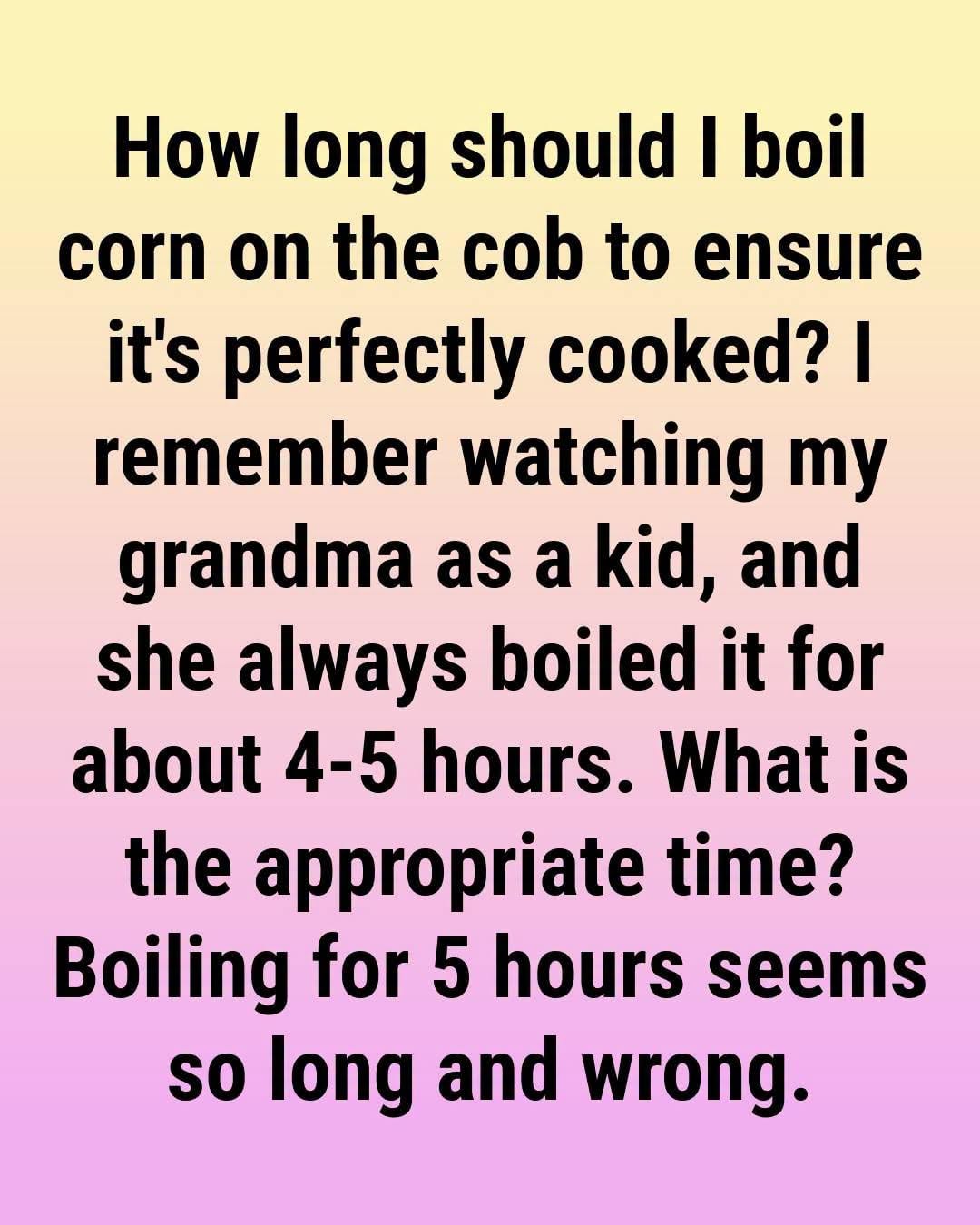
Many people instinctively leave the corn boiling for fifteen or even twenty minutes.
That is almost always far too long.
Fresh corn cooks much faster than most people realize.
If your corn is very fresh and tender, it usually needs only four to six minutes.
Slightly older ears or particularly large cobs may require seven to ten minutes.
That’s it.
Anything beyond that doesn’t make the corn sweeter or softer.
Instead, extended cooking begins breaking down the kernels, causing them to lose their crisp texture while reducing much of the bright flavor that makes fresh corn so enjoyable.
Rather than becoming tender, overcooked corn often becomes tougher.
The natural sugars also continue breaking down, leaving the kernels tasting flatter than they did before cooking.
A gentle simmer after the initial boil often produces even more consistent results than an aggressive rolling boil.
Once the kernels become bright yellow and easily pierced with a fork, the corn is ready.
Lift each ear carefully with tongs and allow any excess water to drain back into the pot.
Serve immediately while the corn is still steaming hot.
This is where you can keep things wonderfully simple or become as creative as you’d like.
The classic combination of butter and salt remains popular for good reason.
As the butter melts into every row of kernels, it creates the comforting flavor that generations have grown up enjoying.
Freshly cracked black pepper adds just enough spice without overwhelming the sweetness.
If you enjoy stronger flavors, grated Parmesan cheese creates a rich, savory coating that pairs beautifully with hot corn.
A squeeze of fresh lime juice combined with chili powder delivers a bright, slightly spicy twist inspired by Mexican street corn.
Herb butter made with parsley, chives, garlic, or dill offers another delicious option, adding freshness without masking the corn’s natural sweetness.
Some people enjoy brushing the ears with olive oil before sprinkling on smoked paprika, while others add crumbled bacon, shredded cheddar, or a drizzle of honey for something a little different.
The possibilities are almost endless.
Boiling isn’t the only way to prepare corn, either.
Grilling creates lightly charred kernels with a subtle smoky flavor that’s perfect for summer cookouts.
Roasting in the oven concentrates the sweetness while producing a slightly firmer texture.
Some cooks even steam their corn instead of boiling it, believing this preserves even more nutrients and flavor.
Each cooking method offers its own unique character, but when fresh corn is in season, boiling remains one of the quickest and easiest ways to let the natural flavor shine.
Many people also wonder whether they should add salt or sugar to the cooking water.
Surprisingly, neither is necessary.
Adding sugar won’t make old corn sweeter because sweetness comes from the corn itself, not the water.
Salt is even more debated. While some recipes recommend it, others argue it can slightly toughen the outer skin of the kernels during cooking.
For most home cooks, plain boiling water works perfectly well.
The real secret has never been what’s in the pot.
It’s knowing when to take the corn out.
Proper storage also helps preserve quality.
If you aren’t cooking the corn immediately, leave the husks on and refrigerate the ears. The husks help slow moisture loss and protect the kernels from drying out.
Cooked leftovers can also be stored in an airtight container for several days.
The kernels can be sliced off the cob later and added to salads, soups, tacos, casseroles, pasta dishes, or homemade salsa.
They also freeze surprisingly well, allowing you to enjoy a little taste of summer long after the season ends.
Fresh corn is naturally rich in fiber, vitamin C, several B vitamins, magnesium, and antioxidants like lutein and zeaxanthin, which support eye health. While it isn’t a miracle food, it provides satisfying nutrition alongside its naturally sweet flavor.
Perhaps the greatest lesson corn teaches is that good food often requires less effort than we imagine.
Many recipes encourage extra ingredients, longer cooking times, and complicated techniques.
Fresh corn asks for the opposite.
Choose quality ears.
Boil them briefly.
Serve them while they’re hot.
Everything else is optional.
The next time you’re standing over a steaming pot, remember that perfect corn isn’t about cooking it longer.
It’s about stopping at exactly the right moment.
Four to six minutes may seem almost too short.
Yet those few carefully timed minutes are often the difference between ordinary corn and one of the sweetest, juiciest bites of summer you’ll enjoy all year.