
Think you have an incredible eye for detail?
Then this classic visual challenge might put your observation skills to the ultimate test.
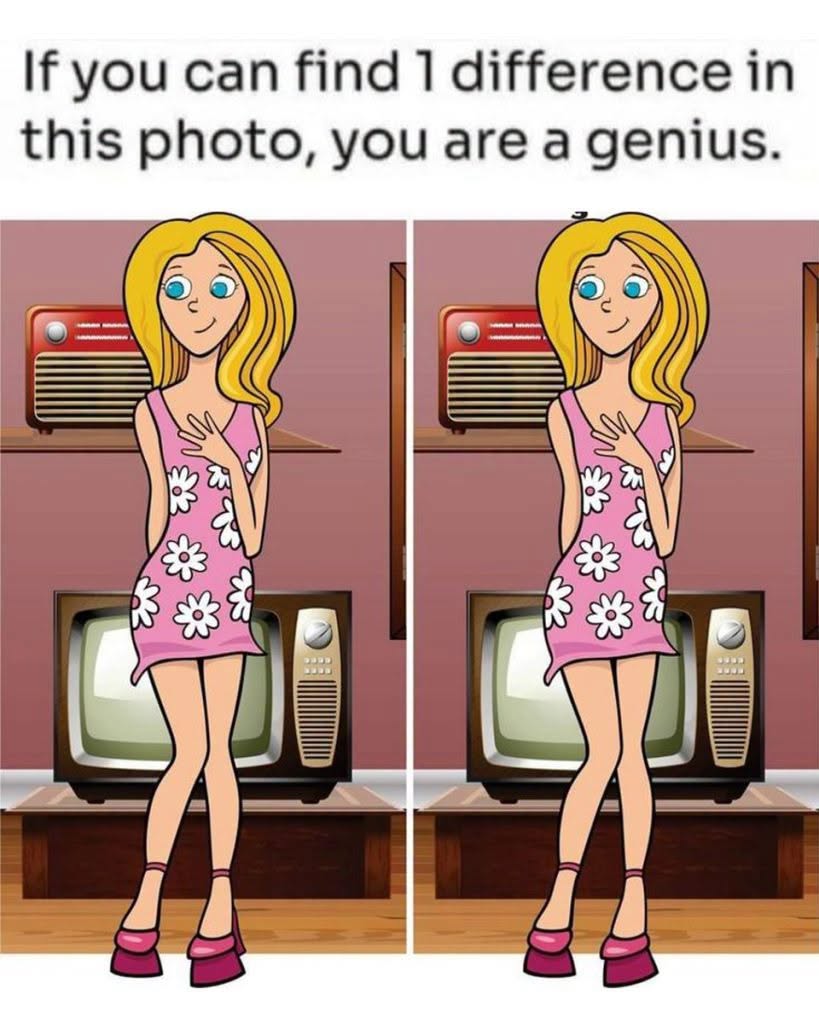
At first glance, the two images in this puzzle appear completely identical. They show the same charming retro scene, the same carefully arranged room, and the same woman standing confidently in a beautiful vintage setting.
But hidden somewhere inside the picture is one tiny detail that does not match.
Only one thing has changed.
Your mission is simple: carefully examine both images and find the single difference before time runs out.
This type of puzzle may look easy, but it often tricks even the most observant people. The human brain is designed to recognize familiar patterns quickly, which means small changes can easily disappear in plain sight.
The challenge is not just about having good eyesight.
It is about focus, patience, and the ability to slow down long enough to notice what others miss.
The Retro Scene
The image takes you back to a simpler era filled with classic furniture, warm colors, and timeless designs.
Standing in the center of the room is a blonde woman wearing an elegant pink floral dress. Her outfit perfectly matches the nostalgic atmosphere, creating the feeling of an old-fashioned photograph from another time.
Behind her sits a vintage television placed on a wooden stand, adding to the charm of the room. Above it, resting on a shelf, is a classic red radio that immediately catches the eye.
Every object seems carefully placed.
Every detail appears intentional.
The wooden textures, the retro electronics, and the soft colors all work together to create a peaceful scene.
But somewhere inside this familiar image is a hidden mistake.
A small change.
A detail that was quietly altered.
And finding it requires more than just a quick glance.
Why Spot The Difference Puzzles Are So Addictive
There is a reason these puzzles have remained popular for generations.
Long before smartphones and online games, people enjoyed searching for hidden differences in magazines, newspapers, and puzzle books. They provided a simple form of entertainment that challenged the mind without requiring complicated rules.
Today, these puzzles continue to attract millions of people because they offer a rare opportunity to slow down and concentrate.
In everyday life, our brains are constantly processing information. We move quickly from one task to another, often missing small details around us.
A spot-the-difference puzzle forces your attention into a single moment.
It encourages you to observe.
It trains your memory.
It improves your ability to compare information.
Even a few minutes spent searching for a hidden clue can become a relaxing mental workout.
It is also a fun activity to share with family and friends. You can challenge someone beside you and see who notices the difference first.
Sometimes the person who finds it quickly is not the one with the best eyesight.
It is usually the person who stays calm and pays attention.
How To Find The Hidden Difference Faster
Finding one difference can actually be harder than finding several.
When an image contains multiple changes, your eyes naturally detect something unusual. But when there is only one small alteration, your brain tends to fill in the missing information and convince you everything looks normal.
That is why a careful strategy can make a big difference.
Start by scanning the picture slowly from top to bottom.
Begin with the woman.
Look closely at her hair, facial features, clothing patterns, and accessories. Small changes involving shapes, colors, or missing details are often hidden in places people naturally look first.
Next, move toward the background.
Examine the television carefully.
Check the screen, buttons, edges, and the wooden stand underneath. Objects that appear simple often hide the smallest changes.
Then look at the shelf and the vintage radio.
Because the radio is one of the most noticeable objects in the room, it may attract your attention immediately—but do not just glance at it. Compare every part of it between the two images.
Look at the shape.
Look at the buttons.
Look at the position of small details.
Sometimes the difference is not something missing. It could be something added, moved, resized, or slightly changed.
Another useful technique is to compare the images in sections.
Instead of looking at both entire pictures at once, divide them into smaller areas.
Compare the top left.
Then the top right.
Move down to the middle.
Then the bottom.
This prevents your brain from becoming overwhelmed by too much information at once.
Do Not Give Up Too Quickly
Many people make the mistake of searching for only a few seconds before deciding the difference is impossible to find.
But these puzzles are designed to test persistence.
The hidden detail may be obvious once you see it, but before that moment, it can feel completely invisible.
If you are struggling, try changing your approach.
Look away from the screen for a moment and return with fresh eyes.
Move closer or farther away.
Relax your focus instead of staring intensely.
Sometimes the brain notices differences more easily when you stop forcing yourself to find them.
The Satisfaction Of Solving The Mystery
There is a special feeling that comes with finally discovering a hidden difference.
At first, the image seems impossible.
Then suddenly, your brain recognizes the change.
The mystery disappears.
You wonder how you missed something that was sitting there the entire time.
That moment of discovery is what makes these puzzles so enjoyable.
They remind us that our minds are powerful, but they also have habits. We often see what we expect to see rather than what is actually in front of us.
A simple vintage picture can reveal how much we rely on attention and observation every day.
So take another careful look at the blonde woman, the retro television, the wooden furniture, and especially that classic red radio.
Somewhere in this nostalgic scene is a tiny secret waiting to be discovered.
The question is not whether the difference exists.
The question is whether you are observant enough to find it.