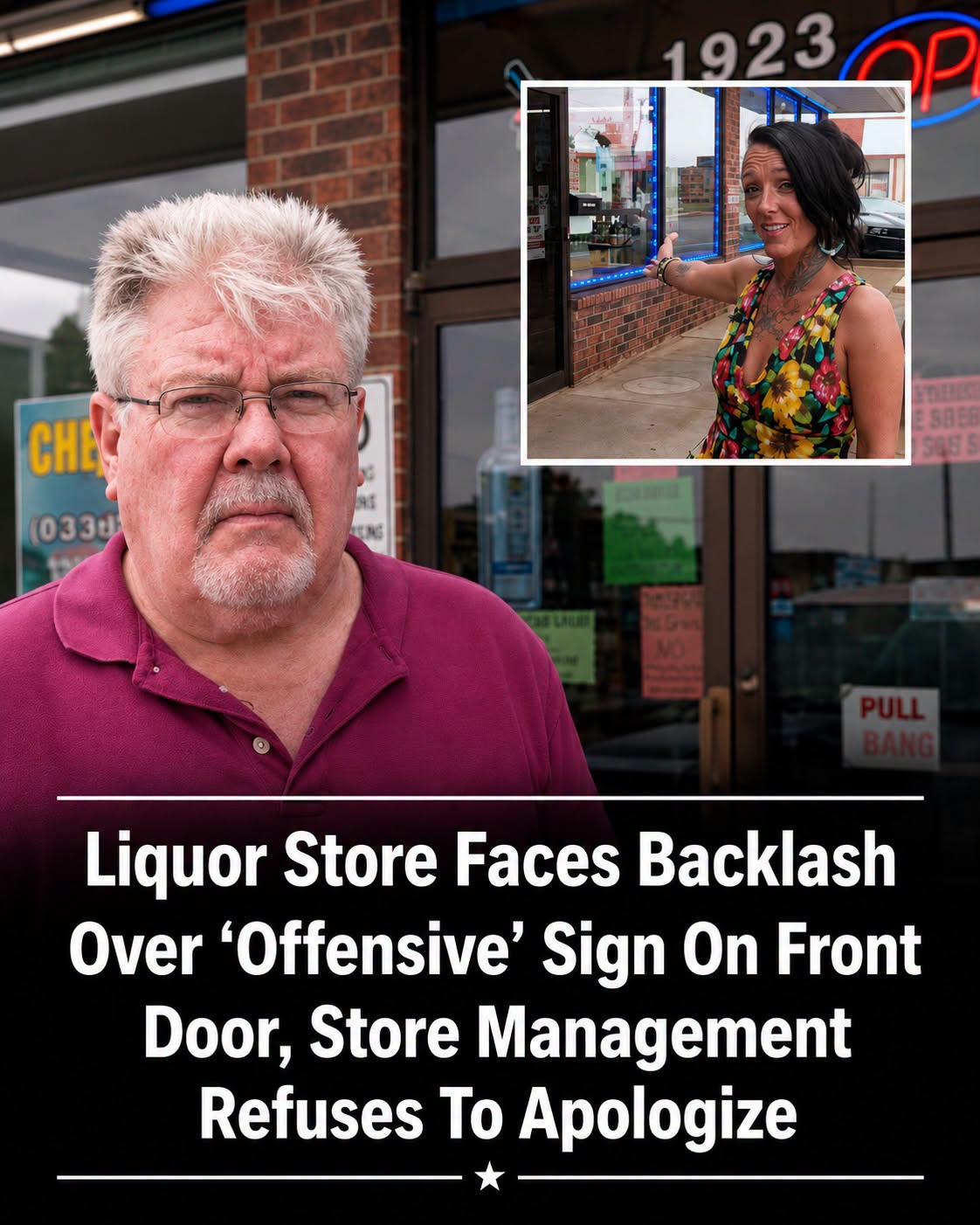
A simple sign on the front door of an Oklahoma liquor store managed to turn an ordinary shopping trip into a surprisingly heated public debate.
The message was blunt, unmistakable, and impossible for customers to overlook: pull your pants up, or do not come inside.
Originally reported in August 2017, the controversy surrounding the sign at Midwest Wine and Spirits in Oklahoma City quickly attracted attention because the store was not simply asking customers to dress appropriately. Management was openly declaring that anyone wearing sagging pants would not be welcome inside.
For some customers, the policy was nothing more than a business setting a basic standard for appearance. For others, however, the wording crossed a line and raised uncomfortable questions about discrimination, stereotypes, and who gets to decide what qualifies as acceptable clothing in a public establishment.
According to store management, the decision did not come out of nowhere.
Employees said they had become frustrated with customers entering the store with their pants hanging so low that underwear and exposed skin were visible. Rather than repeatedly confronting people individually, management decided to put the rule directly on the door so customers would know what was expected before entering.
The sign reportedly urged customers to pull their pants up and described the practice as disrespectful and indecent. Its message was not subtle, and management made it clear that they intended to stand behind it.
Chad Gilbert, one of the managers, acknowledged that wearing pants low can be considered a fashion choice. But he said that, regardless of its popularity, he personally found the style offensive and inappropriate.
That explanation did little to end the debate.
Instead, the sign became a lightning rod for a much larger conversation about public behavior and personal freedom.
Supporters of the store argued that businesses have the right to establish reasonable dress expectations for customers. Restaurants, clubs, offices, and other establishments frequently impose rules about clothing, footwear, or general appearance. From that perspective, asking customers to keep their pants properly worn was simply another example of a private business setting its own standards.
Critics saw the situation differently.
One customer, Sunshine Weatherby, questioned whether a liquor store was really in a position to lecture customers about morality or decency. She pointed out that people encounter all kinds of behavior in liquor stores and suggested that the establishment should be careful about presenting itself as an authority on appropriate conduct.
At the same time, Weatherby did not necessarily argue that the store had no right to display the sign. Her concern was more about how the policy might be applied.
If every customer were treated equally, she suggested, the rule could be viewed as a simple dress-code policy. But if employees used sagging pants as an excuse to target people because of their race or appearance, the situation would become much more serious.
That distinction became one of the most important parts of the controversy.
A clothing style can exist across different communities and generations, but certain fashion choices have also been associated with particular racial and cultural groups. Because of that history, a rule that appears neutral on paper can still raise concerns about how it is enforced in practice.
The store’s employees, however, offered another reason for paying attention to customers wearing loose or sagging clothing.
They said they believed the style could create security concerns.
According to employee Shana Wiessner, bottles could potentially be concealed more easily when clothing was loose or hanging away from the body. She said employees paid closer attention when they noticed customers wearing sagging pants and claimed that this had sometimes helped them detect attempted theft.
That explanation added another layer to an already controversial policy.
What management considered a practical security measure was interpreted by some customers as an unfair assumption that someone dressed a certain way was more likely to steal.
And that is where the debate became much bigger than a pair of pants.
The argument was no longer simply about whether sagging pants look fashionable or appropriate. It became a discussion about assumptions.
Does clothing justify additional suspicion?
Can a business enforce an appearance policy without unintentionally targeting particular groups?
When does a dress code become reasonable, and when does it become unnecessarily judgmental?
And perhaps most importantly, should customers be expected to follow a store’s standards even when they personally disagree with them?
The controversy also highlighted how quickly a small local dispute can become a larger cultural argument.
A sign that might have been ignored by hundreds of customers suddenly became something people wanted to photograph, discuss, and share. The wording was provocative enough to attract attention, while the disagreement surrounding it gave people plenty to argue about.
Some people found the policy refreshing, believing that public spaces had become too tolerant of behavior they considered disrespectful.
Others felt that adults should be free to choose their clothing without being publicly shamed or treated as potential criminals.
There was also an important question about proportionality.
A store can reasonably ask customers to follow certain rules, particularly when those rules relate to safety, cleanliness, or the protection of employees and customers. But the way those rules are communicated matters.
A straightforward request for appropriate clothing might be received very differently from a message that appears insulting or judgmental.
In this case, the store chose a particularly direct approach.
There was no carefully worded corporate statement and no complicated dress-code policy. The message was placed where everyone entering the business would see it.
For management, that directness was probably the point.
They wanted customers to understand the expectation immediately.
For critics, however, the same bluntness made the policy feel unnecessarily confrontational.
Years later, the debate remains interesting because it touches on a question that businesses continue to face: how much control should a private establishment have over the way customers present themselves?
The answer is rarely as simple as people want it to be.
A business has legitimate reasons to maintain a certain environment, protect its employees, and establish expectations for customers. At the same time, those rules should be applied consistently and without turning assumptions about someone’s appearance into assumptions about their character.
Ultimately, the controversial Oklahoma sign became memorable not because of its size or complexity, but because of how much disagreement could fit into a handful of words.
To some, it represented common courtesy.
To others, it represented unnecessary judgment.
And for many people, it raised an even bigger question about the line between personal expression and public standards.
What began as a store’s attempt to establish a dress expectation ended up becoming a conversation about respect, privacy, discrimination, security, and the complicated ways people judge one another based on appearances.
The sign may have been simple, but the debate it created was anything but.